
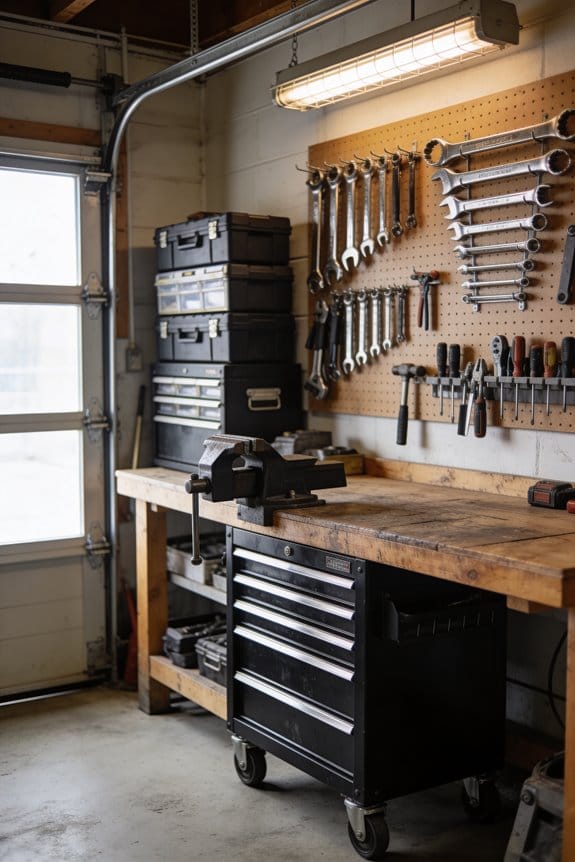

The most common garage storage mistakes prevent you from parking your car. Clutter on the floor—bikes, boxes, storage bins—takes up valuable space that 36% of homeowners can’t reclaim. You’re likely wasting overhead and wall space while your floor stays packed. Hazardous materials stored improperly create safety risks. Humidity-sensitive items deteriorate in moisture-prone environments. You’ll discover how to fix each mistake by implementing vertical storage, creating organized zones, and selecting moisture-resistant materials that protect your belongings.
Key Takeaways
- Leaving floor clutter prevents vehicle parking; remove bikes, boxes, and bins to reclaim garage space.
- Ignoring vertical space wastes storage potential; install wall shelves, pegboards, and ceiling racks instead.
- Storing items randomly creates inefficiency; designate zones for parking, tools, seasonal gear, and supplies.
- Placing hazardous materials indoors risks safety; store gasoline, chemicals, and propane tanks outdoors away.
- Using moisture-prone materials causes deterioration; choose steel cabinets, vinyl shelving, and laminate-coated surfaces instead.
Clear Floor Clutter: Get Your Car Back
When bikes, boxes, and storage bins pile up on your garage floor, you’re not just wasting space—you’re creating real problems that affect your daily life. The clutter blocks vehicles from parking, making your garage unusable for its primary purpose. According to surveys, 36% of Americans can’t park in their garages due to excessive clutter.
To reclaim your floor, start by removing items that don’t belong. Install bicycle hoists on your walls to suspend bikes overhead, freeing valuable floor space. Use rolling bins for seasonal items or tools, allowing you to move them easily when needed. By organizing vertically and removing floor obstacles, you’ll transform your garage into a functional parking area and discover how much space you actually have.
Go Vertical: The Fastest Way to Gain Parking Space
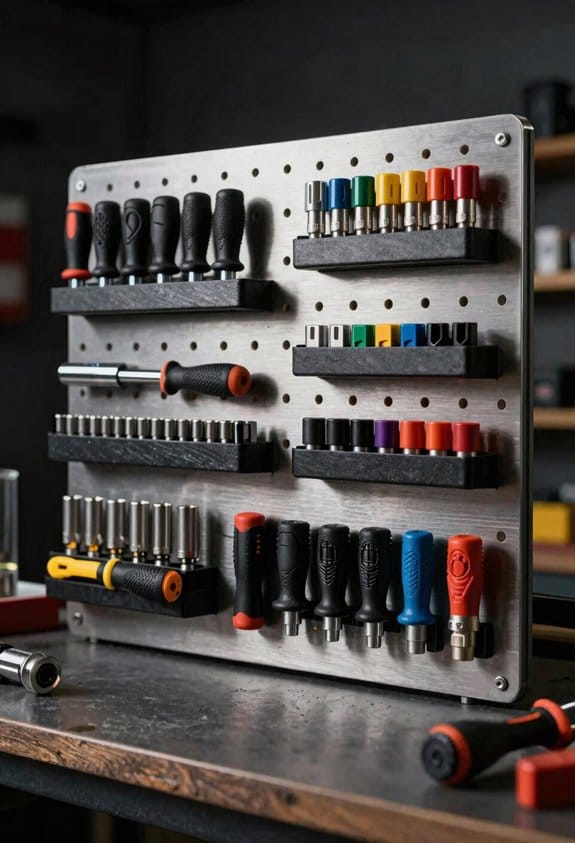
Most garages waste enormous amounts of overhead space that could hold your belongings instead of cluttering your floor. I’d recommend installing wall-mounted shelves and vertical cabinets along your garage walls to reclaim valuable parking area. Ceiling-mounted racks with overhead pulleys work exceptionally well for storing seasonal items, holiday decorations, and rarely used equipment. These systems keep bulky objects elevated and out of your way, freeing up floor space for your vehicles.
Pegboards offer another practical solution for organizing tools vertically. By utilizing your garage’s height rather than spreading items horizontally, you’ll dramatically increase usable storage capacity. This vertical approach prevents the overcrowding that damages hinges and causes shelves to sag under weight. Fastening cabinets directly to wall studs guarantees stability when storing heavier items overhead.
Organize Into Zones (And Why Yours Needs Them)
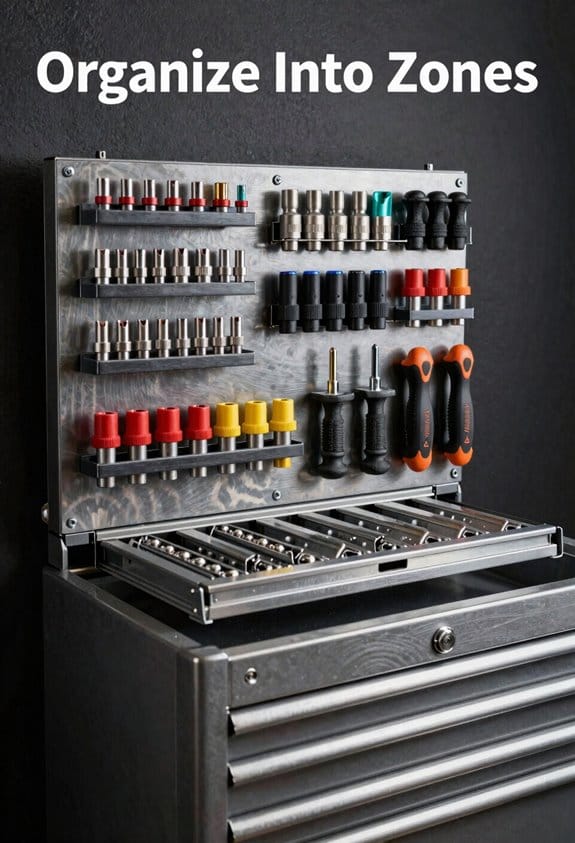
Designating specific areas in your garage for different purposes transforms a chaotic space into a functional storage system, and I’d recommend starting this process by identifying what activities or storage needs your garage serves. Create distinct task categories such as vehicle parking, tool storage, seasonal items, and cleaning supplies. Establish workflow stations where you group related items together—for example, a gardening zone with potting soil, seeds, and hand tools nearby. This organization prevents you from searching through clutter when you need something specific. When everything has a designated location, you’ll naturally maintain order and maximize your garage’s functionality. Zone-based organization also improves safety by keeping hazardous materials separated from other items and creating clear pathways for movement.
Where Hazardous Items & Seasonal Gear Actually Belong
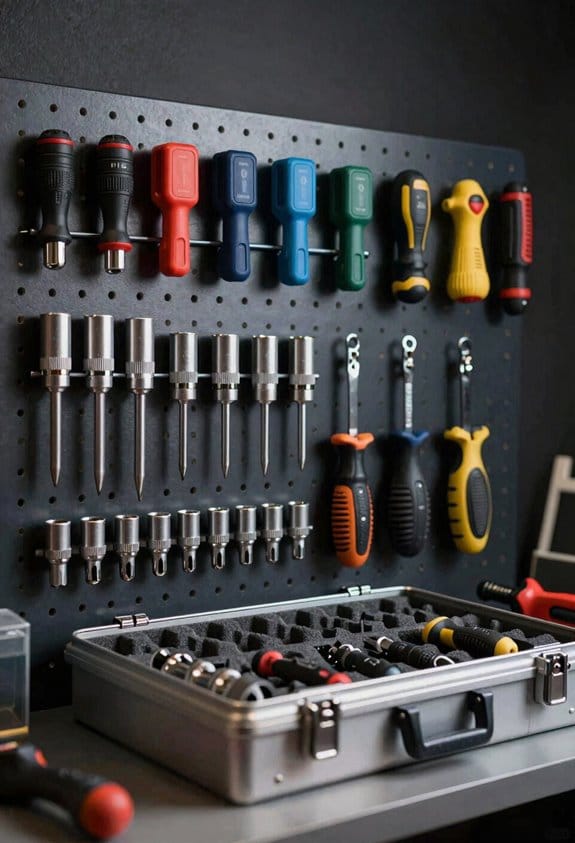
Once you’ve established your zones, you’ll notice that certain items require special attention because they pose safety risks or need specific storage conditions. Hazardous materials like gasoline, propane tanks, and cleaning chemicals shouldn’t stay in your garage because they’re flammable or toxic. Instead, store them in outdoor storage areas away from your home. Batteries should sit elevated on wood or cardboard to prevent corrosion. Paint requires a cool, dry location away from temperature extremes. Firewood belongs twenty feet from your house to prevent pest infestations. Seasonal gear—holiday decorations, sports equipment, winter supplies—fits well in locked cabinets or ceiling racks, keeping them organized and accessible without cluttering your main floor space.
Choose Materials That Handle Garage Humidity

Selecting the right storage materials makes all the difference in protecting your garage investments from moisture damage, which occurs year-round in most climates. I’d avoid cheap pressboard or untreated plywood because they sag and deteriorate when exposed to humidity and weight. Instead, consider steel cabinets, which resist rust and moisture when properly finished. Vinyl shelving offers another reliable option, as it won’t absorb water or warp like traditional wood. Laminate-coated surfaces also provide moisture protection while maintaining durability under heavy loads. When you invest in these quality materials and secure cabinets to wall studs, you’re preventing costly damage to tools, paints, and equipment. This approach guarantees your storage system remains functional and protective for years.
Frequently Asked Questions
How Do I Know the Weight Capacity of My Garage Shelves and Cabinets?
I’d check your shelves like a detective hunting clues—look for manufacturer labels, instruction manuals, or tags listing weight rating and load limits. Contact the maker if you can’t find them.
What’s the Best Way to Store Bicycles Without Taking up Floor Space?
I’d recommend vertical racks mounted on your garage walls or ceiling hoists that suspend bikes overhead. Both solutions free up valuable floor space, eliminate tripping hazards, and keep your vehicles safely parkable while maximizing your garage’s unused air space.
How Far Should Firewood Be Kept From My Garage and Home?
I’d keep your firewood 20 feet from your garage and home. A homeowner’s nearby stack caused ember risk during a fire, spreading flames quickly. That distance protects you from potential ignition hazards.
Should I Secure All My Garage Cabinets to Wall Studs?
You should secure heavy cabinets to wall studs for stability. I’d recommend using anchor points at multiple locations and locker locks to prevent tipping, especially when storing tools and materials that create substantial weight loads.
What Temperature and Humidity Levels Are Ideal for Storing Paint?
I’d store your paint in a cool, dry place maintaining 50-85°F with low humidity. These ideal climate conditions guarantee paint longevity and prevent separation, thickening, or spoilage that’d ruin your supply.


