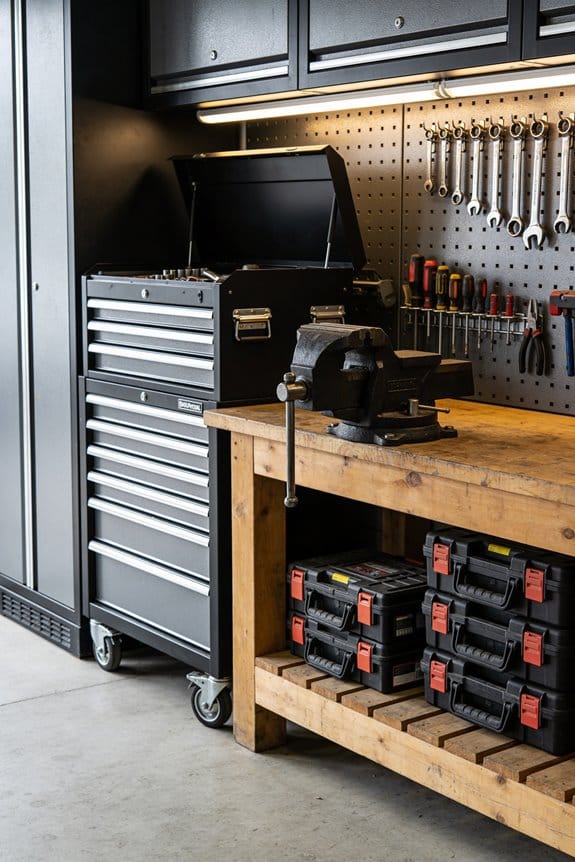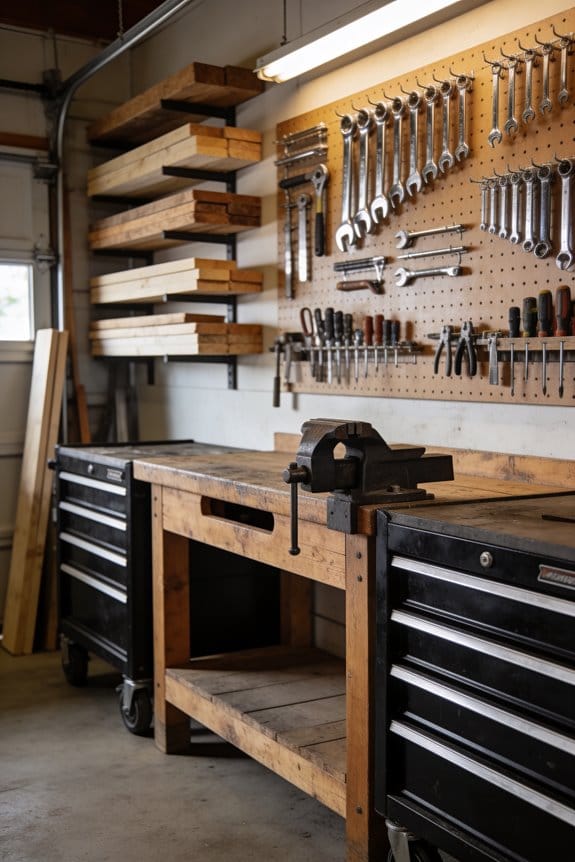

To keep your one-car garage open, store lumber vertically using wall-mounted racks and overhead space above the garage door. Sort materials by type and length on dedicated shelves, which reduces clutter and search time. Install stud-mounted brackets with 1×4 boards for tools and hardware, freeing floor space for your vehicle. Use a low-base roller carrier for plywood sheets so you can easily move large materials without taking up permanent space. These vertical storage methods maximize your garage’s capacity while maintaining clear access to park your car.
Key Takeaways
- Use vertical racks along garage walls to store lumber upright and maximize space without blocking floor areas or vehicle access.
- Install adjustable overhead racks above the garage door for long boards, utilizing wall space while keeping materials accessible and organized.
- Mount wall-based brackets and pegboards for tools and hardware to keep frequently used items within reach without consuming floor space.
- Store plywood on low-base roller carriers under workbenches to keep sheets mobile and accessible while minimizing permanent floor obstruction.
- Sort and label lumber by type in stacked piles using vertical compartments to reduce search time and maintain organized storage.
Sort Materials by Type to Streamline Access
When you’re working in a one-car garage with limited space, organizing your lumber by type and length makes a significant difference in how efficiently you can find and use materials. I stack boards in like-minded piles, keeping newer building lumber separate from reclaimed wood. Treated lumber goes on dedicated shelves away from non-treated stock, preventing cross-contamination and confusion during projects. I also label ends of each pile so I can quickly identify grades without moving everything around. By sorting grade lumber by thickness and purpose, you’ll spend less time searching and more time building. This system, developed over twenty years of garage workshops, streamlines your workflow considerably. When materials are organized logically, you’re working smarter, not harder.
Store Lumber Vertically to Save Floor Space
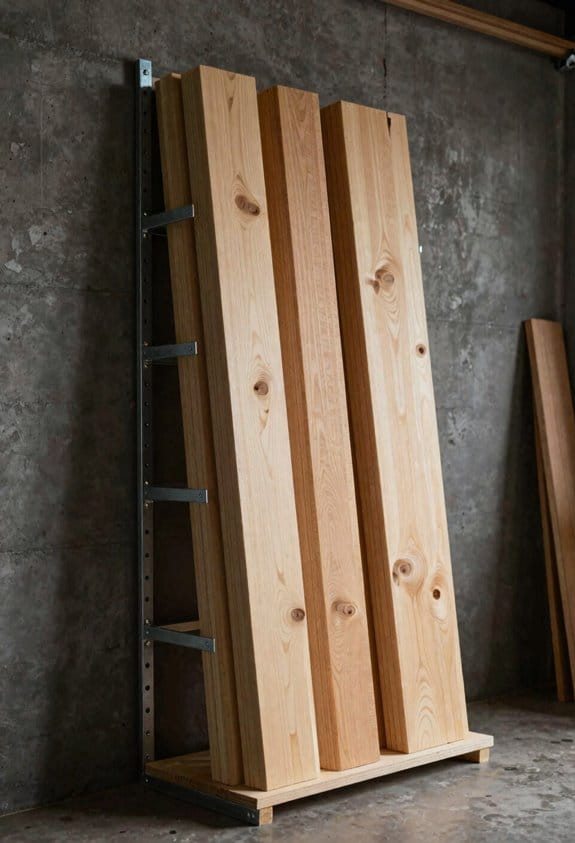
Maximizing your garage’s vertical space requires investing in purpose-built racks that store 8-foot lumber and plywood without consuming valuable floor area. I’ve found that vertical compartments designed for 2x4s, 4x8s, and dimensional lumber eliminate waste by organizing each board type separately. When you install stud mounted racks along your garage walls, you’re freeing up vital floor space that your car needs. I position narrower planks in front compartments and wider sheets toward the back for easier access. The key is installing a low bottom board made from a 2×4 measuring 36 inches, which prevents lumber from sliding forward. This single storage solution consolidates multiple racks, ultimately freeing up approximately 4 feet of usable wall space in your garage.
Hang Long Boards Above the Garage Door
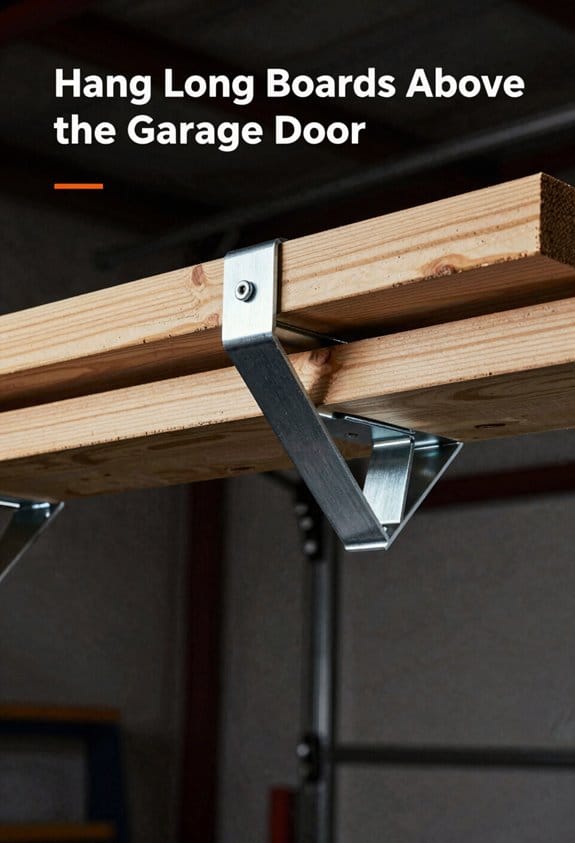
Taking advantage of the space above your garage door opens up a practical storage area for long boards and walnut that would otherwise consume floor space. I position adjustable upper racks to hold hardwood, plywood, and cut-offs strategically along the 11-foot wall section extending from the door to my cabinet. Long planks rest on the top shelf, while posts and molding fit below. Before installing, I verify door clearance sensors function properly to prevent interference with the opening mechanism. Overhead ventilation keeps the stored materials dry and prevents moisture buildup. This arrangement accommodates a cross-cut sled with potential for hook additions, maximizing vertical storage without blocking vehicle access or creating safety hazards in my one-car garage.
Mount Storage Brackets on Walls for Tools and Hardware

Wall-mounted brackets provide an efficient solution for organizing tools and hardware without consuming valuable floor space in your one-car garage. I recommend cutting scrap wood brackets at 7¾ inches long with 30-degree angles, then securing them across wall studs using three 2-inch screws per pair. This angled design prevents sagging under weight. For tool storage, I install 1×4 boards with 2-inch holes into these brackets, creating customizable organization. Peg hooks slip into the holes, holding frequently used items within arm’s reach. I also mount magnetic strips on vertical surfaces for storing metal fasteners, drill bits, and small metal tools. This approach maximizes wall space while keeping your garage functional and accessible for vehicle parking.
Keep Plywood Moving With a Low-Base Roller Carrier
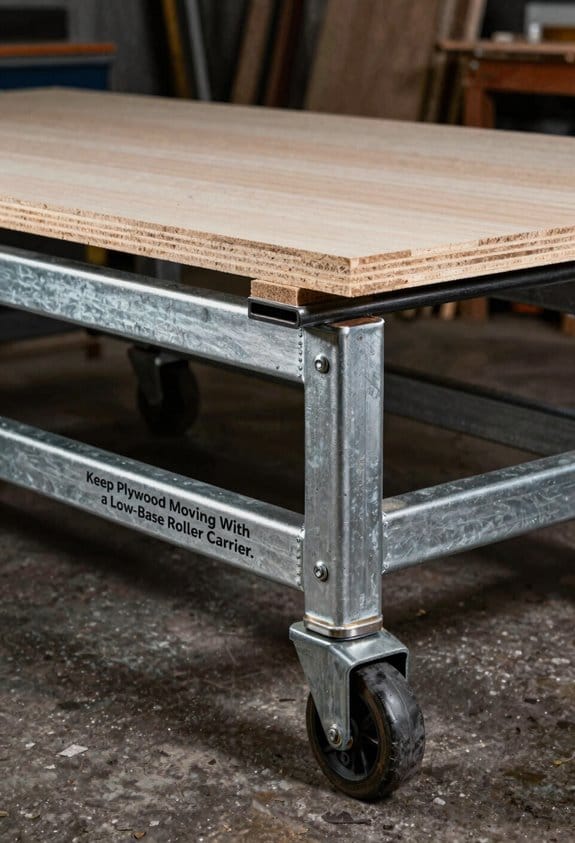
One of the biggest challenges I’ve faced when storing plywood in a compact garage is managing the weight and awkwardness of moving large sheets without damaging them or taking up permanent floor space. A low-base roller carrier solves this problem effectively. The carrier sits close to the floor, which reduces the strain of lifting heavy plywood sheets onto it. I built mine with an external frame design that fits through narrow spaces without obstruction. The rollers glide smoothly across concrete, making transport effortless. I store the carrier under my workbench when not in use. Before each use, I check roller maintenance by cleaning debris and ensuring smooth movement. The carrier’s weight limits accommodate standard plywood sheets comfortably, making it an essential tool for compact workshops.
Frequently Asked Questions
How Do I Prevent Moisture Damage to Lumber Stored in a Garage?
I’d make sure you’ve got proper air circulation around your lumber and use moisture barriers like plastic sheeting to protect it from humidity and moisture. Stack boards with spacers to allow airflow underneath and keep everything off the garage floor.
What’s the Best Way to Organize Lumber by Wood Species and Quality?
I’d separate premium hardwood from common lumber using grade labels on each stack. You’ll want hardwood sorting by species—walnut apart from oak—then stack newer building lumber below reclaimed wood for easy identification.
Should I Treat Wood Differently Based on Indoor Versus Outdoor Project Use?
I’d absolutely treat your wood differently. For outdoor projects, I’d choose sealed lumber to resist moisture. For indoor work, you’ll want kiln dried versus green wood—it’s more stable and won’t warp your finished pieces.
How Can I Safely Access Overhead Storage Without a Ladder Blocking Pathways?
Like Archimedes leveraging the world, I’d install a pulley system to lower materials safely. A retractable platform stores overhead lumber while keeping walkways clear—you’ll access everything without blocking pathways or leaving ladders scattered about.
What Dimensions Work Best for a Garage With Limited Ceiling Height?
I’d recommend keeping overhead racks shallow—around 18-24 inches—so you don’t bump your head. For low ceilings, prioritize wall-mounted shelves and vertical racks instead. They’ll maintain narrow aisles while maximizing your storage capacity efficiently.