
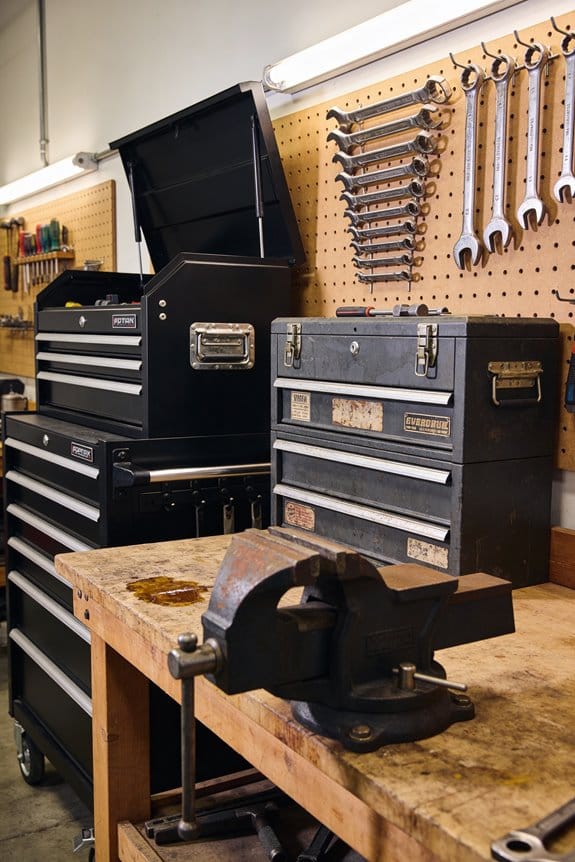

I organize my tools by the specific HVAC systems I service—oil, gas, and air conditioning—rather than grouping them by tool type like general contractors do. Each system uses incompatible materials and equipment that can’t mix without damaging components or contaminating performance. My oil bag contains specialized gauges and wrenches, while my gas bag holds manometers and allen wrenches. AC work demands separate refrigerant handling equipment. This system-based approach prevents costly mistakes, protects customer installations, and keeps my reputation solid. Understanding why this separation matters reveals how professionals maximize efficiency in the field.
Key Takeaways
- HVAC technicians organize tools by system type (oil, gas, AC) rather than general task categories used by contractors.
- Separate system-specific bags prevent contamination and incompatibility issues critical to HVAC performance that general contractors don’t encounter.
- HVAC tool organization prioritizes rapid single-tool retrieval for diagnostics, unlike contractors who typically grab full toolboxes for jobs.
- Specialized equipment like manometers, refrigerant handling tools, and purge wrenches require dedicated storage incomparable to general contractor needs.
- HVAC van storage emphasizes accessibility through custom shelving and door-mounted holders for immediate field access versus contractor tool organization.
Organize HVAC Tools by System, Not Tool Type
Unlike general contractors who organize their tools by categories like “wrenches,” “gauges,” or “screwdrivers,” HVAC technicians benefit from organizing tools based on the specific systems they service—oil systems, gas systems, and air conditioning condensers. I maintain system specific kits because each installation requires different equipment and expertise. My oil system bag contains oil pump gauges and specialized wrenches, while my gas system bag holds manometers and allen wrenches. My AC condenser bag stores everything for refrigerant work. This approach supports contamination prevention by keeping tools separate, which is critical since mixing refrigerants or oils compromises system performance. When I organize by system rather than tool type, I work faster and avoid costly mistakes that damage equipment or require expensive repairs.
Oil, Gas, and AC: Why Each System Needs Its Own Bag
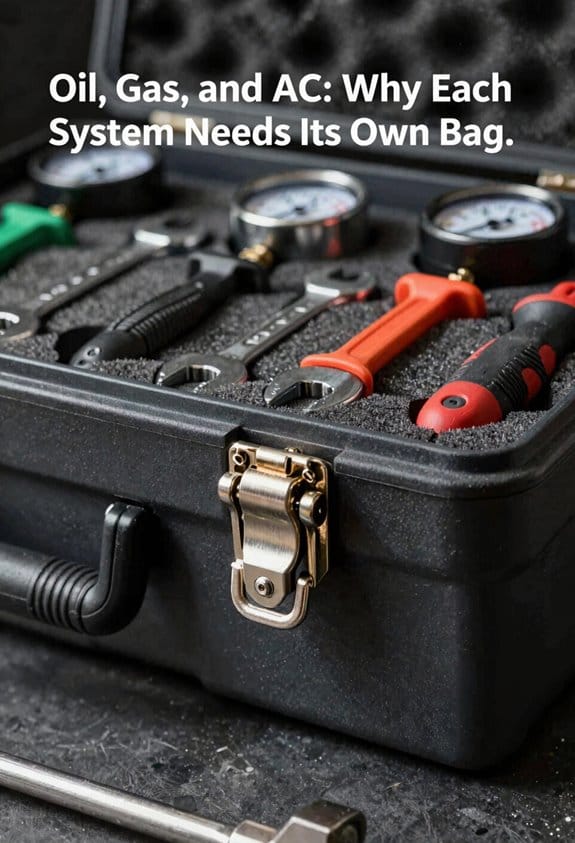
Because each HVAC system operates under different technical requirements and uses incompatible materials, I keep separate tool bags for oil systems, gas systems, and air conditioning work. My oil system bag contains specialized gauges, specific wrenches for purging air, and drill bits for boiler servicing. Gas systems require different tools entirely, including manometers and appropriate allen wrenches designed for that equipment. AC work demands refrigerant handling equipment and tools specific to condenser maintenance. Mixing these bags creates serious problems: wrong sealant compatibility can damage components, refrigerants can contaminate each other, and using inappropriate tools risks system failure. Maintaining dedicated bags guarantees I grab the right equipment quickly, and protects both the customer’s system and my professional reputation during service calls.
HVAC Tool Storage in Service Vans: Speed and Access
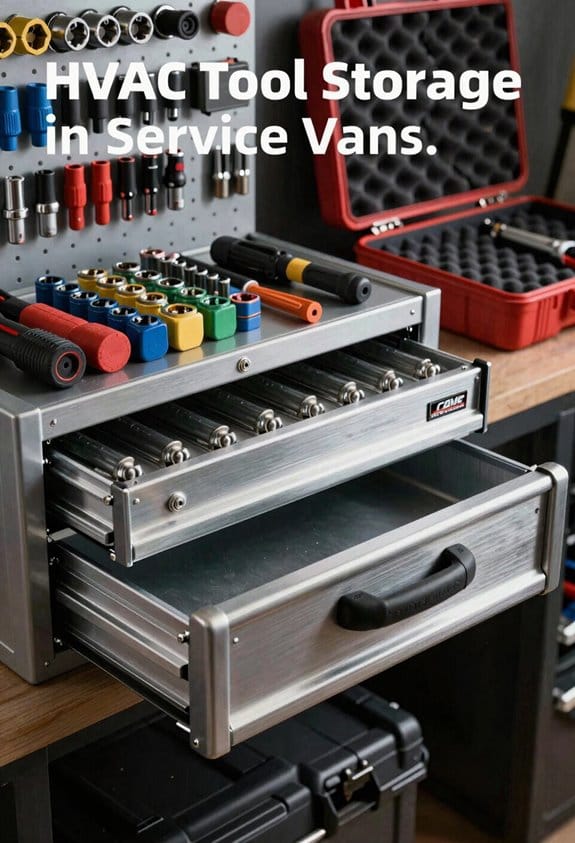
Once you’ve organized your tools into specialized bags by system type, the next challenge becomes storing them efficiently in your service van so you can access what you need without wasting time on the job site. Custom shelving units from companies like Adrian Steel and Ranger Design provide the backbone of professional van storage. Position steel cabinets at your van’s rear, allowing you to access drawers without stepping inside. Install tool holders and wrench racks directly onto shelving to eliminate searching through boxes. Consider your route planning when arranging bags—place frequently needed items at door accessibility points using magnetic strips or bungee cords. This strategic placement guarantees you grab exactly what you need quickly between appointments.
How to Grab Tools Fast During Service Calls?
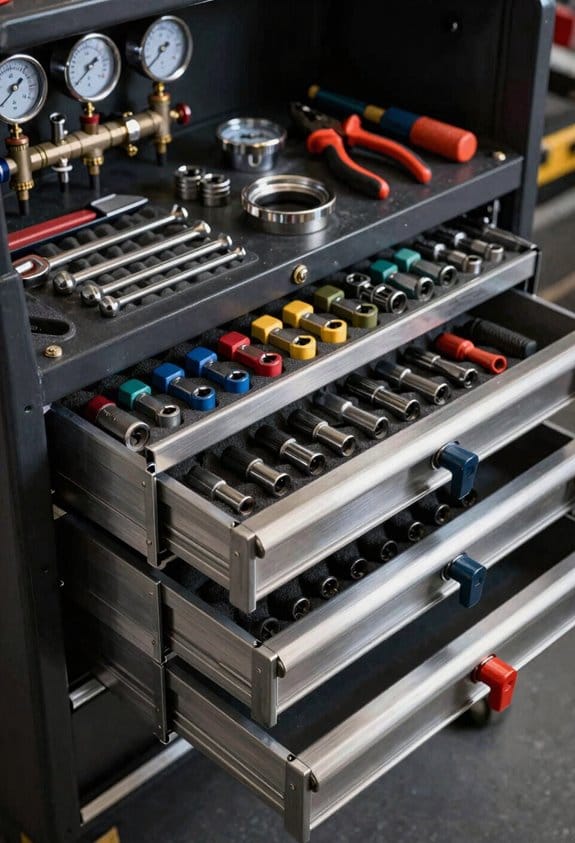
When you pull up to a job site, every minute counts, so you’ll want to set up your retrieval system before you even step out of the van. I keep my most-used items in door-mounted holders and on magnetic trays for immediate access. For a quick check of a system, I grab a single tool rather than hauling an entire bag inside. This approach saves time and reduces unnecessary trips to the vehicle. My troubleshooting bag stays lightweight, positioned where I can reach it without shuffling through compartments. I’ve learned that designating specific spots for each tool prevents wasted moments searching. When every diagnostic matters, having your frequently needed items organized at arm’s reach directly improves your job efficiency and customer satisfaction.
Backup Tools and Batteries: Why HVAC Redundancy Matters
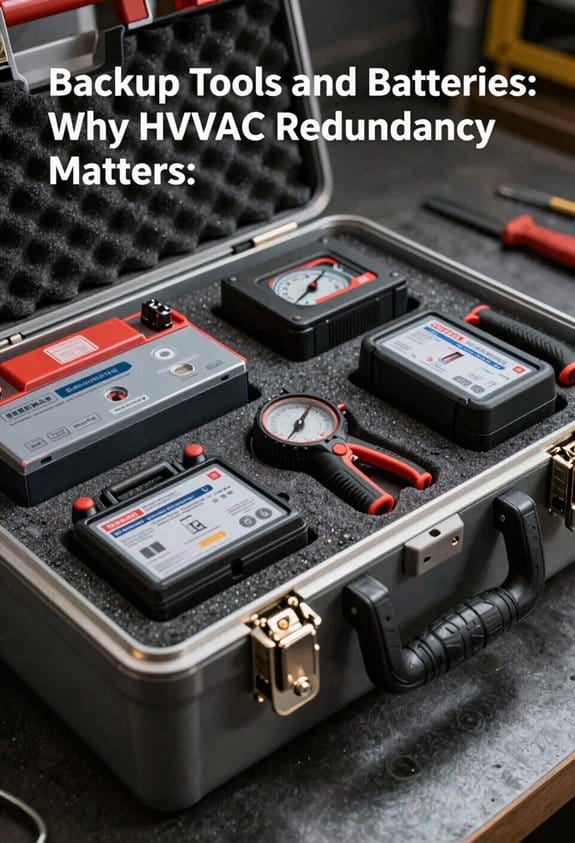
While grabbing tools quickly during service calls keeps you moving efficiently, you’ll find that having backup tools and batteries prevents those frustrating moments when equipment fails mid-job. I always carry spare batteries for my cordless drill, because a dead battery during a diagnostic can waste valuable time and delay service completion. Redundant chargers positioned in both my van and home workshop guarantee that at least one battery stays charged and ready. When your primary drill fails unexpectedly, having a backup means you’ll finish the job without interruption. This redundancy approach isn’t wasteful—it’s practical field management that reflects how professionals minimize downtime and maintain consistent productivity across multiple service calls throughout your day.
Frequently Asked Questions
What Is the Cost Difference Between Quality Tools and Budget Alternatives for HVAC Work?
I can’t give you exact figures, but quality tools cost more upfront while budget alternatives require frequent replacement. When you compare brands and tool lifespan, premium tools typically save money long-term despite higher initial investment.
How Do HVAC Technicians Identify and Prevent Cross-Contamination Between Different System Tool Bags?
Like ships sailing separate waters, I keep my color coded bags completely isolated—oil system, gas, and AC condensers each in dedicated kits. This separation prevents tool mixing and cross-contamination, ensuring accuracy and safety across every job I tackle.
Which Cargo Management Companies Offer the Best Custom Shelving for HVAC Service Vans?
I’d recommend Adrian Steel and Weather Guard as top choices for your van’s custom shelving. Both companies specialize in HVAC-specific storage solutions with durable steel cabinets, pull-out drawers, and tool racks that’ll keep everything organized and accessible.
How Frequently Should HVAC Technicians Replace Worn Tools and Maintain Their Tool Collections?
Like a well-tuned engine, your tool collection runs best with routine inspections. I’d recommend establishing a replacement schedule based on wear patterns—typically annually for high-use items, ensuring you’re always field-ready.
What Organizational Methods Work Best for Technicians Working Across Multiple Job Sites Daily?
I’ve found that zone packing—separating tools by system type into dedicated bags—paired with mobile checklists keeps me organized across job sites. This method guarantees I’m never searching for equipment and can quickly grab what I need for each service call.


