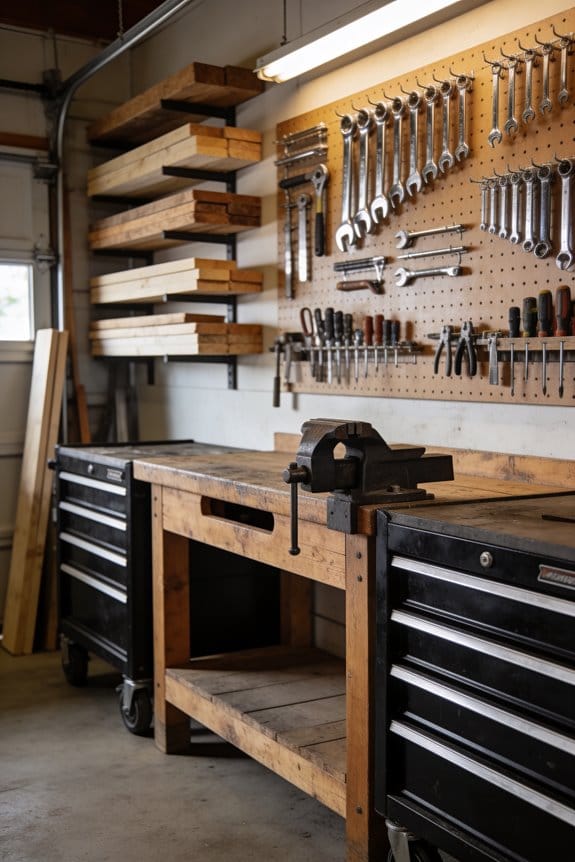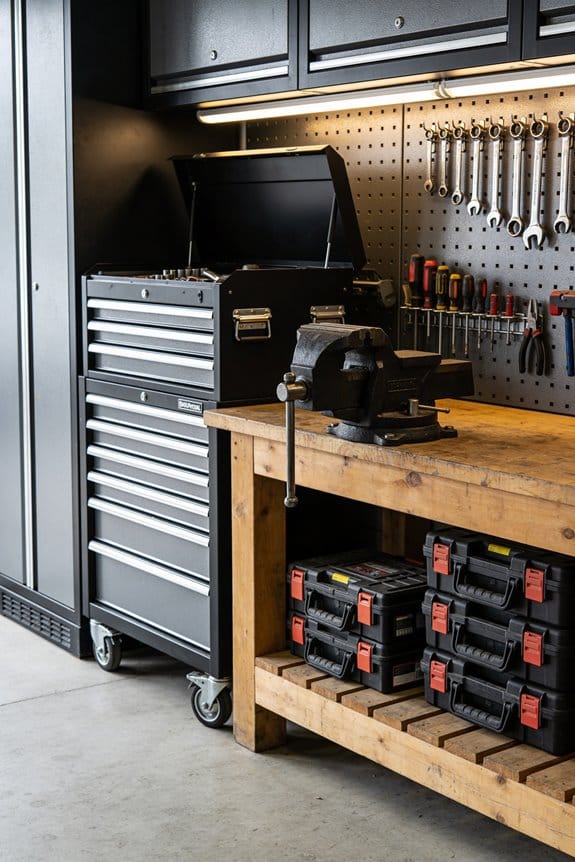

Garage workbenches use metal construction to handle heavy-duty tasks like auto repair and welding, resisting chemicals and dents effectively. Woodworking benches feature hardwood tops with dog holes and vises, designed for precision crafting and detailed projects. Metal conducts electricity and heat, making it risky for certain work, while wood naturally insulates and absorbs vibration for quieter, safer operation. Your choice depends on your primary projects and workshop needs. Understanding each bench’s customization options and maintenance requirements reveals which suits your situation best.
Key Takeaways
- Garage workbenches use metal construction for heavy-duty tasks, while woodworking benches feature hardwood tops with dog holes for precision crafting.
- Metal benches resist chemicals and corrosion but conduct electricity dangerously; wood benches insulate safely for detailed work.
- Woodworking benches customize easily by drilling holes; metal benches require welding, making them less adaptable for varied projects.
- Metal benches require minimal maintenance and handle heavy loads without sagging; wood benches need regular sealing and oiling.
- Wood surfaces dampen vibration and noise for precision assembly; metal surfaces vibrate and ring when struck, causing fatigue.
Three Workbench Types: Garage, Woodworking, and Hybrid
When you’re setting up a workshop, you’ll want to weigh your options among three main workbench categories, each designed for distinct purposes and work environments. Garage workbenches feature metal construction that withstands heavy-duty tasks like auto repair and welding. Woodworking benches use hardwood tops with specialized features like dog holes and vises for precision crafting. Hybrid benches combine a wood top mounted on a metal base, offering versatility for both types of work.
Your choice depends on your primary activities. Garage benches prioritize durability and storage solutions for tools and parts. Woodworking benches emphasize ergonomic height and customizable work-holding systems. Hybrid models provide flexibility when you’re tackling diverse projects, making them practical for home workshops where space and multiple purposes matter.
Metal vs. Wood: Why Material Choice Matters for Your Work
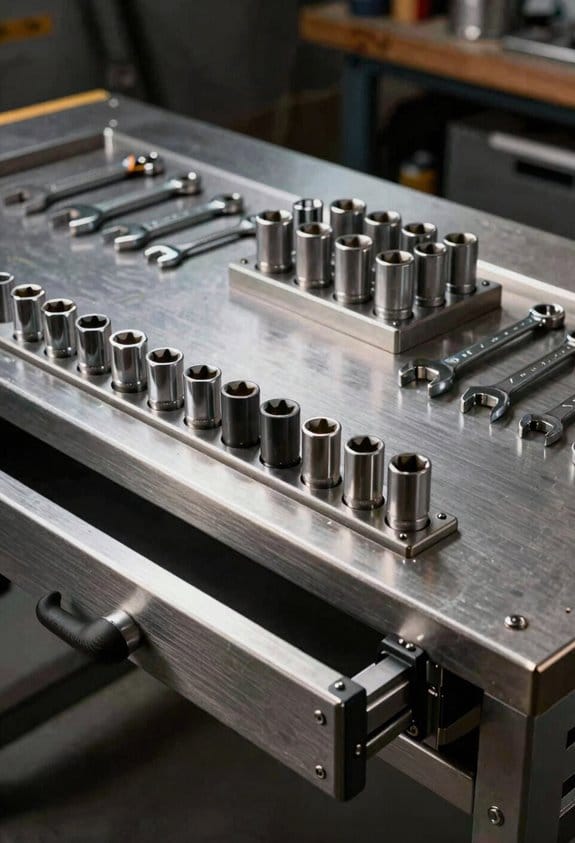
Because you’ll spend considerable time at your workbench, the material it’s made from directly affects how well your projects turn out and how long the bench lasts. Metal benches offer superior chemical resistance, meaning they won’t stain or corrode when you spill oil, solvents, or other harsh substances. However, metal’s thermal conductivity—its ability to transfer heat—makes it problematic during welding or electrical work since it conducts electricity and temperature. Wood benches, conversely, provide natural insulation and won’t transmit electrical current, making them safer for certain tasks. Wood absorbs impact better, protecting delicate tools, though it requires regular sealing to prevent moisture damage. Your choice depends on your primary work: metal for durability in industrial settings, wood for precision crafting and safety.
Vises, Dog Holes, and Customization Options Explained
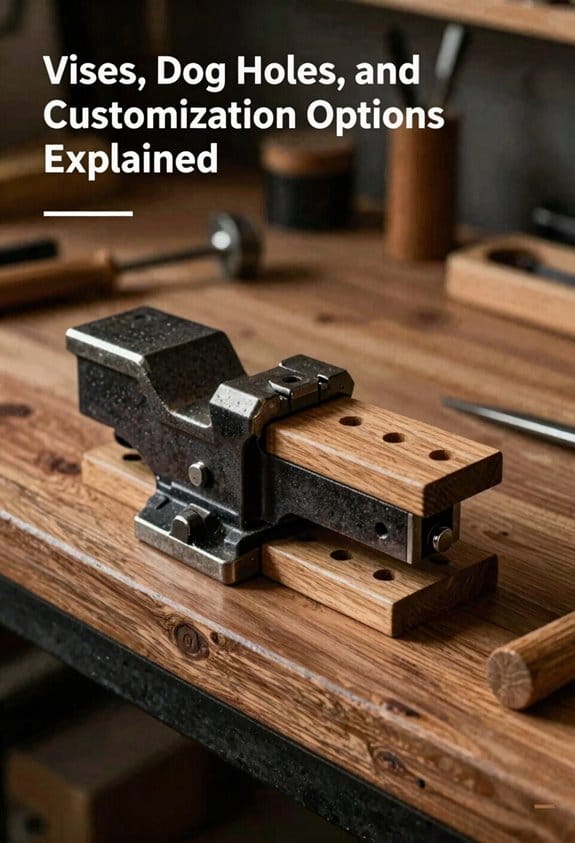
While a garage workbench comes ready to use right out of the box, a woodworking bench truly shines when you customize it with specialized holding devices that match your specific projects. Dog holes—evenly spaced openings across the bench top—work with wooden pegs to secure workpieces at various angles. Vise placement determines how effectively you’ll hold materials during cutting and shaping tasks. A front vise clamps work horizontally, while a tail vise accommodates longer boards. Bench customization on wooden surfaces involves simply drilling holes or screwing in accessories, requiring only basic tools. Metal garage benches, by contrast, need welding or bolting for modifications, making them less adaptable. This flexibility makes woodworking benches ideal for craftspeople who frequently switch between different projects and techniques.
Durability and Maintenance: Which Lasts Longer and Costs Less?
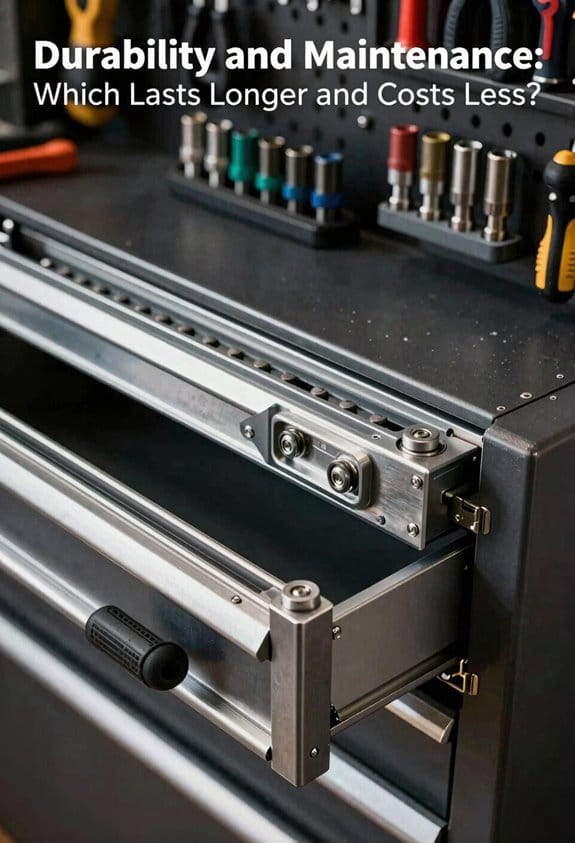
Consider your long-term investment when choosing between a garage workbench and a woodworking bench, as their durability and maintenance demands differ markedly. Metal garage benches resist dents, chemicals, and rust, requiring minimal long term upkeep and outlasting wooden alternatives considerably. Woodworking benches, conversely, demand regular sealing and oiling to prevent moisture damage and warping. However, metal’s environmental resilience comes at a higher upfront cost, while wood benches cost less initially but require ongoing maintenance. Heavy loads cause wooden surfaces to sag over time, whereas metal frames handle substantial weight without issue. If you’re budget-conscious short-term, wood makes sense; for lasting durability with reduced maintenance, metal provides better value over decades of use.
Vibration and Noise: Why Metal Rings and Wood Absorbs
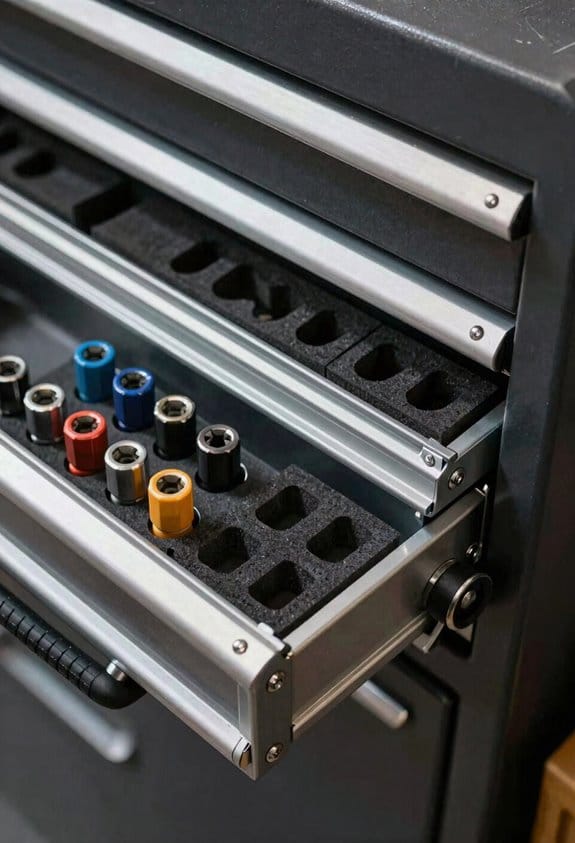
When you strike a metal workbench with a tool, the surface vibrates and produces a ringing sound that echoes through your garage, whereas a wooden bench absorbs that same impact with minimal noise. This difference stems from how each material handles vibration. Metal conducts frequency transmission efficiently, meaning vibrations travel through the steel frame and bounce back as audible sound. Wood, by contrast, provides acoustic dampening because its cellular structure naturally dissipates energy rather than reflecting it. The wood fibers compress and absorb vibrations internally, converting them into minimal noise. For precision work requiring focus, this acoustic advantage matters considerably. If you’re performing delicate assembly tasks, a wooden bench’s quieter operation reduces fatigue and allows better concentration than a metal alternative’s constant ringing resonance.
Auto Repair, Heavy Machinery, or Precision Crafts: Which Bench Fits Your Projects?
Understanding how your workbench handles vibration and noise tells you something important about its design priorities, but the real measure of a bench’s value comes down to what you’re actually building or fixing. If you’re doing auto repair or working with heavy machinery, you need a garage workbench‘s rigid metal construction. The solid frame won’t flex under impact, and the durable surface handles dropped tools, chemical spills, and extreme temperatures without damage. Conversely, if you’re pursuing precision crafts or detailed woodworking, a woodworking bench‘s forgiving surface protects delicate pieces. The customizable design lets you add specialized holding tools. Your project type determines which bench serves you best, making this distinction essential for workshop planning.
Hybrid Benches: Should You Choose a Wood-Top Metal Base?
If you’ve ever wished for the stability of metal combined with the workability of wood, a hybrid workbench might solve your dilemma. These benches feature a sturdy metal base with a wood top, offering versatility for multiple project types. The metal frame provides durability and handles heavy loads without sagging, while the wood surface absorbs vibration and protects delicate tools. You’ll find hybrid benches excellent for surface finishing tasks, where the wood top won’t scratch your work. Additionally, the wood construction offers better electrical safety compared to metal surfaces, reducing shock risks during electrical work. This combination lets you switch between heavy machinery projects and precision crafting without compromising on either capability or protection.
Frequently Asked Questions
Can I Safely Use a Metal Workbench for Electrical Work and Repairs?
I wouldn’t recommend it. Metal conducts electricity, creating serious shock hazards. Instead, I’d use a wooden workbench with grounding mats and insulated gloves for safer electrical repairs.
How Much Weight Can a Wooden Workbench Support Before Sagging Occurs?
I’d telegraph you this: most wooden workbenches support 300-1,000 pounds before noticeable deflection limits occur. Your load capacity depends on wood species, thickness, and support structure—hardwoods handle heavier loads than softwoods.
What’s the Best Way to Transport a Heavy Metal Workbench to My Garage?
I’d recommend using a dolly transport for moving your heavy metal workbench. If it’s too large, consider sectional disassembly—breaking it into manageable pieces you can reassemble once it’s in your garage.
How Often Should I Seal or Oil My Woodworking Bench to Prevent Damage?
I’d recommend seasonal oiling—typically twice yearly—to maintain your bench’s protection. This finish rejuvenation prevents moisture absorption, cracking, and stains. You’ll adjust frequency based on your workshop’s humidity levels and usage intensity.
Can I Convert a Garage Metal Bench Into a Woodworking Bench With Modifications?
I’ve seen folks transform rigid metal bases like old file cabinets into hybrid workstations. You can install a laminated top and add benchdog system holes, converting your garage bench into a functional woodworking station.