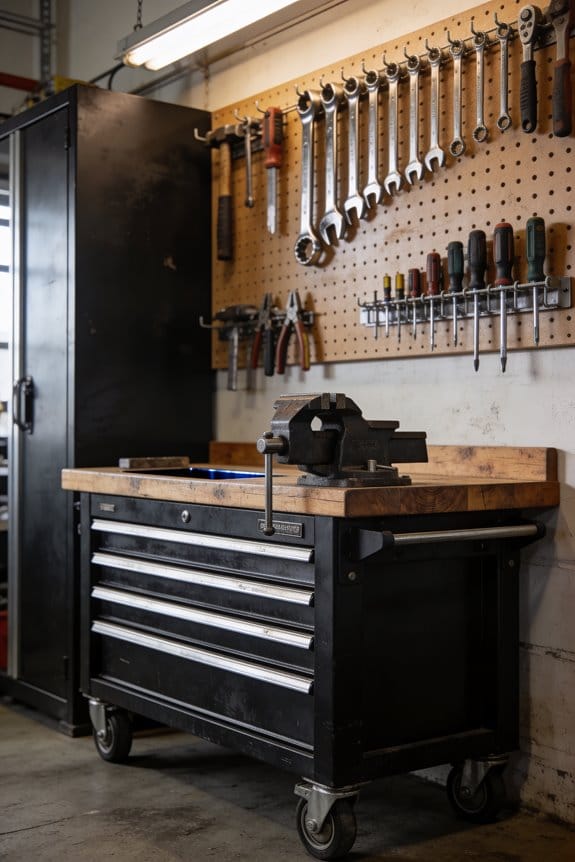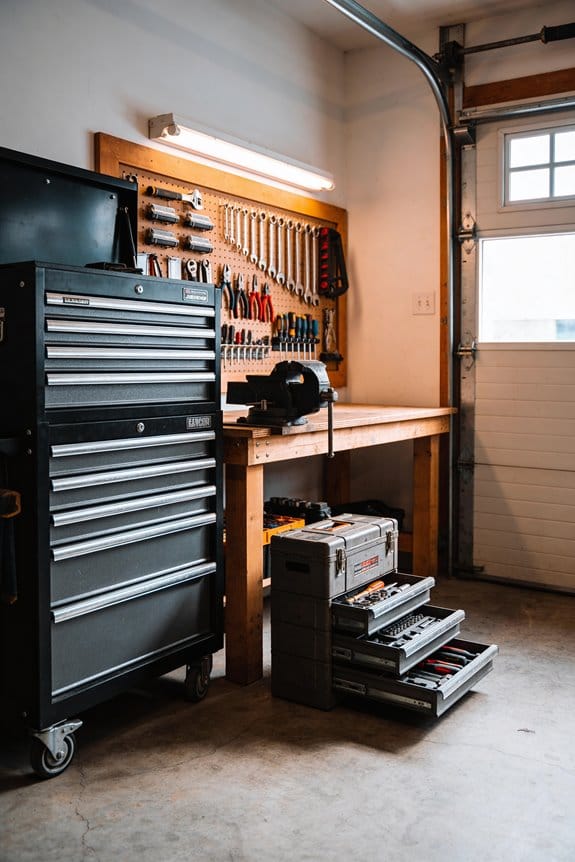

Your toolbox gets messy because tools lack designated homes and clear accountability. When you don’t assign specific spots for each item, tools drift to random locations, get borrowed and forgotten, or disappear entirely. This wastes up to 30 minutes per project searching instead of working. You’ll stop the cycle by establishing fixed storage locations, labeling ownership, and creating daily return-to-home rituals. Implementing visual systems like shadow boards makes missing items obvious instantly, while peer accountability keeps everyone compliant with organization standards long-term.
Key Takeaways
- Without designated storage locations, tools scatter randomly, making it impossible to maintain consistent organization.
- Unclear accountability means no one owns responsibility for returning tools, causing items to disappear or pile up.
- Shadow boards and visual systems immediately reveal missing tools and reinforce where everything belongs.
- Daily end-of-shift rituals and peer accountability create lasting habits that prevent disorder from accumulating.
- Mobile toolboxes positioned near workstations keep frequently-used tools accessible and reduce the urge to leave items scattered.
What Disorganized Tools Actually Cost Your Team
When tools aren’t organized, they don’t just disappear—they drain your team’s time and money in ways that directly impact your bottom line. Lost time searching for misplaced tools costs facilities hundreds of dollars yearly and wastes up to 30 minutes per project. These delays extend job hours and increase labor expenses markedly. Beyond lost time, replacement costs add up when tools go missing or get stolen. Disorganized workspaces also slow worker productivity, forcing employees to spend energy locating equipment instead of completing tasks. This inefficiency compounds across multiple projects, creating substantial financial losses. Poor organization frustrates workers, which lowers team morale and further reduces output. When you invest in proper tool storage systems, you’re investing directly in your team’s productivity and profitability.
Why Tools Go Missing
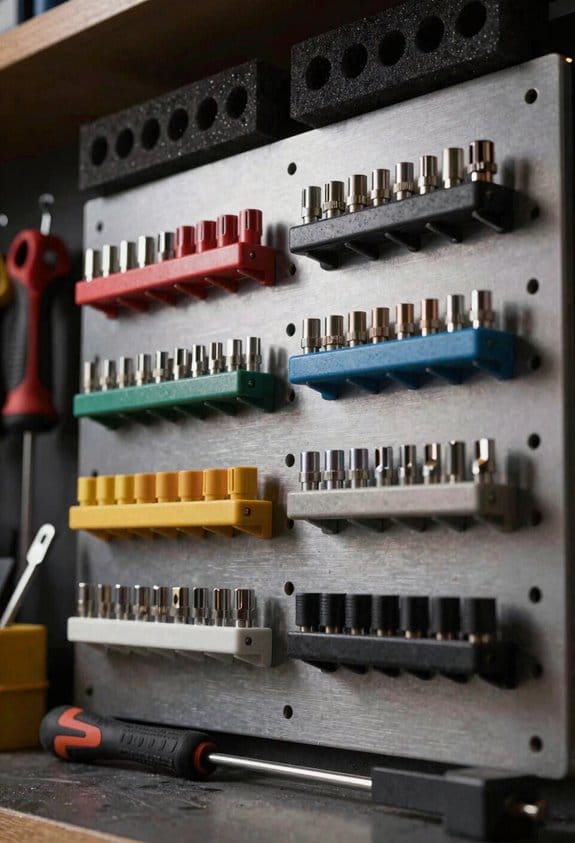
Because tools aren’t always stored in designated locations, they disappear from your facility more often than you’d expect. Unclear accountability creates confusion about who’s responsible for each tool, making it difficult to track items once they leave their proper places. Without inadequate tracking systems, you lose visibility into where tools actually are. Workers might borrow equipment for one project, then forget to return it. Tools get left at job sites or mixed with another crew’s supplies. When no one’s assigned ownership of specific items, responsibility falls through the cracks. Implementing assigned “home” locations for every tool and establishing clear tracking procedures markedly reduces loss. Mobile toolboxes kept near workstations also help maintain control over your inventory and prevent tools from wandering off unexpectedly.
Start Here: Assign Every Tool a Home
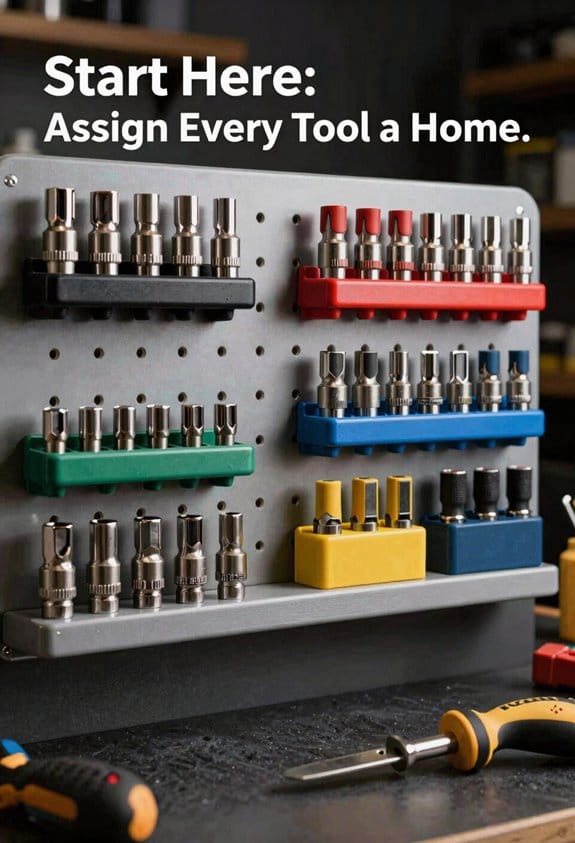
The most effective way to combat tool loss is establishing a designated storage location for every single item in your toolbox or facility. When you assign spots for specific tools, you’re creating a system where workers know exactly where items belong and where to find them. This practice builds consistent habits and improves recall. Adding ownership labels reinforces accountability, making it clear who’s responsible for each tool. Shadow boards work well for this purpose, outlining tool spaces visually so missing items become immediately obvious. When everyone understands that tools have assigned homes, you’ll notice fewer losses and less time wasted searching. This foundation transforms your workspace from chaotic to organized, reducing frustration and boosting productivity across your entire team.
Visual Organization Systems That Work
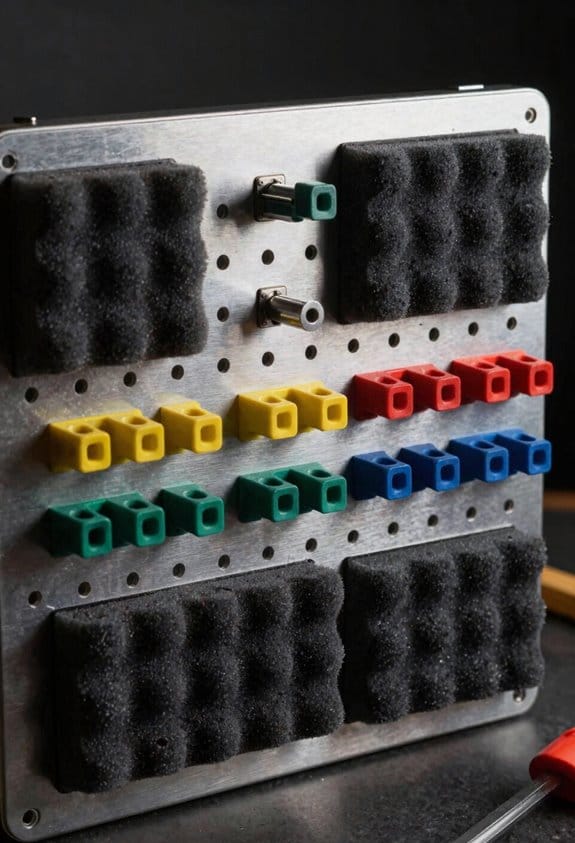
Once you’ve established designated homes for your tools, putting visual organization systems in place transforms that foundation into something you can actually see and maintain. Tool shadow boards are particularly effective, as they outline the exact space where each tool belongs, making missing items immediately obvious. You might also consider color coded layouts, which help you quickly identify tool categories at a glance. Tactile labels further reinforce organization by clearly marking storage compartments with tool names or images. These visual cues reduce search time markedly and build strong worker habits through repeated recognition. When tools have clear, visible designations, your team naturally returns them to their proper locations, preventing the gradual slide back into messiness that derails even the best intentions.
Mobile Toolboxes: Bring Tools to the Job
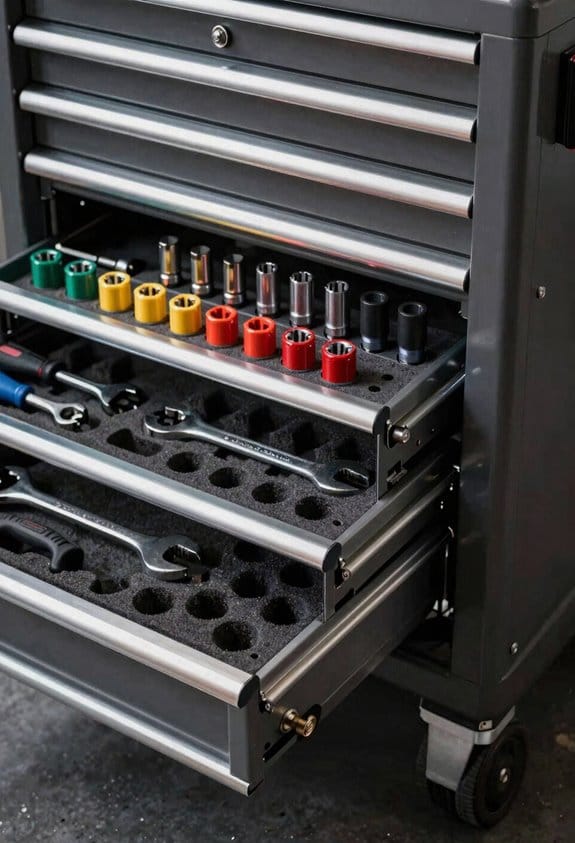
Even with excellent visual organization systems in place, your tools won’t help you if they’re sitting back at the shop while you’re working across town. Mobile workstations, like rolling cabinets and portable toolboxes, solve this problem by keeping your most-used tools nearby. When you position these mobile solutions at your workstation, you eliminate the time wasted walking back and forth searching for equipment. Rolling cabinets offer flexible storage that you can move between job sites, while portable toolboxes work well for smaller operations. By assigning each tool a designated spot in your mobile setup, you’ll build strong habits and reduce search time markedly. This approach, combined with visual organization, creates a system where productivity increases and frustration decreases.
Make Tool Organization a Team Habit
While mobile toolboxes and shadow boards create the foundation for an organized workspace, these systems only work when everyone on your team uses them consistently. You’ll need to establish daily rituals that reinforce proper tool storage, like checking that everything returns to its designated spot before leaving each shift. Peer accountability strengthens these habits markedly. When team members remind each other about organization standards, compliance improves naturally. Assign someone to conduct quick end-of-day tool audits, creating responsibility across the group. Regular toolbox talks can reinforce why organization matters for safety and efficiency. When workers understand that messy toolboxes cost the company money and waste their time searching, they’re more motivated to maintain order. Building these habits takes consistent effort, but the payoff—reduced frustration and improved productivity—makes it worthwhile.
Maintenance: Keeping Systems Organized Long-Term
Building a solid organization system is just the beginning; maintaining it requires consistent effort and regular check-ins to guarantee your toolbox stays functional over time. I recommend conducting scheduled audits monthly to verify tools remain in assigned locations and assess system effectiveness. During these audits, you’ll identify missing or damaged items and plan replacement tracking to prevent future losses. I’ve found that assigning someone responsibility for maintenance checks assures accountability and consistency. You should also adjust your system based on what you’ve learned from daily use—if certain tools frequently get misplaced, their storage locations may need adjustment. Regular maintenance transforms your organization system from a one-time project into a sustainable practice that keeps productivity high and frustration low.
Frequently Asked Questions
How Do Daily Toolbox Talks Improve Tool Organization and Reduce Workplace Incidents?
I’ve found that daily briefings reinforce toolbox etiquette among your team, creating accountability for proper storage. This consistency reduces incidents by 85% because you’re constantly addressing hazards and establishing organized workplace habits.
What’s the Expected Market Growth for Tool Storage Solutions Over the Next Decade?
I’m seeing the tool storage market’s projected growth reach $3.0 billion by 2034, expanding at 5.5% annually. The market outlook’s driven by demand drivers like workplace organization needs and productivity pressures you’re facing.
Which Materials Work Best for Different Types of Tool Storage Systems?
I’ll cut to the chase: steel’s your workhorse for durability, wood cabinets offer customization, plastic totes provide lightweight portability, and aluminum balances strength with mobility. You’ll pick based on your facility’s specific needs and budget constraints.
How Can Small Construction Firms With Limited Budgets Organize Tools Effectively?
I’d recommend starting with affordable portable cases and vertical racks—they’re budget-friendly yet highly effective. Assign each tool a dedicated spot, use shadow boards for visibility, and position storage near workstations to maximize your crew’s efficiency.
What Role Does Job Hazard Analysis Play in Identifying Organization Needs?
I’ve found that job analysis helps me map tasks and identify hazards through risk assessment. This guides where I’ll place tools and what control measures—like shadow boards or foam organizers—I’ll implement for safer, organized workflows.