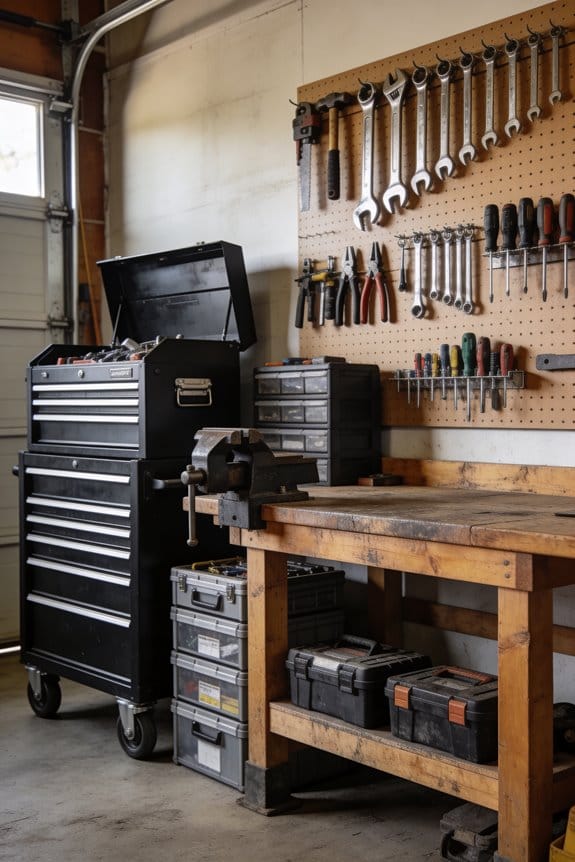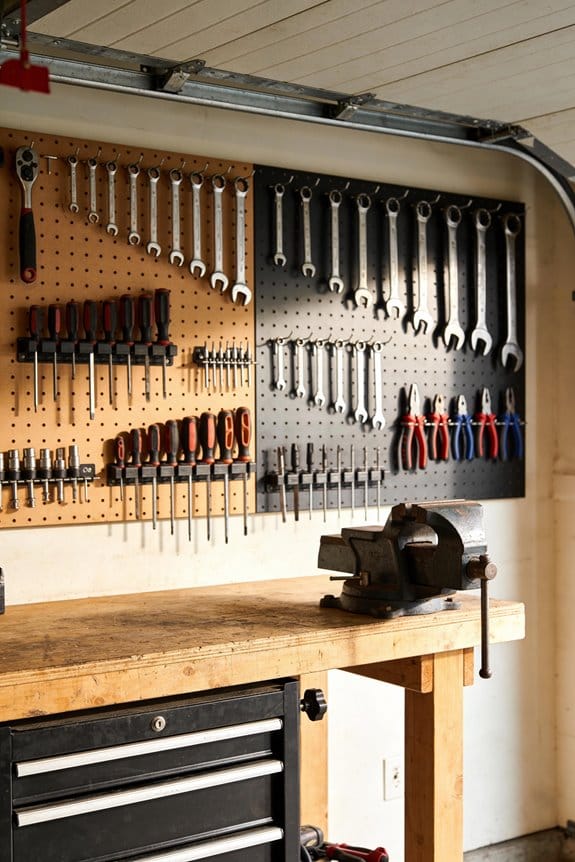

Metal pegboards support heavier tools without sagging, while plastic ones work best for lighter items. Metal offers superior strength but requires rust protection and careful installation, often needing multiple people to hang. Plastic is lightweight, moisture-proof, easier to install, and needs minimal maintenance—just occasional wiping. Though metal costs more upfront, plastic provides better long-term value since it won’t rust or warp. Your choice depends on your tool weight and budget, though each option has distinct advantages worth exploring further.
Key Takeaways
- Metal pegboards offer superior load capacity and durability for heavy tools, while plastic excels in moisture resistance and requires minimal maintenance.
- Plastic pegboards are substantially lighter and easier to install without furring strips, whereas metal panels require careful mounting and multiple people.
- Metal pegboards provide a sleek professional appearance but are susceptible to rust without protective coatings; plastic comes in wider color options.
- Metal pegboards cost significantly more upfront and require periodic maintenance and rust inspections, while plastic offers better long-term value affordably.
- Plastic pegboards resist warping, mold, and corrosion indefinitely, while metal can last decades only if properly protected from moisture exposure.
Metal vs. Plastic Pegboards: What’s the Difference?
When you’re organizing a garage or workshop, you’ll encounter two main pegboard options: metal and plastic. Metal pegboards, constructed from steel or galvanized sheet metal, offer superior strength and durability compared to their plastic counterparts. They’re several times stronger than wood or plastic alternatives, supporting heavier tools without damage. Plastic pegboards, made from molded co-polymer plastic, provide excellent moisture resistance and never rust, warp, or splinter. Regarding aesthetic appeal, metal pegboards present a sleek, professional appearance that cleans easily with a wet rag. Plastic pegboards come in a wider range of color options and sizes, allowing you to customize your space. While metal requires careful mounting due to weight, plastic installs readily without furring strips, making setup simpler for most users.
Which Pegboard Type Holds Heavier Loads?
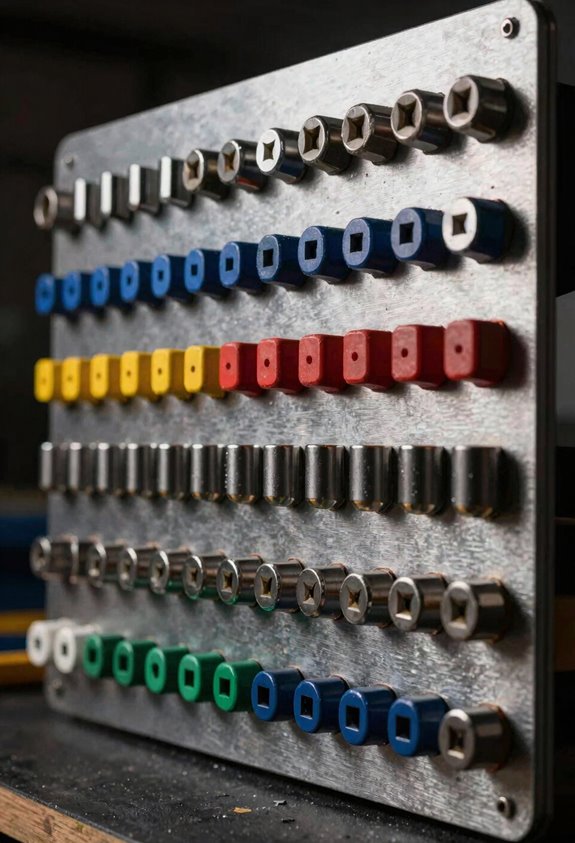
Metal pegboards markedly outperform plastic ones when it comes to supporting heavy loads, and this difference matters if you’re hanging tools regularly. Metal’s superior load capacity stems from its structural composition, which provides markedly greater strength than plastic materials. When you mount heavy drills, hammers, or power tools, metal pegboards maintain their integrity without warping or sagging under pressure.
The hook strength also differs considerably between materials. Metal hooks remain secure and stable, resisting bending even when bearing substantial weight. Plastic hooks, while adequate for lighter items, can flex or weaken over extended use with heavier equipment.
If your workshop requires hanging numerous heavy tools, I’d recommend choosing metal pegboards. Their durability justifies the higher investment, ensuring your equipment stays safely secured for years.
Weight and Portability: Why It Matters
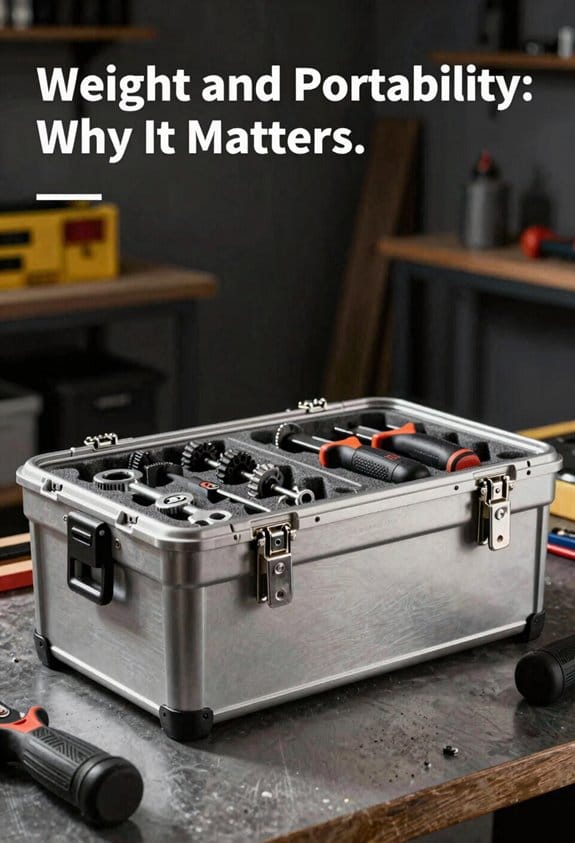
Despite their superior strength, plastic pegboards offer a significant advantage that metal ones can’t match: they’re substantially lighter and easier to move around. When you’re installing pegboards in your workspace, weight matters considerably. Metal pegboards, especially in large sheets, become cumbersome and difficult to handle alone, requiring multiple people for installation ease. Plastic pegboards, by contrast, provide lightweight transport capabilities that make them ideal for repositioning or reconfiguring your storage system without assistance. Their manageable weight means you’ll spend less time struggling with installation and more time organizing your tools. Since plastic comes ready to mount without furring strips, the lightweight nature combined with straightforward setup reduces installation complexity notably. This portability advantage makes plastic pegboards particularly practical for anyone who anticipates changing their workspace layout.
Will It Rust? Handling Moisture and Humidity
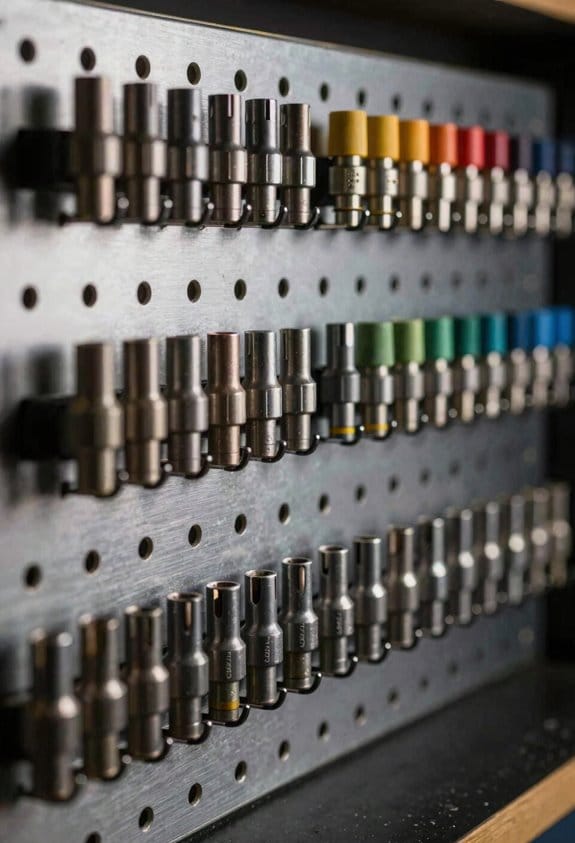
If you’re planning to install pegboards in a garage, basement, or bathroom where moisture levels run high, rust prevention becomes a critical factor in your material selection. Metal pegboards face significant humidity effects, as uncoated steel corrodes when exposed to moisture. However, galvanized or stainless steel options provide better protection against rust.
Plastic pegboards eliminate this concern entirely. They’re completely moisture-proof and won’t rust, mold, or warp regardless of environmental conditions. This makes plastic ideal for damp spaces where metal requires protective coatings or frequent maintenance.
If you choose metal, make certain it’s properly coated or sealed to withstand moisture exposure. Plastic requires no such precautions, offering straightforward rust prevention through its inherent material properties.
The Real Cost: Why Plastic Offers Better Value
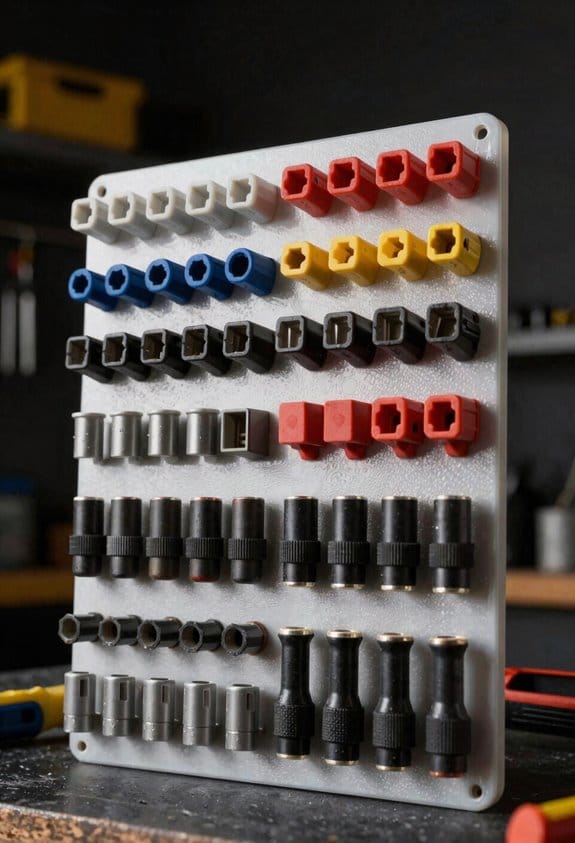
When you’re weighing your pegboard options, the price difference between materials becomes one of the most practical considerations in your decision. Metal pegboards cost considerably more upfront, while plastic versions are cheaper to produce and purchase. However, a budget analysis reveals that plastic offers superior long-term value. Lifecycle costing shows that plastic pegboards require minimal maintenance, won’t rust, and resist moisture damage that might require costly repairs. Metal panels need protective coatings and careful installation to prevent wall damage from their weight. Plastic comes ready to mount without additional expenses. When you factor in durability, ease of installation, and maintenance requirements over time, plastic pegboards provide the most economical choice for homeowners seeking reliable storage solutions without breaking their budget.
Maintenance and Expected Lifespan
Understanding how well your pegboard holds up over time depends largely on the material you choose and how you care for it. Metal pegboards require a consistent inspection schedule to catch rust before it spreads, especially in humid environments. You’ll need preventive maintenance like applying protective coatings periodically. Plastic pegboards demand minimal upkeep; basic cleaning procedures with a damp cloth suffice for long term durability. Neither material peels or breaks easily with proper care. Metal pegboards can last decades if protected from moisture, while plastic maintains its integrity indefinitely without rusting or warping. Your maintenance commitment directly affects how long either option serves your storage needs effectively.
Frequently Asked Questions
Can Metal Pegboard Panels Be Cut to Custom Sizes for Specific Wall Dimensions?
Yes, like clay in a sculptor’s hands, metal pegboards can be customized. I’d recommend laser cutting for precision or edge trimming for simpler adjustments, ensuring you’ll fit your wall dimensions perfectly without waste.
Are Plastic Pegboards Suitable for Garage Storage of Automotive Tools and Equipment?
I’d recommend plastic pegboards for your garage storage. They’re excellent for automotive tools since they’re completely moisture-proof and withstand chemical spills. Their garage compatibility is unmatched—they’ll never rust or warp despite humidity and temperature fluctuations.
How Do Temperature Fluctuations Affect the Structural Integrity of Plastic Pegboards Over Time?
Like a rubber band stretched too many times, plastic pegboards weaken through thermal cycling. I’ve found brittleness progression accelerates with temperature fluctuations, gradually compromising their structural integrity and hook-holding capacity over seasons.
What Wall Anchors or Mounting Hardware Work Best for Metal Pegboard Installation?
I’d recommend toggle bolts and metal anchors for your metal pegboard installation. They’ll secure the heavy panel firmly to drywall without wall damage. I find toggle bolts especially reliable for supporting substantial tool loads effectively.
Do Plastic Pegboards Yellow or Discolor After Prolonged Exposure to Sunlight?
Like fabric bleached by relentless rays, plastic pegboards can experience UV yellowing and color fading with prolonged sunlight exposure. I’d recommend using UV-resistant coatings or positioning them away from direct windows to preserve their appearance.