
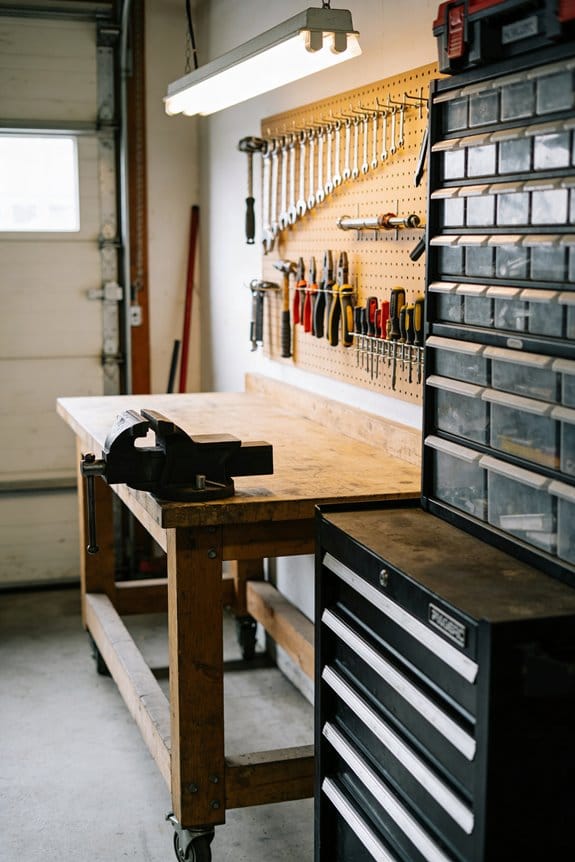

I start by inspecting each tool for damage, then sharpen blades and sand wooden handles before cleaning. Next, I remove dirt and sawdust with a brush or compressed air, then wash metal parts with a brass-bristle brush and handles with mild soap and water. After rinsing thoroughly, I dry everything completely with clean cloths, paying close attention to crevices. Finally, I apply rust-preventive oil to metal surfaces and lubricate moving parts. These preparation steps guarantee your tools stay protected during storage, though proper container selection and moisture control methods matter greatly too.
Key Takeaways
- Remove dirt, sawdust, and debris using a stiff brush, compressed air, or hose spray for stubborn soil.
- Clean metal parts with a brass-bristle brush; wash handles with mild soap, water, and a nylon brush.
- Dry tools completely with clean cloths, paying special attention to crevices where water collects and accumulates.
- Apply thin, even layers of machine oil or rust-preventive spray to all metal surfaces after drying.
- Lubricate hinges, joints, and pivot points thoroughly, then wipe away excess oil to prevent greasiness buildup.
Start With a Full Inspection of Each Tool
Before you store your tools away, you’ll want to examine each one carefully to identify any damage or wear that might worsen during storage. I recommend conducting functionality testing on moving parts like hinges and mechanisms to make certain they operate smoothly. Check wooden handles for cracks or splinters, and inspect metal surfaces for existing rust spots or corrosion. Visual documentation through photos can help you track tool conditions over time. Look for bent blades, loose rivets, or worn edges that need attention before storage. Replace any broken components now rather than discovering problems later. This inspection phase prevents small issues from becoming major problems during the storage period, ultimately extending your tools’ lifespan and maintaining their effectiveness for future use.
Sharpen Blades and Sand Wooden Handles Before Cleaning

After you’ve identified any problem areas during your inspection, I’d recommend addressing blade sharpness and wooden handle condition as your next step, since you’ll want to complete these tasks before the cleaning process begins. Sharp blades work more efficiently and safely, so edge preparation is essential for peak tool performance. For wooden handles, I suggest sanding them with 120-grit or 150-grit sandpaper to smooth rough spots and prepare the surface. After sanding, handle refinishing involves rubbing linseed oil into the wood, which protects it from moisture and extends its lifespan. These preparatory steps guarantee your tools are in peak condition before you proceed with washing and drying, ultimately improving their durability and functionality during storage.
Remove Dirt, Sawdust, and Surface Debris for Storage

With your blades sharpened and wooden handles refined, it’s time to remove the accumulated dirt, sawdust, and surface debris that can trap moisture and compromise your tools during storage. I recommend starting with a stiff brush or compressed air to dislodge loose particles from crevices and surfaces. For garden tools, a quick spray from the hose effectively removes stubborn soil. Use a brass-bristle brush to work away embedded dirt from metal parts, ensuring thorough coverage. Don’t overlook handles and tool joints where debris collects. This brush storage preparation prevents moisture from becoming trapped beneath layers of grime. An air blow out using compressed air reaches tight spaces your brush might miss, ensuring your tools are completely clean before protection applications and long-term storage.
Clean Metal Parts Without Causing Rust

While your metal parts are now free from loose debris, they remain vulnerable to rust if moisture isn’t removed promptly and thoroughly. I recommend using a brass-bristle brush to work soil off metal surfaces, which helps prevent corrosion without damaging the material. After brushing, wipe everything with a clean, dry cloth to eliminate all moisture.
To maintain long-term protection, apply thin layers of machine oil or rust-preventive spray to your metal parts. This creates protective coatings that shield against oxidation. For specialized tools, coat blades with 3-IN-ONE Multi-Purpose Oil, which enhances electrochemical passivation—a natural process where oil prevents oxygen from reaching the metal surface. Make certain complete drying before applying any protective layer for maximum effectiveness.
Wash Handles and Remove Ground-In Soil Before Storage

Tool handles accumulate ground-in soil, sawdust, and debris that can trap moisture and compromise the wood or material underneath, so cleaning them thoroughly before storage is essential for maintaining your tools’ longevity. I recommend using a stiff nylon-bristle brush with mild soap and water to scrub away stubborn grime from wooden or plastic handles. For particularly dirty handles, a soft bristled brush works well on delicate surfaces without causing damage. After scrubbing, rinse thoroughly under running water to remove all soap residue. A vinegar rinse can help eliminate any remaining buildup. Dry handles completely with a clean cloth to prevent moisture absorption. Once dry, sand wooden handles with 120-grit or 150-grit sandpaper, then apply linseed oil for protection and conditioning before storage.
Dry Tools Completely to Prevent Moisture Buildup
After you’ve thoroughly cleaned your tools, drying them completely becomes the most critical step in preventing rust and moisture damage during storage. I recommend using clean, dry cloths to wipe down all surfaces, paying special attention to crevices where water collects. For wooden handles, make sure they dry thoroughly after rinsing to prevent swelling and rot. If you live in a humid climate like Florida, consider using humidity monitors in your storage area to track moisture levels. Drying racks work well for organizing tools while air circulates around them. Store your dried tools off damp floors in your garage or shed. This simple practice protects your investment and keeps your tools functioning properly for years to come.
Oil Metal Surfaces and Lubricate Moving Parts
Once your tools are completely dry, applying a protective oil coating to metal surfaces becomes your next essential step in preventing rust and extending tool life. I recommend using 3-IN-ONE Multi-Purpose Oil or a specialized rust-preventive spray for this oil application process. Apply a thin, even layer across all metal parts, avoiding excessive buildup that attracts dust and debris.
For moving lubrication, I focus on hinges, joints, and pivot points where friction occurs. Light lubrication here guarantees smooth operation and prevents corrosion in these critical areas. After applying oil, I wipe away excess with a clean cloth to maintain a protective coating without greasiness. This straightforward maintenance routine markedly reduces rust formation and keeps your tools functioning properly throughout storage.
Select Storage Containers by Climate and Humidity
Because moisture and humidity levels vary considerably depending on where you live, I need to take into account my climate zone when choosing storage containers for my tools. In humid regions like Florida, I’ll invest in climate specific bins with tight-sealing lids that prevent moisture infiltration. For drier climates, standard plastic containers work adequately, though I should still add silica gel packs inside for extra protection.
I’m also considering humidity resistant shelving for my storage area, which keeps tools elevated off damp floors and promotes air circulation. Metal cabinets with drawers work well in most climates, but I’ll make certain they’re positioned away from exterior walls where condensation forms. By matching my storage solution to my specific climate conditions, I’m protecting my tools from rust and deterioration year-round.
Use Silica Gel and Sealed Bags for Moisture Protection
To keep my tools protected from rust and degradation, I can take advantage of silica gel packs, which work by absorbing moisture from the air inside storage containers and sealed bags. I’ll place silica gel strategically throughout my storage setup, especially near metal tools and in tight spaces where moisture tends to collect. For sensitive items, I seal tools directly in plastic bags with silica gel packets to create moisture-free environments. Proper bag labeling helps me track which containers hold which tools and when I last replaced the silica gel. I’ll check and refresh these packs periodically, particularly in humid climates like Florida. This layered approach prevents condensation buildup and keeps my tools in pristine condition during storage periods.
Store Tools Off the Floor and Away From Humidity
Beyond using silica gel and sealed bags, I need to take into account where I actually place my tools in storage, since floor-level placement exposes them to moisture that naturally collects there. I’ve found that elevated shelving keeps my tools safely away from damp basement floors and garage surfaces. Installing shelves at least several inches high creates a protective barrier against humidity and water accumulation.
I also monitor my storage environment using climate monitors, which help me track temperature and moisture levels throughout the year. In humid areas like Florida, this becomes especially important. By combining elevated storage with environmental awareness, I markedly reduce rust risk and extend tool life substantially.
Frequently Asked Questions
How Often Should I Apply Oil to Tools During Storage to Maintain Rust Protection?
I’d recommend you apply oil with a monthly application during storage, but seasonal recoat works best for most folks. A light coating every few months keeps your tools rust-free and ready to use whenever you need them.
Can I Store Different Types of Tools Together in the Same Container Safely?
Sure, I’d love to watch your quality tools destroy each other! Seriously though, I’d recommend tool segregation by material compatibility—keep metal, wood, and power tools separate to prevent rust transfer, damage, and corrosion issues.
What’s the Best Way to Remove Rust From Tools That Already Have Surface Rust?
I’d recommend using naval jelly or electrolytic cleaning for surface rust removal. Naval jelly works quickly on light rust, while electrolytic cleaning handles stubborn corrosion effectively. After treating, I’ll dry thoroughly and apply oil to prevent future rust.
How Long Do Silica Gel Packs Remain Effective Before Needing Replacement?
I’ve found that silica gel’s lifespan depends on environmental conditions—typically they’re effective for months until moisture saturation occurs. You’ll notice they’ve lost their potency when they feel damp, requiring replacement to protect your stored tools.
Should I Store Power Tools Differently Than Hand Tools for Long-Term Preservation?
Yes, I’d store power tools differently. They’ll need battery care—remove and store batteries separately in cool, dry places. Hand tools don’t require this. Both need insulation needs met through proper moisture control and protective coatings for longevity.


