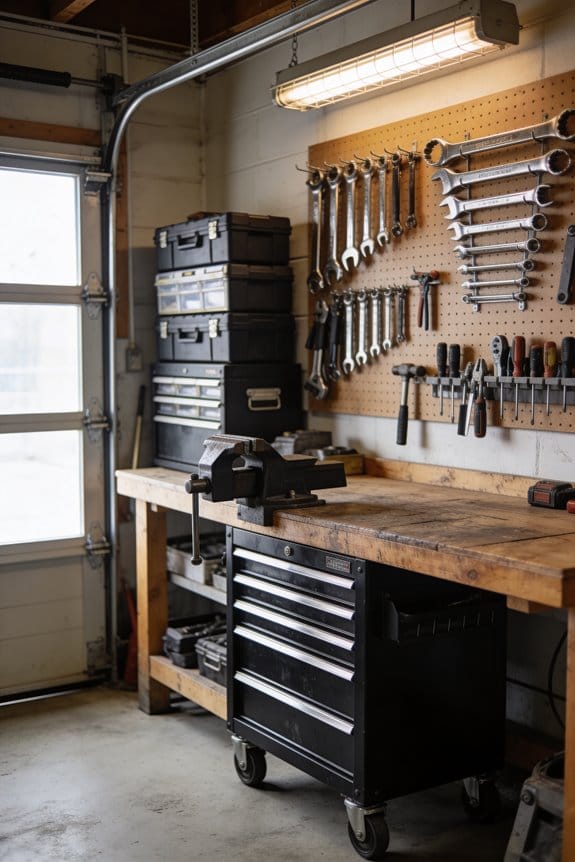
I’d recommend epoxy-coated concrete if your cabinet rolls frequently, since it resists stains and lets wheels move smoothly without sinking. For stationary setups, rubber mats offer comfort and sound dampening. Plastic interlocking tiles work well if you need flexibility to expand later. Your choice depends on three factors: how heavy your cabinet is, whether it moves daily or stays put, and your budget. The right foundation prevents wheel damage, keeps your cabinet stable, and protects your investment long-term. Understanding your specific workflow will help you decide which option fits your shop best.
Key Takeaways
- Epoxy-coated concrete offers superior durability, stain resistance, and smooth surfaces ideal for frequent rolling movement.
- Plastic interlocking tiles provide quick installation, modular expansion, and stable support for heavy machinery without compression.
- Rubber mats deliver sound insulation and easy cleaning but work better for stationary cabinets than frequent rolling.
- Surface preparation—cleaning, leveling, and filling cracks—protects cabinet wheels and ensures smooth, safe operation.
- Match flooring choice to workflow: epoxy for frequent rolling; mats for stationary workstations to balance cost and performance.
Why Rolling Cabinet Flooring Requires the Right Foundation
When you’re setting up a workspace with rolling tool cabinets, the flooring beneath them matters more than you might think. The right foundation guarantees proper load distribution, preventing damage to both your floor and cabinet wheels. Without adequate support, heavy cabinets can sink into soft surfaces or tip unexpectedly during movement. Surface traction also plays a pivotal role—slippery floors make cabinets difficult to maneuver safely, while surfaces with too much grip can strain the wheels. Additionally, the flooring must resist stains from tools and liquids that inevitably spill in workshops. Choosing appropriate flooring protects your investment, maintains workspace safety, and enables smooth operation of your rolling storage solutions.
Three Decision Factors: Weight Capacity, Traffic, and Budget

Because selecting flooring for rolling tool cabinets involves multiple competing priorities, you’ll need to evaluate three key factors that directly influence which option works best for your workspace.
First, consider weight capacity and load distribution. Heavy cabinets require flooring that won’t deflect under pressure, so epoxy-coated concrete handles substantial loads effectively. Second, assess your traffic patterns. High-traffic areas with frequent rolling movement demand durable surfaces, while stationary workspaces tolerate softer materials like foam mats. Third, examine your budget constraints, which range from $20 per square foot for basic antifatigue mats to more expensive modular systems.
Your wheel material also matters considerably. Swivel wheels glide smoothly on hard surfaces, whereas larger wheels distribute weight better across softer foundations. Balancing these three factors guarantees you’ll choose flooring that supports your specific workshop needs.
Epoxy Flooring for Heavy Rolling Cabinets

If you’re housing heavy rolling tool cabinets in your workshop, epoxy-coated concrete stands out as a superior flooring choice that combines durability with practicality. I’ve found that epoxy creates a protective barrier resistant to stains from adhesives and tools, which keeps your workspace looking professional. The epoxy sheen also facilitates smooth movement for carts with swivel wheels, reducing the effort needed to reposition heavy equipment. Before installation, you’ll need to account for curing time, typically seven to fourteen days depending on environmental conditions and product specifications. During this period, the surface hardens into a resilient layer capable of supporting 400-pound load capacities without deflection, making it ideal for tiered storage cabinets and multi-drawer systems.
Plastic Interlocking Tiles: Fast Setup for Growing Workshops

While epoxy-coated concrete offers durability and excellent support for heavy rolling cabinets, it requires patience during the curing process and professional installation. Plastic interlocking tiles present a compelling alternative for workshops that prioritize quick installation and modular expansion.
These flexi-tiles install markedly faster than foam equivalents, allowing you to establish a functional workspace without extended downtime. Unlike adhesive-dependent options like Gladiator tiles on slick surfaces, many plastic tiles simply connect together, reducing preparation requirements.
The tiles remain stable under substantial machinery weight, resisting compression even from heavy equipment like table saws. You can customize the layout using a tablesaw or bandsaw for precise fits around existing tools and workbenches.
As your workshop grows, you’ll appreciate the modular design, which lets you add sections without replacing the entire floor.
Rubber Mats: Comfort When Your Cabinet Stays Put

Rubber mats and foam alternatives frequently appeal to workshop owners who maintain stationary tool setups, since these materials prioritize comfort and protection over the rolling mobility that plastic tiles provide. I find that these mats offer excellent sound insulation, reducing noise from dropped tools and machinery vibration. They also provide thermal insulation, keeping your feet warmer during long work sessions on concrete floors.
However, you’ll need to accept trade-offs. Rubberized surfaces clean paint and stain quickly without absorbing liquids, but sawdust settles into seams and requires regular vacuuming. Dropped chisels leave marks on these materials, though they won’t cut through completely. If your tool cabinet remains stationary and you value comfort alongside protection, rubber mats deliver practical benefits for dedicated workshop spaces.
Antifatigue Mats: Stationary Work Stations Only
Antifatigue mats regularly serve workshops where you’ll spend hours standing in one location, since they’re engineered to reduce foot and leg strain during stationary work around benches or tools. I’ve found these mats particularly valuable for standing comfort in dedicated workspaces.
However, they’re not ideal for rolling tool storage. The mats compress under weight but resist damage minimally from dropped chisels. More problematically, their surface holes complicate moving heavy equipment like table saws across them. If you’re considering antifatigue mats for your workshop, reserve them for grinder stations and other limited lateral movement areas where your cabinet stays permanently positioned.
Their price range of $20–$40 per square foot makes them budget-friendly for focused work zones.
Matching Flooring to Your Cabinet’s Workflow
To choose the right flooring for your rolling tool cabinet, you’ll need to assess how frequently you move the cabinet and what tasks you perform around it. Workflow mapping—identifying your daily routines and tool usage patterns—helps determine the best surface. If you’re constantly rolling your cabinet between workstations, epoxy or coated concrete supports heavy movement without wearing down. For stationary setups where the cabinet stays put, antifatigue mats or rubber flooring provide comfort during long work sessions. Consider cabinet ergonomics too; the flooring should accommodate your cabinet’s wheel type and weight distribution. Heavy-duty modular flooring works well for multipurpose spaces, while specialized surfaces suit dedicated work areas. Match your flooring choice to your actual workflow, not just aesthetic preference.
Preparing and Maintaining Your Workshop Floor
Once you’ve selected flooring that matches your workflow, you’ll want to prepare the surface properly and establish a maintenance routine to protect your investment. Start by thoroughly cleaning and leveling your workshop floor, removing debris and filling any cracks that could damage your cabinet’s wheels. For epoxy or coated concrete, apply the coating according to manufacturer instructions before placing equipment.
Develop seasonal maintenance schedules to extend your flooring’s lifespan. During winter months, monitor moisture accumulation that can compromise mats or tiles. Implement organization systems that minimize unnecessary rolling, reducing wear patterns on your floor. Regularly inspect your cabinet’s wheels for debris buildup, vacuum seams in foam or rubber materials, and wipe coated surfaces with appropriate cleaners. These preventative measures make certain both your flooring and tool storage remain functional and durable.
Frequently Asked Questions
Can I Install Interlocking Tiles Over Existing Concrete Without Removing It First?
Yes, I can install interlocking tiles over existing concrete, but I’ll need proper surface prep first. I’d recommend a moisture barrier to prevent wicking, check adhesive compatibility, and account for thermal expansion gaps between tiles.
How Do Carpet Floors Compare in Cost to Epoxy or Modular Flooring Options?
Carpet’s lower installation cost appeals initially, but its durability suffers under rolling cabinets compared to epoxy or modular flooring. You’ll face frequent replacement expenses, making those pricier options more economical long-term.
Will Antifatigue Mats Work Under Cabinets With Swivel or Locking Wheel Mechanisms?
I’d say antifatigue mats are like quicksand for rolling cabinets—they’ll sink under weight. Their compression and hole patterns won’t provide stable wheel locking grip, compromising caster compatibility and mat durability long-term.
Do Rubberized Mats Prevent Rust Stains From Metal Tool Cabinet Legs Long-Term?
I wouldn’t rely on rubberized mats as a long-term rust prevention solution. They’re not an effective moisture barrier, and rubber degradation over time can trap moisture against metal legs, actually promoting rust formation rather than preventing it.
What Thickness of Modular Flooring Best Supports Cabinets on Uneven Garage Floors?
I’ve seen a 3/4-inch modular floor handle uneven garage surfaces beautifully. You’ll want that load-bearing thickness for substrate leveling beneath your cabinet, ensuring stable rolling and preventing wobbling on dips.