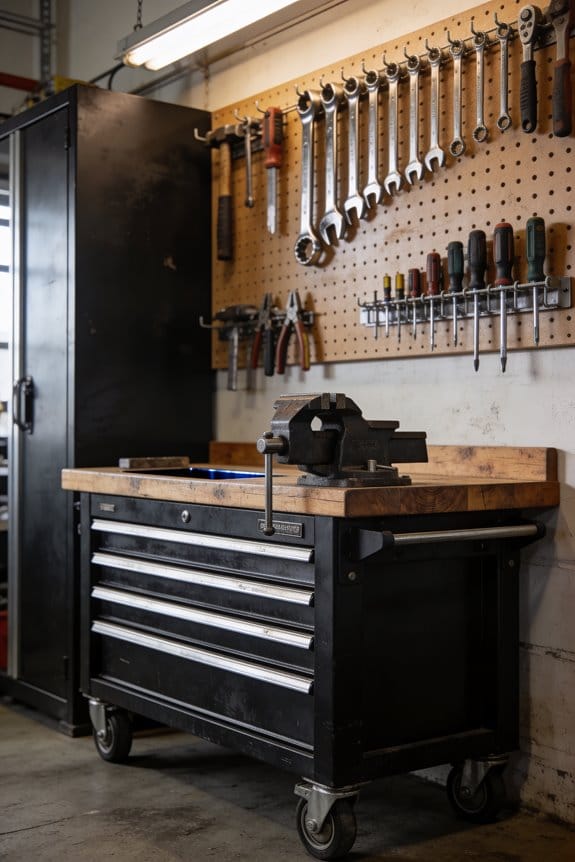
I’ll organize my tool chest by weight and frequency. The bottom drawer holds heavy sockets and fasteners, supported by ball-bearing slides that handle up to 100 pounds. My middle drawers store frequently used wrenches, pliers, and screwdrivers within arm’s reach, arranged by size for quick access. Upper drawers keep specialty and air tools separated to prevent damage. Using modular dividers, magnetic holders, and labels prevents tangling while maximizing space. Soft-close slides protect everything during use. Understanding these organizational strategies reveals how to transform your tool storage into an efficient, well-protected system.
Key Takeaways
- Store heavy sockets and fasteners in the bottom drawer using ball-bearing slides rated for up to 100 lbs capacity.
- Place frequently used hand tools like wrenches and screwdrivers in middle drawers arranged by size for quick access.
- Keep specialty and pneumatic air tools in upper drawers, physically separated from hand tools to prevent damage.
- Use modular storage systems, dividers, and magnetic holders to organize tools by type and prevent tangling or shifting.
- Apply drawer liners and employ soft-close features to protect tools from damage and extend tool chest lifespan.
Bottom Drawer: Store Heavy Sockets and Fasteners Here
The bottom drawer‘s your best option for storing heavy sockets and fasteners because it’s specifically designed to handle significant weight without compromising your tool chest’s stability or functionality. Ball-bearing slides support drawers holding up to 100 lbs, making this location ideal for bulk fasteners and dense collections. I’d recommend organizing heavy sockets by size and drive type using modular socket storage systems that enable custom configurations. Partitions and subdividers separate metric from standard measurements, improving accessibility during projects. Pre-cut drawer liners protect both your sockets and the drawer surface while maintaining organizational structure. This strategic placement keeps your most-used fasteners within reach while distributing weight evenly across your tool chest’s foundation.
Middle Drawers: Fast Access for Wrenches, Pliers, and Screwdrivers

Position your most frequently used hand tools in the middle drawers, where they’re easily within arm’s reach during projects. I’d recommend organizing wrenches, pliers, and screwdrivers using modular storage systems that let you customize your setup. Try size sequencing, arranging tools from smallest to largest so you can quickly locate what you need. This approach also helps with tool rotation, ensuring you use tools evenly and notice immediately when something’s missing. Use magnetic holders to keep ferrous pliers secure and prevent shifting during transport. Add identification labels on each organizer section so you’ll instantly recognize tool sizes. Drawer dividers separate these hand tools from other categories, improving your workflow efficiency and keeping your workspace organized during repairs.
Upper Drawers: Keep Specialty and Air Tools Separated

While your middle drawers handle everyday hand tools, upper drawers should serve a different purpose by keeping specialty and air tools organized and accessible. Air separation is essential because pneumatic tools require different storage conditions than hand tools, preventing damage and contamination. Specialty segregation keeps less frequently used equipment from cluttering your workspace.
I recommend dedicating upper drawer sections to specific tool categories. Air tool compartments should remain physically separated from hand tools and fasteners, protecting both tool types. Customizable tool grid systems with pegboard-style holes let you position holders flexibly as your collection grows. Magnetic drawer badges identify each specialty category, enabling quick recognition when you need particular tools. This organizational approach maintains efficiency while protecting your investment in specialized equipment.
Why Tool Separation Prevents Tangling and Damage

Organizing tools by type and location does more than keep your toolbox neat—it actively protects your equipment from damage and extends its lifespan. When you store wrenches, screwdrivers, and pliers separately, you prevent them from banging against each other during transport or daily use. This preventative maintenance approach reduces dings, bent handles, and dulled edges. Tool pairing—like keeping magnetic holders for ferrous metals or using dedicated drawers for specific categories—ensures each tool remains in prime condition. Tangling occurs when different tools mix together, causing scratches and forcing you to work harder when retrieving items. Dedicated compartments and organizers minimize contact between tools, preserving their functionality and appearance while making your workflow more efficient and productive.
Fit More Tools in Less Space: Modular Drawer Systems

Maximize your drawer’s capacity by adopting modular storage systems that adapt to your specific tool collection, transforming cramped spaces into highly efficient workstations. Modular inserts allow you to customize each drawer’s layout based on your tools’ sizes and shapes. You can rearrange dividers and compartments as your collection grows or changes, eliminating wasted space. Vertical stacking techniques further increase storage capacity by organizing tools upward rather than spreading them horizontally. Ball-bearing drawer slides support these densely packed configurations, handling substantial weight without difficulty. Pre-cut liners protect your tools while maintaining organizational structure. This flexible approach means you’re not locked into one setup—you can modify your system whenever needed. Whether you’re adding specialty tools or expanding your existing collection, modular systems grow with you.
Use Labels and Badges to Find Tools Instantly
Even the most efficient modular drawer system loses its advantage if you can’t quickly locate the tools you need. I’ve found that identification labels and magnetic badges transform my toolbox organization from functional to exceptional.
Durable labels withstand moisture, temperature changes, and frequent handling without fading or peeling. I apply them directly to drawer fronts and tool holders, listing contents by size and type. Strategic badge placement on drawer exteriors creates instant visual recognition—I can identify specialty tool sections, socket sets, and screwdriver categories at a glance.
Color-coded badges further streamline my workflow, allowing me to distinguish between metric and standard measurements. This system prevents the frustration of searching through drawers and guarantees I notice immediately when tools go missing. Investment in quality labeling pays dividends through faster access and improved accountability.
Ball-Bearing Slides and Soft-Close Features Protect Your Investment
Your tool chest drawers experience constant stress from heavy loads, frequent opening and closing, and the weight of professional-grade equipment, which is why the mechanical components supporting them deserve serious consideration. Ball-bearing slides undergo rigorous load bearing testing to guarantee they can safely support drawers containing up to 100 pounds of tools without failure or sagging. These precision-engineered slides allow smooth operation even under maximum weight conditions. Soft-close mechanisms represent another critical feature that protects your investment by preventing drawer slamming, which can damage tools, dent drawer fronts, and wear out closing mechanisms durability over time. Together, these components work to extend your tool chest’s lifespan while maintaining reliable access to your equipment during demanding work.
Frequently Asked Questions
How Do I Organize Different Wrench Sizes Within a Single Drawer Section?
I’d arrange my wrenches using size gradienting, placing smallest sizes on one end and progressively larger ones toward the other. This wrench shadowing method lets me quickly spot any missing tools and grab exactly what I need.
Should Magnetic Holders Be Used for All Types of Pliers and Hand Tools?
I’d caution you against universal magnetic holders—they’re not your one-size-fits-all solution. Non-ferrous pliers won’t stick, and magnetic holders can trap moisture, inviting tool corrosion on exposed metal surfaces over time.
What’s the Best Way to Arrange Screwdrivers by Type and Size Preference?
I’d arrange my screwdrivers using modular trays organized by type first, then size within each category. I’ll orient handles consistently for grip comfort and quick access, using drawer dividers to keep everything separated and easily identifiable.
Can Socket Trays Accommodate Both Metric and Standard Measurements Simultaneously?
Yes, I’ve found that socket trays with partitions and subdividers work perfectly for mixed sets. You’ll want dual markings on your organizer so I can quickly distinguish between metric and standard measurements without confusion.
How Often Should I Replace Pre-Cut Drawer Liners for Optimal Tool Protection?
I’d recommend you replace pre-cut drawer liners annually for peak protection. I suggest you inspect quarterly for wear, tears, or debris accumulation that might compromise your tools’ safety and organization.