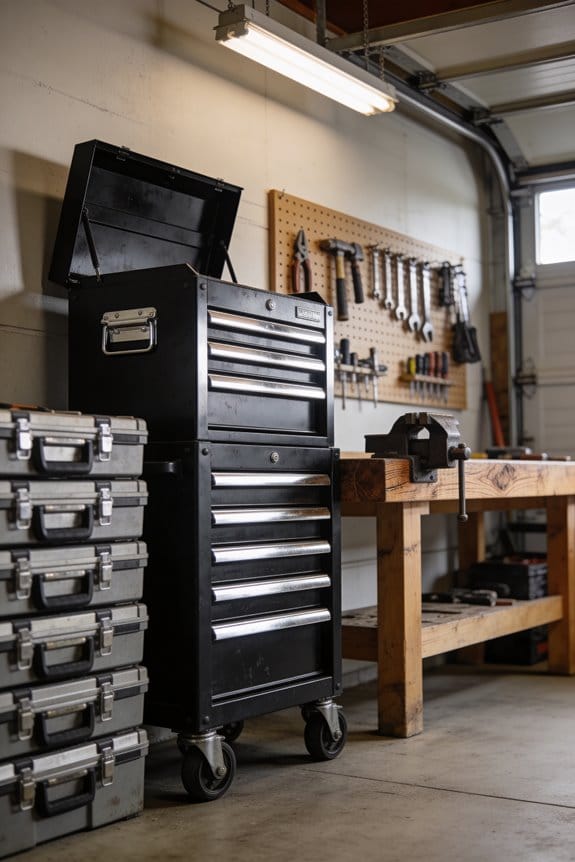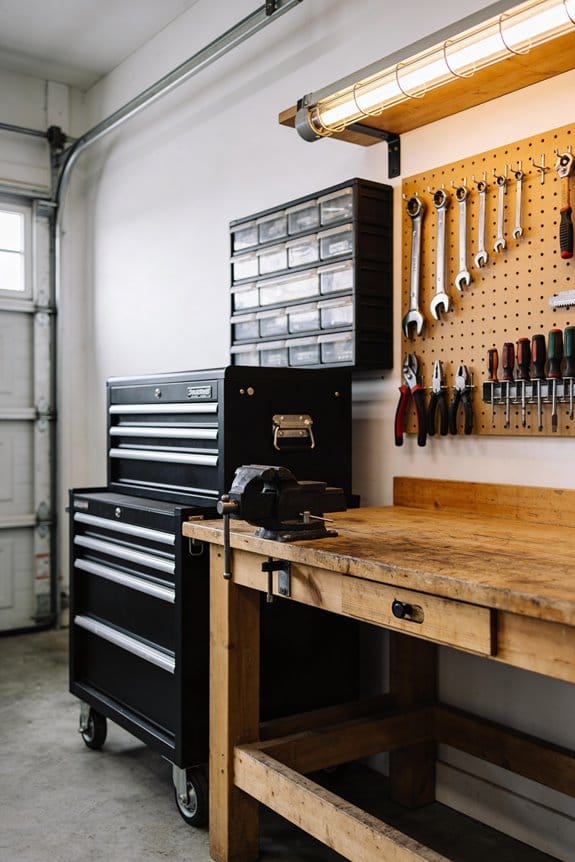

You’ll start your apprenticeship with five essential tools: a claw hammer, wire cutters, insulated screwdrivers, a voltage tester, and a tape measure. Once you have these basics, you’ll organize them by task—grouping electrical tools separately from mechanical ones—and use labeling and color coding for quick identification. Your supervisor will show you how experienced workers arrange their kits on job sites. As your skills develop, you’ll gradually expand your collection while learning proper maintenance to prevent rust and damage. The sections ahead explain each organizational strategy in detail.
Key Takeaways
- Start with essential starter tools like hammers, screwdrivers, wire cutters, voltage testers, and tape measures before expanding your collection.
- Use toolboxes, tool bags, and labeled storage systems with color coding to organize tools by category for quick identification.
- Group tools into task zones, separating electrical work from mechanical work, and create job-specific kits for particular tasks.
- Implement shadow boards and wall-mounted displays to keep frequently used tools visible and develop consistent muscle memory through organization.
- Maintain tools by wiping dry after each shift, applying oil to moving parts, and storing in dry environments to ensure longevity.
Master the Five Essential Tools Every Apprentice Needs First
When you’re starting an apprenticeship, how do you know which tools to buy first? You’ll want to invest in five essential items that form your foundation. A claw hammer handles fastening and removal tasks, while wire cutters and wire strippers manage electrical work. Insulated screwdrivers in Phillips, Posidrive, and slotted variants let you work safely with various fasteners. A voltage tester protects you from electrical hazards by detecting live circuits up to 1,000 volts. A retractable tape measure, at least 25 feet long, guarantees accurate measurements on job sites. Finally, a quality toolbox keeps everything organized and portable. These toolbox essentials give you the capability to handle most basic apprenticeship tasks while you develop your skills.
Group Tools by Task: How Your Supervisor Organizes on Site
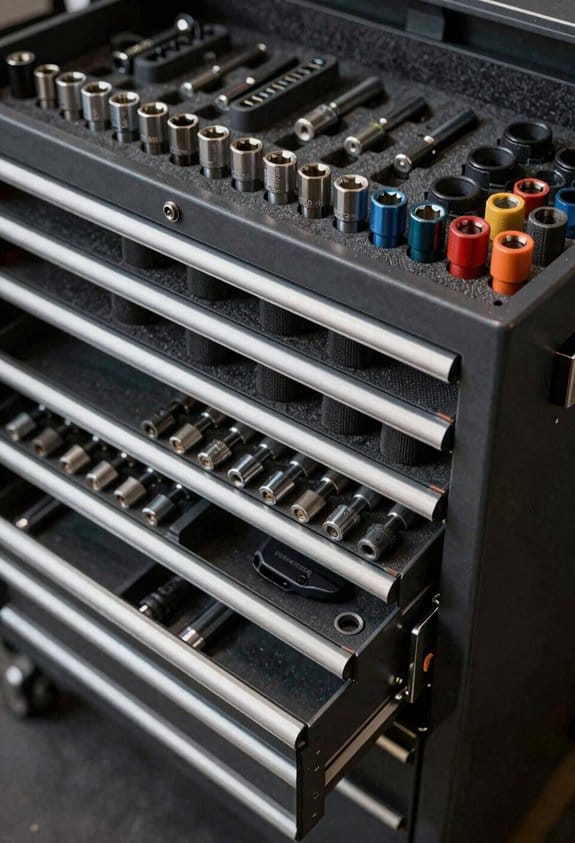
Beyond simply owning the right tools, you’ll discover that organizing them by function transforms how efficiently you work on job sites. Your supervisor likely arranges tools into task zones, grouping items needed for specific jobs together. Electrical work tools stay separate from mechanical tools, making it faster to grab what you need without searching through unrelated equipment. Job specific kits—collections organized for particular tasks—eliminate wasted time during shifts. When you organize by function rather than alphabetically, you’ll naturally develop muscle memory about where everything belongs. This approach reduces frustration and keeps you focused on the work itself. By observing how experienced workers arrange their tools, you’ll learn practical systems that accelerate your efficiency and professionalism on every job.
Label and Display Everything for Instant Access

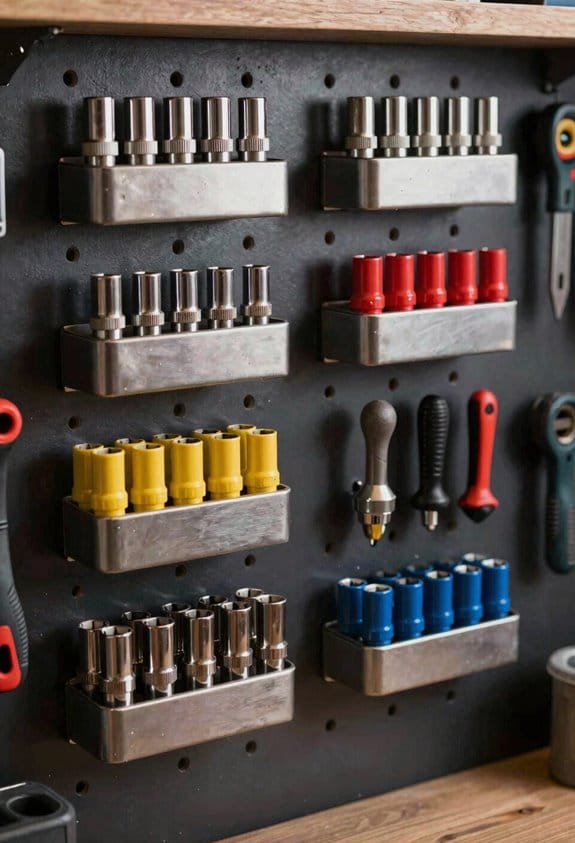
Once you’ve organized your tools by function, the next critical step is making every item instantly visible and findable through strategic labeling and display methods. I recommend using color coding on your storage containers and tool bags, which lets you identify categories at a glance. Shadow boards with outlined tool shapes show you exactly where everything belongs. Clear labeling on drawers and bins accelerates identification, especially in shared workspaces where multiple apprentices work together. Quick reference cards posted near your storage area remind you of organizational systems. Wall-mounted pegboards and magnetic strips keep frequently used tools visible and accessible. This visibility reduces search time during busy job sites and prevents equipment loss. When tools are easy to find and return, your productivity increases markedly.
Expand Your Toolkit as Your Training Progresses
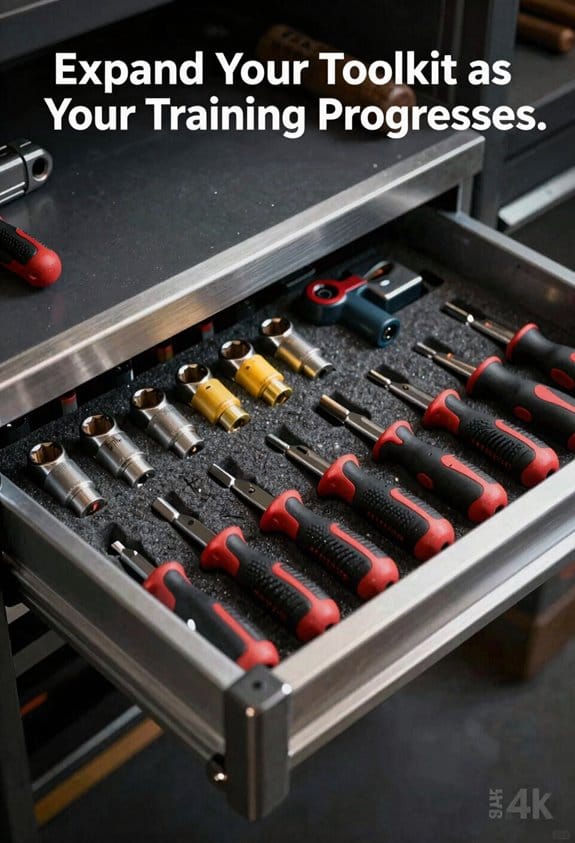
As your skills develop and your responsibilities increase, your toolkit should grow alongside your competencies rather than remaining static from day one. You’ll encounter skill milestones throughout your apprenticeship—completing coursework, mastering specific techniques, or taking on new project types. These moments signal when you’re ready for specialized tools. Budget planning becomes essential here; instead of purchasing everything at once, you’ll strategically invest in equipment as you need it. Talk with your supervisor about which advanced tools align with your current training level. This gradual expansion prevents wasting money on items you won’t use yet while ensuring you have exactly what you need for each stage of development.
Clean and Store Tools Properly to Prevent Rust and Damage
Protecting your tools from rust and damage requires intentional care routines that you’ll practice throughout your apprenticeship. After each shift, wipe dry all metal surfaces with a clean cloth to remove moisture and debris that cause corrosion. For tools with moving parts, apply light machine oil to hinges and joints, which prevents rust and guarantees smooth operation.
Store your tools in a dry environment, away from damp areas where oxidation accelerates. Use protective cases or tool bags that shield equipment from environmental exposure. Keep consumables like replacement bits organized separately so they don’t absorb moisture. Regular inspection helps you identify early rust spots before they spread. These maintenance habits protect your investment and guarantee your tools remain reliable throughout your career.
Frequently Asked Questions
How Much Should an Apprentice Initially Spend on Their First Toolkit?
You’re standing at the threshold of your career, wondering what you’ll actually spend. I’d recommend a modest $150-$300 budget range with starter brands—enough for essentials without breaking the bank before you’ve begun.
What Organizational System Works Best for Shared Workshop Spaces With Multiple Apprentices?
I’d recommend shadow boards with shared labeling so you’ll know exactly where every tool belongs. Implement tool rotation schedules—you’ll check out what you need and return it promptly, keeping everything accessible for all apprentices.
How Often Should Apprentices Conduct Full Toolkit Inventory Assessments and Inspections?
I’d say your toolkit’s like a garden—it needs regular tending. You’ll want weekly inspections to catch missing or damaged tools, then conduct thorough annual inventories to reassess your entire collection’s condition.
What Role Do Employers Play in Providing Tools Versus Apprentice Self-Investment?
I’ve found that employers typically supply quality belts and pouches, removing financial barriers while you develop your skills. You’ll gradually invest in specialized tools as your responsibilities grow, balancing employer contributions with your professional autonomy.
How Can Apprentices Prevent Tool Loss or Theft on Active Job Sites?
I’d guard my tools like they’re made of gold. You’ve got to use secure storage—locked toolboxes and labeled bags—plus tracking apps on expensive items. Never leave equipment unattended; I keep everything visible and inventoried daily.