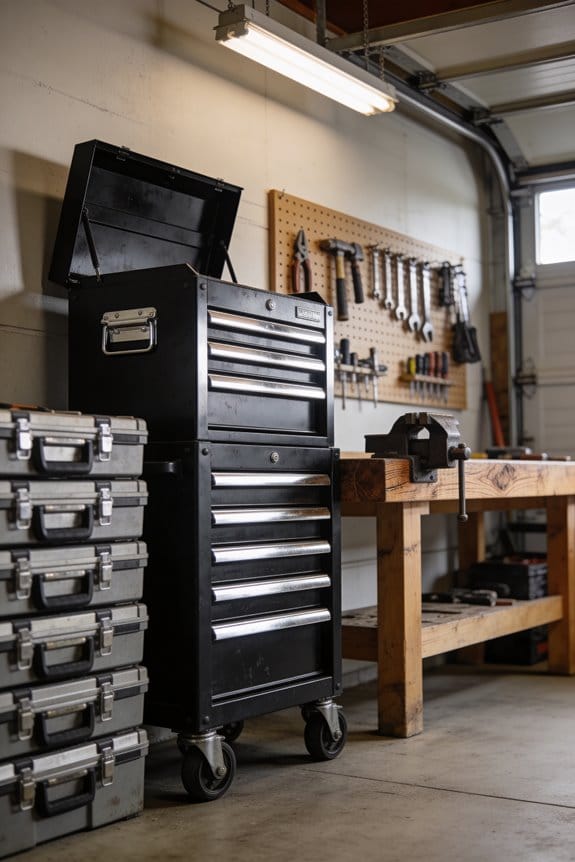

Store your lithium batteries in a climate-controlled indoor closet between 50–68°F, keeping them at 40–60% charge to prevent damage during dormancy. Place batteries on wood shelves away from concrete floors, heat sources, and direct sunlight. Use padded cases and silica gel packets for protection against physical shock and moisture. Store batteries separately from tools and metal objects to reduce fire risk. Check them monthly for swelling or corrosion, verifying charge levels remain stable. This foundation guarantees your power tools stay ready for spring, though proper maintenance details require further exploration.
Key Takeaways
- Store batteries at 40–60% charge in climate-controlled indoor spaces between 50–68°F to prevent degradation.
- Place batteries on wood shelves away from exterior walls, windows, and direct heat or sunlight sources.
- Use silica gel packets and sealed containers to control humidity and protect against moisture damage.
- Inspect batteries monthly for swelling, leaks, corrosion, and verify charge levels remain within recommended range.
- Charge fully with original chargers and test on low-demand tools before resuming regular use in spring.
Choose the Right Storage Location for Winter
When you’re preparing your lithium battery power tools for winter storage, the location you choose makes a significant difference in how well your batteries maintain their charge and function when spring arrives. I’d recommend storing your batteries in indoor closets or similar interior spaces where temperature remains stable. These locations protect batteries from extreme cold and heat fluctuations that damage capacity. Avoid areas near your furnace, which creates temperature swings that stress battery components. Instead, choose well-ventilated rooms away from direct sunlight and heat sources. Position batteries on wood planks or shelves rather than cold concrete floors, which drain charge quickly. Keeping your tools in climate-controlled indoor spaces makes certain they’ll be ready when you need them.
Set Your Ideal Temperature Range (50–68°F)
Because lithium batteries perform best within specific temperature ranges, I recommend maintaining storage conditions between 50°F and 68°F (10°C to 20°C) throughout winter. This temperature band preserves battery capacity and prevents performance degradation caused by extreme cold or heat.
I suggest using ambient monitoring devices, such as thermometers or data loggers, to track your storage area’s temperature consistently. These tools alert you to dangerous fluctuations before they damage your batteries.
For additional protection, I employ thermal buffering techniques like insulated storage boxes or fire-resistant cabinets. These create stable microclimates around your batteries, reducing temperature swings from external conditions.
Keep storage areas away from exterior walls, windows, and doors where temperature fluctuations occur more frequently. This approach guarantees your lithium batteries remain in peak condition during the entire winter season.
Select the Optimal Charge Level for Dormancy
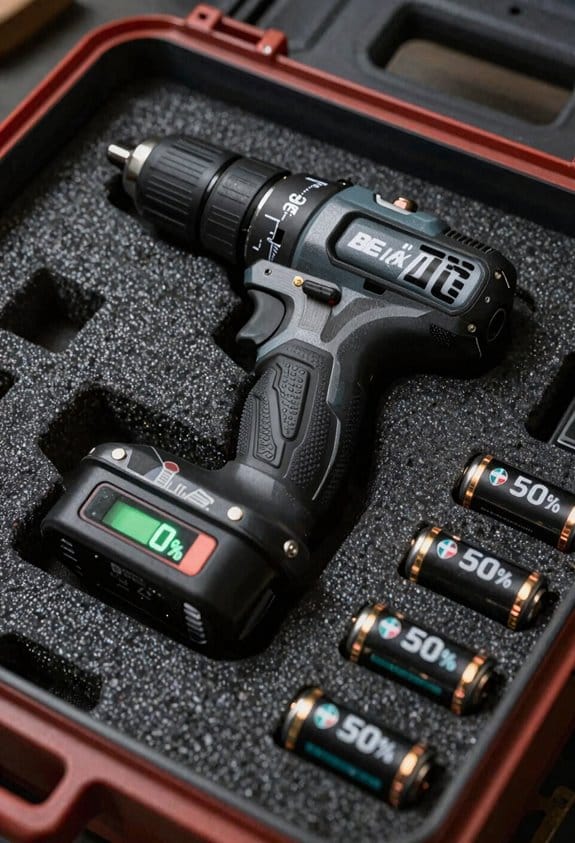
While maintaining your storage area at the right temperature protects your batteries from heat and cold damage, the charge level you select before storing them matters just as much. I recommend storing your lithium batteries at 40-60% charge, which prevents deep discharge and extends their lifespan during winter months. If you prefer an alternative approach, aim for 30-50% charge to minimize over-discharge risks. Before placing batteries into storage, check your charge indicators—you should see two lit LEDs confirming proper charge status. Understanding battery chemistry helps explain why this range works best; lithium cells experience stress at full charge or complete depletion. Avoid storing fully charged or completely empty batteries, as both conditions reduce longevity and compromise performance when you need them again next season.
Protect Batteries From Physical Damage and Moisture
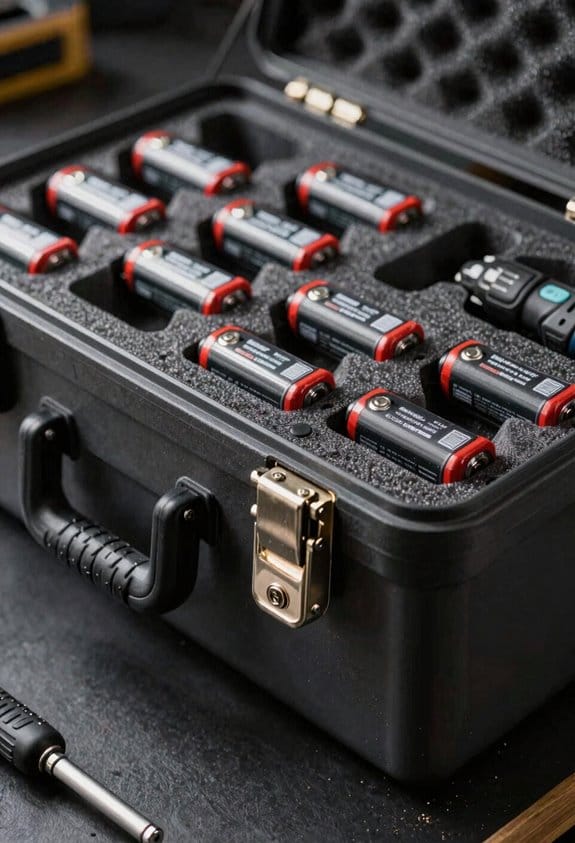
Physical damage and moisture pose serious threats to your lithium batteries during winter storage, so protecting them requires deliberate steps throughout the dormancy period. I recommend storing batteries in impact cushions or padded cases that absorb shock and prevent drops from causing internal damage. You should also use moisture barriers like silica gel packets or sealed storage containers to keep humidity away from terminals and cells. Clean battery contacts with a slightly damp cloth before storage, avoiding solvents that could corrode components. Store batteries separately from power tools, flammable materials, and metal objects that might cause electrical shorts. Keep activation keys away from tools in a separate, secure location. These precautions make certain your batteries remain functional and safe when spring arrives.
Prevent Fire Risk With Proper Insulation
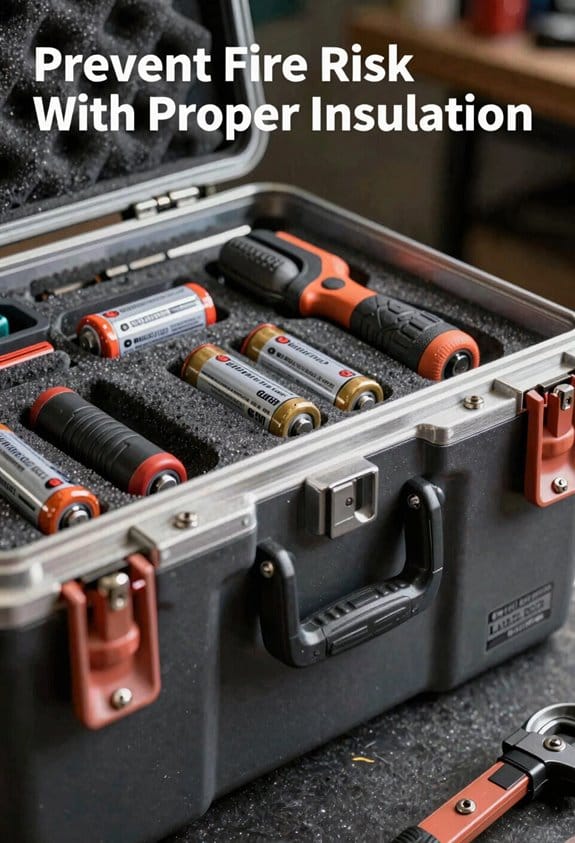
When storing lithium batteries through winter months, insulation serves as your primary defense against fire hazards, since temperature fluctuations and moisture accumulation can trigger dangerous chemical reactions inside the cells. I recommend using fire-resistant cabinets or thermal bags that create thermal barriers around your batteries, maintaining stable internal conditions. These protective enclosures prevent external temperature swings from destabilizing the battery chemistry.
Additionally, proper insulation includes spark suppression features—materials that contain potential sparks if a short circuit occurs. Store batteries on wooden shelves rather than concrete floors, which conduct cold and moisture. Include silica gel packets inside storage containers to absorb excess humidity. Keep batteries separated from flammable materials like gasoline or paint thinner. Regular inspection guarantees your insulation remains intact and effective throughout winter storage.
Check Your Batteries Every Month
Monthly inspections form a critical part of winter battery storage, since conditions change throughout the season and problems can develop quietly without proper monitoring. I recommend you check your batteries every thirty days to catch issues early.
During each inspection, I perform rapid diagnostics by examining the battery for swelling, leaks, or unusual heat. I verify the charge level remains between 40-60%, checking that two LEDs are lit. Monthly logging of voltage readings and temperature conditions helps me track performance patterns over time.
I also inspect terminals for corrosion and make certain the battery hasn’t experienced physical damage. These routine checks take just minutes but markedly extend battery lifespan and prevent dangerous situations during winter storage.
Clean and Prepare Batteries Before Storing Them
Before you store your lithium batteries for winter, taking time to clean and prepare them properly sets the foundation for safe, long-term storage. I recommend using a slightly damp cloth to wipe terminals gently, removing any dirt or corrosion that could interfere with connections. This simple step prevents potential electrical issues when you reconnect them later.
Next, remove adapters and quick connect systems from your batteries. Storing these components separately protects both the batteries and adapters from unnecessary wear. I also suggest checking that your batteries reach the ideal 40-60% charge level before storage, which helps preserve their capacity during winter months.
Finally, inspect your batteries for any visible damage, swelling, or leaks before placing them in their designated storage location.
Test and Reactivate Batteries for Spring Use
As spring arrives and you’re ready to use your power tools again, testing and reactivating your lithium batteries requires a systematic approach to make sure they’re safe and fully functional. Start by checking the LED indicators to verify your batteries stored at the recommended 40-60% charge level. Perform capacity testing to measure how much energy your batteries hold after winter storage, comparing results to their original specifications. If your tools support firmware updates, install any available software improvements before use. Charge your batteries fully using their original chargers, then run a test cycle on a low-demand tool. This verification process guarantees your equipment operates safely and efficiently throughout the spring season.
Frequently Asked Questions
Can I Store Multiple Lithium Batteries Together in the Same Container Safely?
I’d recommend against storing multiple lithium batteries together in one container. Instead, I suggest batteries segregation to minimize fire risk. You’ll want temperature monitoring in your storage area, keeping it between 50°F and 68°F for safety.
How Do I Know if My Battery Has Been Damaged by Cold Temperatures During Storage?
I’ll inspect for telltale troubles: reduced capacity, increased internal resistance, cold-induced swelling, and voltage depression. I’d monitor performance during use—sluggish output signals cold damage. I’ll check for physical deformation and test voltage readings.
Should I Remove Batteries From Power Tools Before Storing Them for Winter?
Yes, I’d definitely remove batteries from power tools before winter storage. Separating them prevents temperature effects from damaging both components and allows me to store batteries in ideal conditions independently.
What Humidity Level Is Best for Storing Lithium Batteries Long-Term?
I’d recommend keeping humidity low in your controlled environment—think of it like maintaining a desert rather than a rainforest. The knowledge base suggests using silica gel packets to achieve ideal humidity, preventing that pesky condensation that damages batteries.
How Often Should I Recharge Batteries During Extended Winter Storage Periods?
I’d recommend you do a monthly top up with a partial recharge to maintain your battery’s health during extended winter storage. This keeps the charge level ideal without stressing the cells.