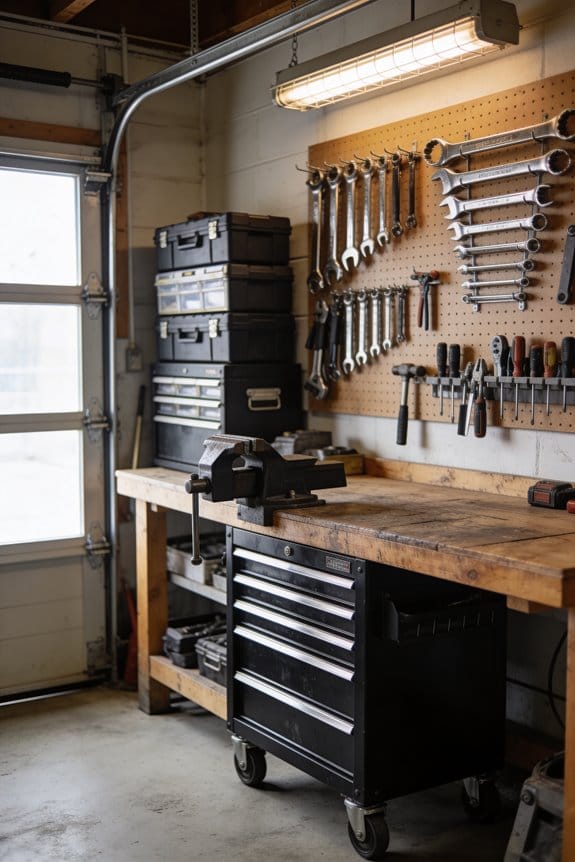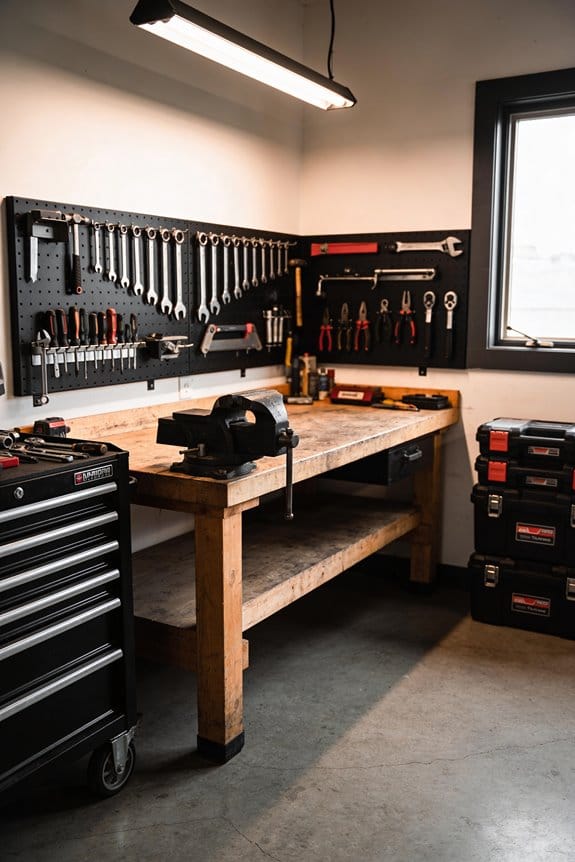

To organize your two-car garage for parking and working, start by inventorying everything and removing broken items, expired chemicals, and duplicates. Measure your space carefully, accounting for door clearance and maneuvering room for both vehicles. Install vertical storage using wall-mounted shelving, pegboards, and overhead racks to maximize unused space. Organize items by category—tools, seasonal equipment, sports gear—placing frequently used items at convenient heights. This strategic approach prevents clutter recurrence while keeping your workspace functional and accessible. Continue exploring these strategies to discover specific installation techniques and troubleshooting solutions tailored to your garage’s unique challenges.
Key Takeaways
- Measure garage dimensions and door clearances first to ensure both vehicles fit with adequate maneuvering space.
- Install vertical storage like wall-mounted shelving, pegboards, and overhead racks to maximize space without floor clutter.
- Organize items into zones by category and frequency of use for efficient workflow and accessibility.
- Remove broken tools, expired chemicals, and duplicates through a comprehensive inventory to eliminate unnecessary clutter.
- Position tall storage units away from door paths and maintain clear traffic lanes for vehicle and foot movement.
Strip Your Garage Down to What You Actually Need
Clearing out your garage before you install any storage systems is one of the most important steps you’ll take, because it prevents you from organizing things you don’t actually need. I recommend creating an ownership inventory by listing every item currently in your garage, then categorizing each one as keep, sell, or donate. This process helps you understand what actually belongs in your space. Establish a purge schedule—perhaps quarterly—to prevent clutter from accumulating again. Remove broken tools, expired chemicals, and duplicate items that serve no purpose. By eliminating unnecessary possessions first, you’ll accurately assess how much storage you genuinely need and avoid purchasing oversized systems. This foundation makes your remaining organizational efforts far more effective and sustainable.
Assess Your Two-Vehicle Garage Layout
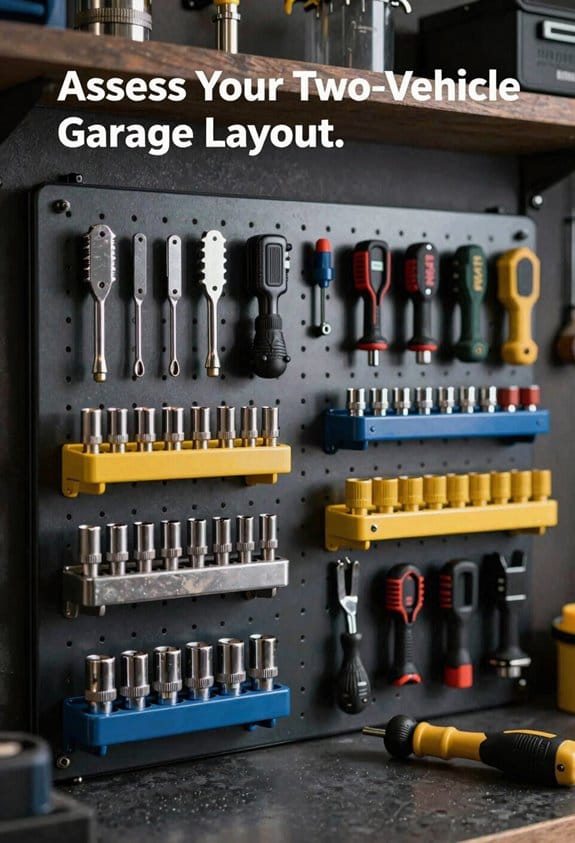
Once you’ve removed the items you don’t need, you’re ready to evaluate how your garage space can accommodate two vehicles alongside your storage systems. Measure your garage width and depth to understand parking requirements for both cars, accounting for door openings and maneuvering space. Assess your traffic flow by identifying how people and vehicles move through the area, then plan storage placement accordingly. Evaluate your lighting layout to determine where you’ll need additional fixtures for visibility in storage zones and work areas. Consider which walls receive natural light and which remain shadowed. This assessment prevents storage installations from blocking vehicle access or creating obstacles. Document these measurements and observations before purchasing any organizational systems, ensuring your final setup supports both parking and functionality.
Select Vertical Storage Systems for Maximum Space
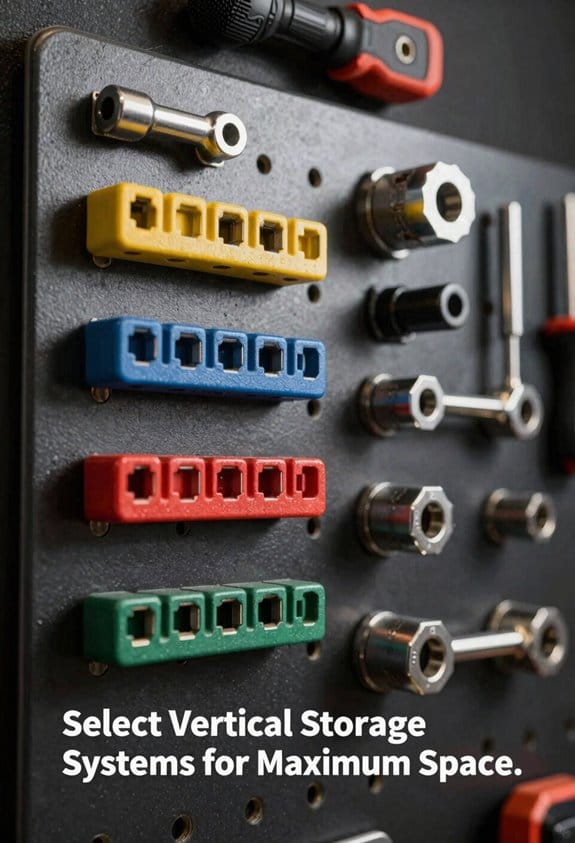
Think of your garage walls as valuable real estate that you’ve largely ignored until now, and you’ll immediately see the potential for transforming your storage capacity. Wall-mounted shelving systems extend storage higher than traditional floor-based options, utilizing the vertical space most garages offer abundantly. Pegboards organize tools and accessories while keeping everything visible and accessible. For heavier items, slat walls accommodate customizable hooks and adjustable shelving based on your specific needs. Overhead racks and ceiling hoists efficiently store seasonal equipment, bikes, and other bulky gear off your garage floor. Track systems hang items like ladders and leaf blowers safely overhead. These vertical solutions maximize your available space without consuming the floor area needed for parking your vehicles and maintaining a functional workspace.
Map Storage Zones by Category
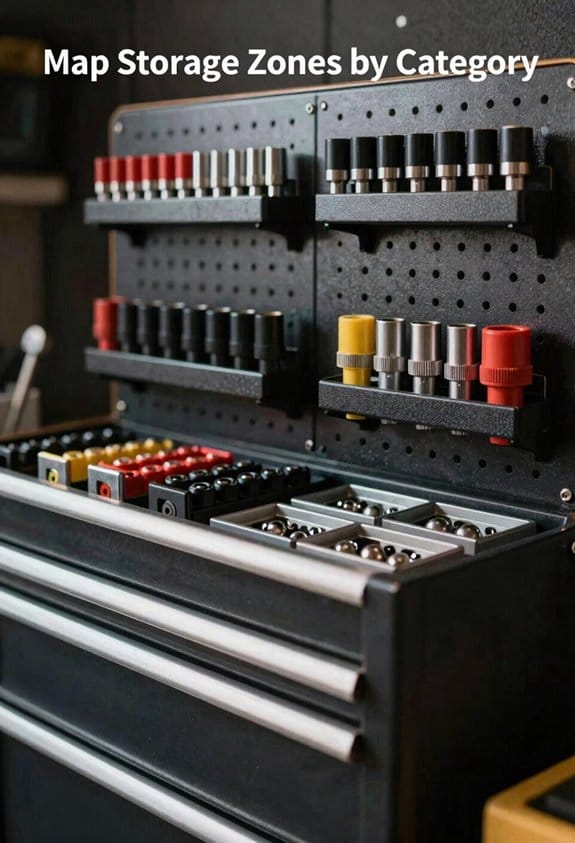
Now that you’ve maximized your vertical storage capacity, you’ll need to organize what goes where by creating distinct storage zones based on item categories. I recommend grouping similar items together, which makes finding things easier and keeps your garage functional. Start with utility mapping by designating specific areas for tools, cleaning supplies, sports equipment, and seasonal rotation items. Place frequently used items at convenient heights, while storing off-season equipment higher or in back corners. Consider establishing a seasonal rotation system where you swap summer and winter gear based on current needs. This approach prevents clutter, maximizes accessibility, and guarantees your two-car parking space remains clear and usable year-round.
Install Garage Wall-Mounted Shelving and Pegboards
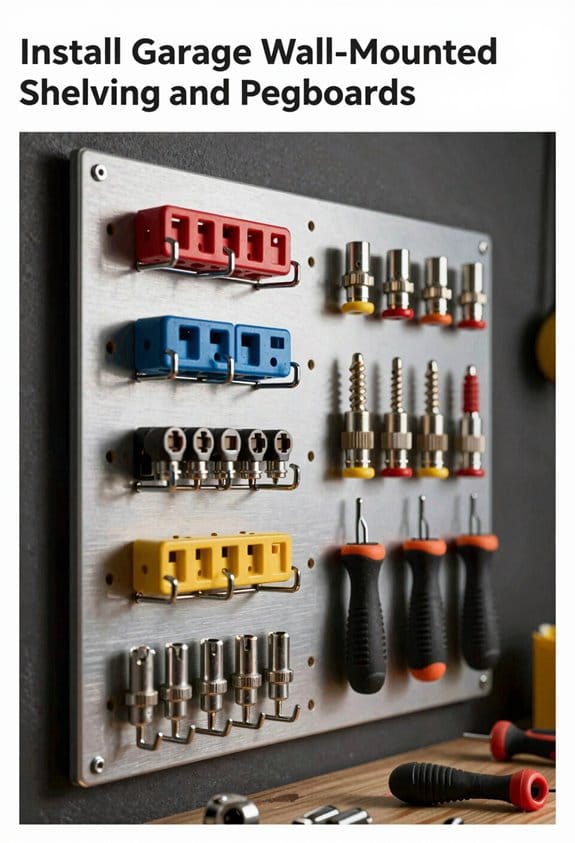
Wall-mounted shelving and pegboards transform your garage’s vertical surfaces into functional storage systems that keep items organized and accessible without consuming floor space your vehicles need. I recommend installing sturdy shelves at varying heights to accommodate different item sizes, from small containers to larger equipment. Pegboards offer exceptional versatility; you can arrange hooks and holders to display tools, cords, and accessories while keeping everything visible and within reach. Adding magnetic strips to pegboards secures metal tools safely. Overhead racks provide additional storage for seasonal items or bulky equipment you don’t access frequently. This combination maximizes your garage’s vertical dimension effectively, creating organized zones while maintaining clear pathways for parking and movement.
Set Your Budget and Choose Affordable Systems
Before you purchase any storage systems, determine how much you can spend on your garage organization project, since budget constraints often influence which solutions work best for your situation. I recommend establishing budget tiers that prioritize your most-needed storage first, then expanding as finances allow.
Wire shelving units and rollout bins offer affordable starting points for basic organization. Hardware hacks, like repurposing existing wall space with track attachment systems, maximize your money without extensive renovation costs. DIY pegboard systems deliver significant savings compared to custom cabinetry while providing excellent tool storage.
Consider mixing budget-friendly solutions with selective investments in higher-quality items you’ll use frequently. This approach lets you organize effectively without overspending, allowing gradual upgrades as your needs evolve and your budget permits.
Organize Your Tool Zone for Quick Access
Creating an efficient tool zone requires strategic placement of your most-used items, since you’ll want to access them without wasting time searching through cluttered shelves or digging through bins. I recommend mounting a magnetic strip on your wall to hold metal tools like screwdrivers and wrenches at eye level. Install labeled drawers in a freestanding cabinet to organize smaller items by category, making identification instant. A rolling cart positioned near your workspace keeps frequently needed supplies mobile and portable. Mount pegboards above your workbench to display hand tools visually, allowing you to grab what you need quickly. This organizational system minimizes frustration and maximizes your productivity during projects, ensuring every tool has a designated spot for rapid retrieval.
Troubleshoot Common Garage Storage Problems
Even well-organized garages can run into problems over time, since storage systems don’t always work the way you initially planned them. One common issue involves door alignment, where overhead garage doors may catch on shelving or stored items, preventing smooth operation. To prevent this, measure clearance carefully and position tall storage units away from the door’s path. Another challenge is humidity control, which causes rust on tools and deterioration of stored goods. Install a dehumidifier or make certain proper ventilation through vents and fans to combat moisture buildup. Additionally, overcrowding shelves beyond their weight capacity creates safety hazards and makes items difficult to access. Regularly reassess your storage zones, remove items you no longer use, and adjust shelf heights as needed to maintain functionality and safety in your organized garage space.
Frequently Asked Questions
How Do I Prevent Stored Items From Shifting or Falling off Wall-Mounted Shelves During Vehicle Movement?
I’d recommend using secure fasteners to anchor shelves firmly to studs, then place anti vibration pads beneath stored items. This absorbs movement vibrations from vehicles, preventing shifting and keeping everything stable and safe.
What Temperature and Humidity Control Measures Protect Tools and Seasonal Equipment Stored in Uninsulated Garages?
You’ll want a dehumidifier tucked in your seasonal zone—trust me, rust’s a garage gremlin. I monitor temperature fluctuations with a simple thermometer, keeping tools between 50-85°F. Dehumidifier placement near stored equipment prevents moisture damage effectively.
Can I Safely Store Hazardous Materials Like Paint and Gasoline in Residential Garage Storage Systems?
You can safely store paint and gasoline if you’re using proper hazardous segregation and meeting ventilation requirements. I’d recommend lockable cabinets in a dedicated zone, away from your parking area and living spaces.
How Often Should I Reorganize and Reassess My Garage Storage Zones to Maintain Functionality?
Think of your garage as a living organism that needs seasonal checkups. I’d recommend a usage audit every quarter, especially during seasonal shifts, to guarantee your zones still match your family’s evolving needs and habits.
What Lighting Solutions Help Maximize Visibility in Storage Areas Without Reducing Vehicle Parking Space?
I’d recommend installing LED strips along your walls and shelving—they’re energy-efficient and won’t consume floor space. Motion sensors automatically activate them when you’re working, eliminating shadows without compromising your parking area.