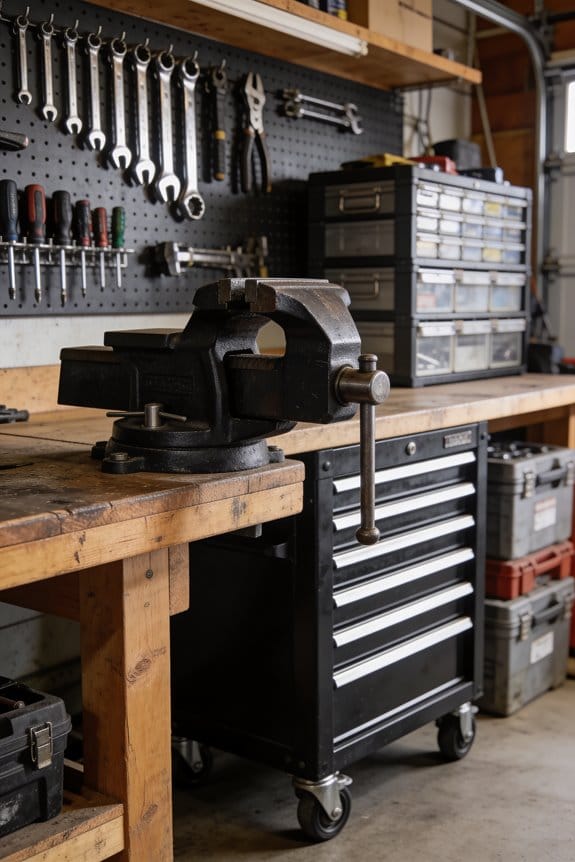
I can transform my closet into a functional tool storage room by first evaluating my space and inventorying my tools to avoid duplicates. I’ll maximize vertical space using pegboards, magnetic strips, and wall-mounted rails to keep frequently used items visible and accessible. I’ll organize small parts in labeled jars and bins, arrange tools by use frequency with everyday items at eye level, and install a fold-down workbench for assembly projects. A strategic approach to organization creates an efficient workspace that continues to adapt as my collection grows.
Key Takeaways
- Conduct a complete inventory audit and measure closet dimensions, including height, width, depth, shelves, and hanging rods before planning storage.
- Maximize vertical space using pegboards, magnetic strips, and wall-mounted rails secured to studs for safe, visible tool organization.
- Store small parts in labeled, clear jars with color-coded lids mounted under shelves for quick identification and accessibility.
- Mount transparent bins and magnetic knifeboards on the closet door for frequently used hand tools and accessories within easy reach.
- Install a fold-down workbench and add task lighting to create a functional workspace while maintaining flexibility for future tool expansion.
Assess Your Closet Space and Tool Collection
Before you organize your closet for tool storage, you’ll want to evaluate both the space you’re working with and the tools you currently own. Start by conducting an inventory audit of every tool, measuring tape, nail, and bolt you possess. This helps you understand what you’re storing and prevents purchasing duplicate items. Next, measure your closet’s clearance dimensions, including height, width, and depth, accounting for any existing shelves or hanging rods. Check wall studs to determine where you can safely mount storage systems. Assess natural lighting and consider adding a small bulb if needed. Finally, identify which tools you use frequently versus occasionally, as this influences where items should go in your organized space.
Quick-Access Storage: Doors and Magnetic Strips First

After you’ve identified your most frequently used tools during the assessment phase, the next logical step is making them accessible without requiring you to search through bins or climb shelves every time you need them. I recommend starting with your closet door, which offers prime real estate for quick-access storage. Back-of-door mounted bins hold hand tools, gloves, and accessories while keeping them visible through transparent pockets. Magnetic knifeboards work excellently for metal tools like pliers and wrenches, eliminating fumbling through drawers. Installing magnetic strips near your workstation guarantees drill bits and metal fasteners stay organized and within arm’s reach. This strategic placement maximizes your closet’s functionality, allowing you to grab frequently needed items instantly.
Mount Pegboards and Rails for Maximum Tool Visibility

Once you’ve established quick-access storage on your closet door, you’re ready to tackle your walls with pegboards and rails, which transform bare spaces into highly organized tool displays. Pegboards offer vertical contrast against plain walls while providing customizable arrangements for your tools. I recommend spacing hooks strategically based on tool size and weight, ensuring hammers, screwdrivers, and measuring tapes hang securely without crowding. Rails work similarly, exploiting vertical space for visibility without requiring digging through bins. Both systems suit small closets by minimizing floor footprint. When installing pegboards, secure them firmly to wall studs for stability. Arrange frequently used tools at eye level, positioning less-used items higher up. This approach maximizes your storage capacity while keeping everything visible and accessible.
Arrange Shelves by Use Frequency: Frequent Items at Eye Level

Strategically positioning your shelves based on how often you use each tool creates an efficient workflow that minimizes wasted motion and frustration. I place my most-used items at eye level, where I can grab them without bending or reaching. This ergonomic placement reduces strain during projects and saves time. Task-specific tools should cluster together on the same shelf, so I’m not hunting across the closet. Less frequently used items go higher or lower, keeping valuable eye-level real estate open. I also practice seasonal rotation, moving winter tools up when summer approaches and bringing down what I need. This organized system keeps my workflow smooth and prevents unnecessary searching through the closet.
Organize Small Parts: Jars, Bins, and Smart Labeling

While your shelves hold the larger tools and equipment, small parts like screws, nails, bolts, and bits require their own organizational strategy to keep your closet tool storage truly functional. I recommend using clear jars with screwable lids mounted under shelves, which maximizes vertical space without cluttering your workspace. Stackable bins and drawer organizers work well for categorizing similar items. Implement a color coding system by marking jar lids and bin labels with permanent markers, making identification quick and easy. For extensive collections, consider RFID tracking labels on containers, allowing you to scan and locate specific parts instantly. Label everything clearly with silver markers on dark bags for visibility. This approach guarantees you’ll find exactly what you need without wasting time searching through disorganized piles.
Create a Compact Assembly Station With a Fold-Down Workbench
Now that you’ve organized your small parts efficiently with jars and bins, you’ll want a dedicated workspace where you can actually assemble and work on projects without cluttering your entire closet. A fold-down workbench mounted on your wall solves this problem perfectly. When you’re not using it, the bench folds up and takes minimal space, then pulls down when you need a work surface. Install vertical lighting above your workbench so you can see detailed projects clearly. A portable vise clamped to the bench holds pieces steady while you work, preventing frustration and ensuring accuracy. This compact assembly station transforms your closet into a functional workshop, combining storage with practical workspace that supports both organization and active project completion.
Redesign Your Layout as Your Tool Collection Expands
As your tool collection grows beyond your initial setup, your closet storage system will need to adapt to accommodate new items and changing priorities. Future proofing layouts means choosing flexible storage solutions that expand with your needs. Modular mounting systems, like French cleats and pegboards, allow you to rearrange or add components without major renovations. You can install additional shelves above existing ones, attach extra pegboard sections, or incorporate new rail systems as your collection increases. Planning space for potential expansion during your initial installation prevents costly redesigns later. Consider grouping similar tools together and leaving gaps between storage sections for future additions. Regularly assess which items you use most frequently, then adjust their placement accordingly to maintain an efficient workspace.
Frequently Asked Questions
Can I Install Pegboards and Shelves Without Damaging Drywall or Studs?
Ironically, you’ll damage your walls anyway—unless you’re smart about it. I’d recommend temporary hooks and removable panels instead. They’re damage-free alternatives that let you customize without committing to permanent installation.
What Weight Capacity Do Magnetic Strips and French Cleats Safely Support?
I’d recommend magnetic strips holding up to 10-15 pounds safely, while French cleats’ cleat limits depend on stud anchoring—typically supporting 25-50 pounds per cleat when properly installed. Your magnetic capacity works best for lightweight metal tools.
How Do I Prevent Rust on Metal Tools Stored on Pegboards?
I’d apply light oil coatings to your metal tools before pegboard storage and place silica packets nearby to absorb moisture. You’ll also want good air circulation in your closet to prevent rust development.
Should I Use a Dehumidifier to Protect Tools in Enclosed Closet Spaces?
I’d absolutely recommend a dehumidifier—watch condensation beading on metal vanish. You’ll want humidity control in enclosed spaces where moisture barriers alone won’t suffice, preventing rust that silently creeps across your tools.
What’s the Best Way to Secure a Fold-Down Workbench for Safety?
I’d install heavy-duty secure latches that lock when the workbench folds up and anchoring brackets firmly attached to wall studs. This prevents accidental drops and guarantees stability during use, keeping you safe while working.