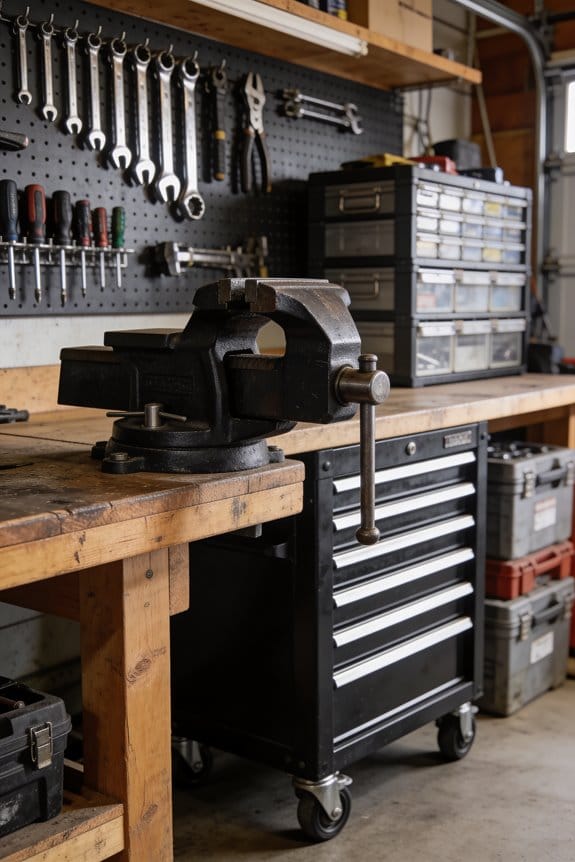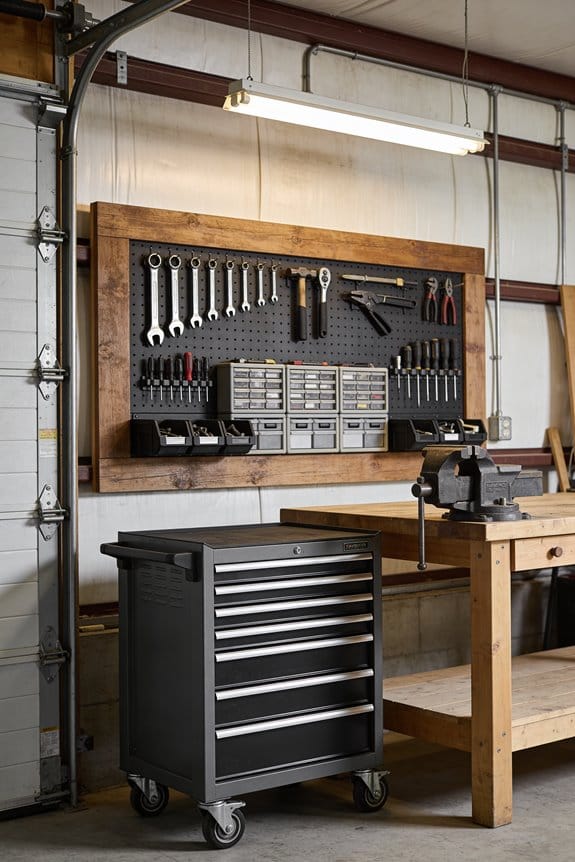

I’ll repurpose old kitchen cabinets into garage storage by first measuring my space and planning what I’m storing—paint, tools, or batteries. I’ll protect the cabinets from moisture and pests by applying weatherproof coatings and sealing gaps. Next, I’ll secure them to wall studs with heavy-duty screws, add locking casters for mobility, and install adjustable shelves inside. Adding pegboard above creates quick-access tool storage. This transforms unused cabinets into durable, organized workshop solutions that keep everything accessible and protected.
Key Takeaways
- Measure garage dimensions twice and sketch layout to identify optimal cabinet placement and ensure proper clearance around workbenches and doorways.
- Apply weatherproof coatings, seal gaps, and install weather stripping to protect kitchen cabinets from garage moisture, humidity, and pest infiltration.
- Secure cabinets to wall studs using lag bolts every 16 inches and install heavy-duty casters with locks for stability and mobility.
- Customize interior organization with adjustable shelves, pull-out drawers, vertical dividers, and pegboard to maximize tool accessibility and prevent overstuffing.
- Prioritize storage zones for paint inventory with electrical access, dedicate shelves for battery chargers, and use color-coded tool outlines for efficiency.
Plan Your Garage Layout and Measure Twice
Before you start moving kitchen cabinets into your garage, you’ll need to carefully plan where everything goes and take accurate measurements of your space. I recommend measuring your garage twice to guarantee accuracy, checking both width and depth along each wall. Assess your must-haves first, like where you’ll position your workbench, tool storage areas, and battery charging station. Consider lighting placement so you can see your work clearly, and plan for adequate floor clearance around cabinets for safe movement. Identify which cabinet types work best for your needs—base units for heavier items and wall cabinets for overhead storage. Sketch your layout on paper, noting doorways and existing obstacles. This planning phase prevents costly mistakes and guarantees your garage becomes an organized, functional workshop.
Choose What You’ll Store First (Paint, Tools, Batteries)
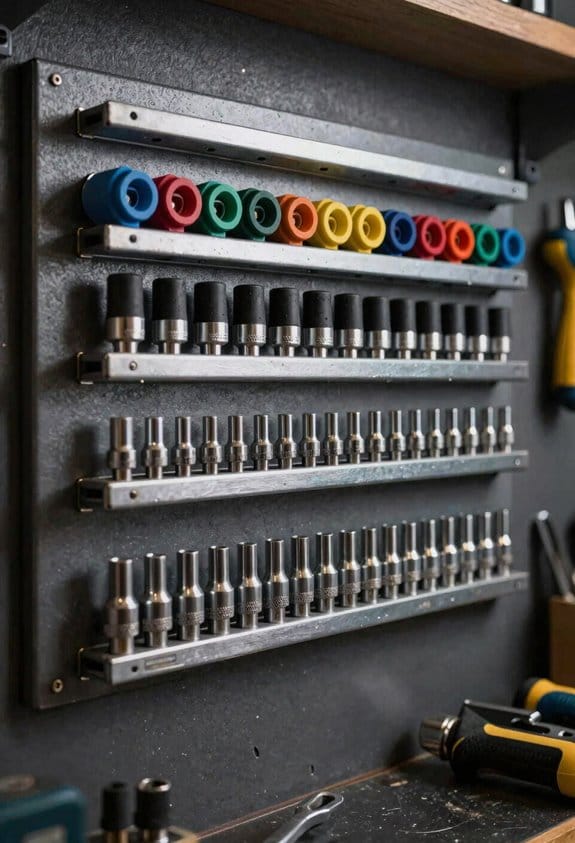
Once you’ve finalized your garage layout, determining what items you’ll store first helps guide your cabinet setup and guarantees your storage system matches your actual needs. I’d recommend starting with your paint inventory, since paint requires specific storage conditions and organized labeling for quick identification. Next, consider battery maintenance supplies and charging equipment, which need dedicated wall space and electrical access. Tools come after, as they benefit from adjustable shelves and pull-out drawers. By prioritizing these categories, you’ll create zones within your cabinet system that function efficiently. This approach prevents overstuffing and assures each storage area serves its intended purpose effectively. Understanding your storage priorities transforms generic kitchen cabinets into a customized workshop solution.
Protect Cabinets From Garage Conditions
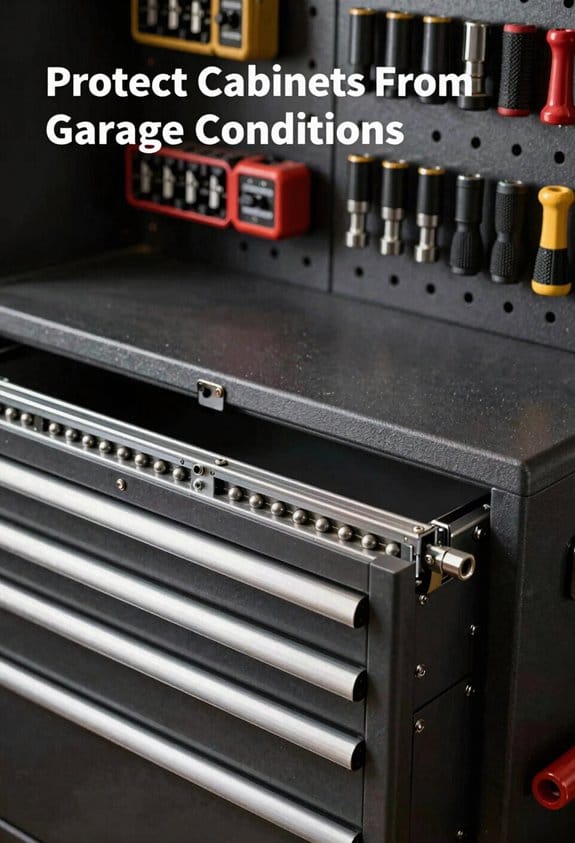
Because garages experience temperature swings, humidity, and dust that differ markedly from kitchens, your repurposed cabinets need protection to prevent damage and extend their lifespan. I’d recommend applying weatherproof coatings to all exterior surfaces, which create a moisture barrier against garage conditions. Inside, consider lining shelves with protective material to shield wood from humidity damage.
You’ll also want to address rodent deterrents by sealing gaps around cabinet bases and installing weather stripping on doors. Store mothballs or rodent repellent products inside enclosed cabinets to discourage pests from nesting in your storage space.
Additionally, use a dehumidifier nearby to maintain stable moisture levels, and make sure proper ventilation in your garage. Regularly inspect cabinets for signs of warping, rust, or pest activity, addressing issues promptly to maintain functionality and protect your stored items.
Mount Cabinets Securely to the Walls
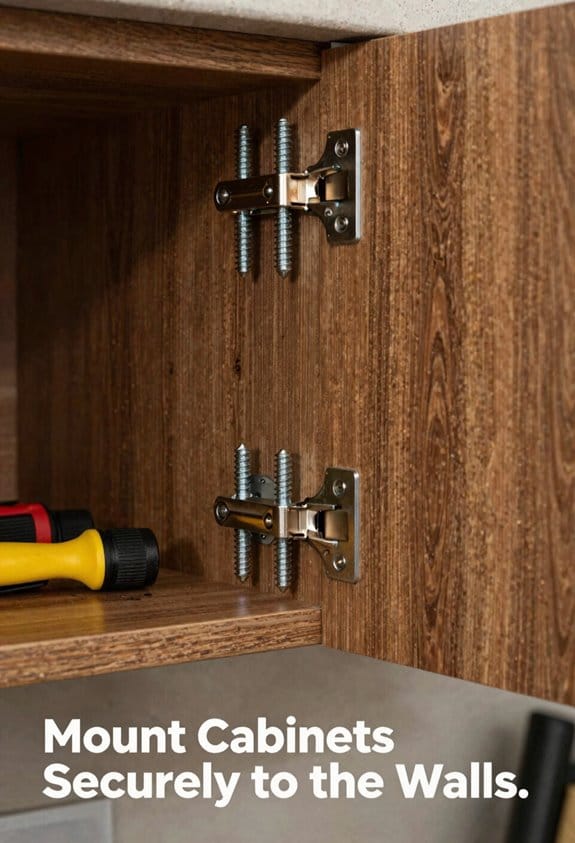
Securing your repurposed kitchen cabinets to the garage wall is essential for safety and stability, as these units will hold heavy tools, supplies, and equipment that could cause injury or damage if they tip over. I recommend using secure fasteners that penetrate deep into wall studs, which provide the strongest anchoring points. Before installation, locate studs using a stud finder, then drill pilot holes through the cabinet frame directly into them. For areas between studs, install stud anchors rated for your cabinet’s weight capacity. Use lag bolts or heavy-duty screws, spacing fasteners every 16 inches along the cabinet’s top and bottom sections. This prevents shifting and guarantees your storage system remains stable during daily use and access.
Add Wheels and Build Your Workbench
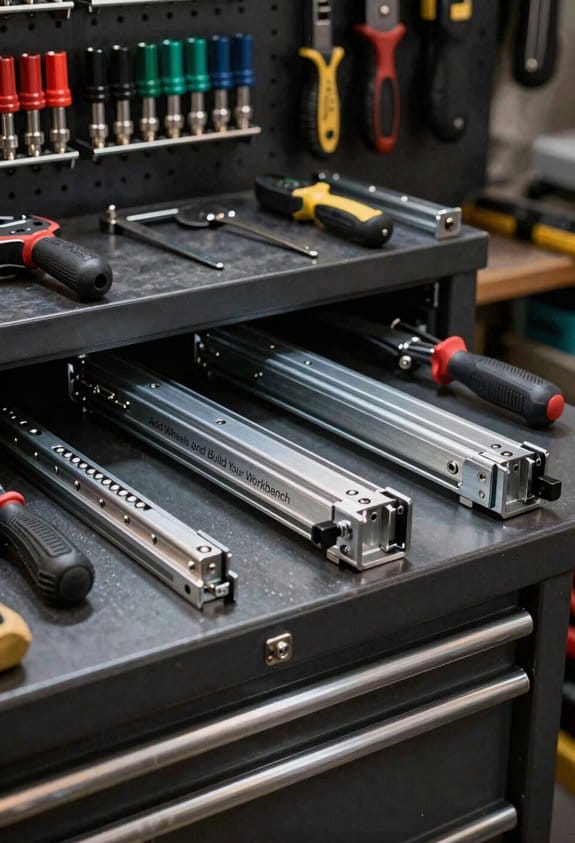
Transforming your base cabinets into mobile storage units and creating a functional work surface requires strategic planning and careful execution. I’ll start by installing casters on the cabinet bottoms, ensuring proper alignment by drilling holes with precision. You’ll want heavy-duty casters with a locking mechanism for stability when you’re working. Next, I recommend adding a double-layer plywood top across your cabinets to create a durable workbench surface. This setup accommodates tool work and project assembly effectively. For ideal functionality, incorporate workbench lighting above your work area using LED fixtures or shop lights. Proper illumination prevents mistakes and reduces eye strain during detailed tasks. Finally, secure everything firmly to prevent shifting or tipping while you’re actively working on projects.
Maximize Cabinet Space With Shelves and Drawers
Once you’ve established your workbench and mobile base, the next step involves optimizing the interior space of your cabinets to accommodate different tool types and sizes. I recommend installing adjustable shelves in the bottom sections, which allows you to customize spacing for bulkier items like paint cans and equipment. Adding pull-out drawers markedly improves accessibility, making it easier to reach stored supplies without removing everything. To further organize your space, use vertical dividers to separate categories of tools and prevent them from shifting. Labeling each shelf and drawer section helps you maintain order and locate items quickly. This systematic approach transforms your repurposed cabinets into an efficient storage system that maximizes every available inch while keeping your most-used tools within reach.
Hang Tools on Pegboard for Quick Access
After you’ve organized your cabinet shelves and drawers, installing pegboard above your workbench provides an excellent way to keep frequently used tools within arm’s reach. I recommend mounting a vertical toolboard directly behind your workspace, ensuring it’s sturdy and at eye level for comfortable access.
To maximize your pegboard’s efficiency, I suggest using magnetic strips along the top for metal tools like wrenches and screwdrivers. These strips hold items securely while keeping them visible and accessible. Arrange your most-used tools in the center section, with less frequent items toward the edges.
I find that color-coding your tool outlines helps maintain organization. This system transforms your pegboard into a functional, organized storage solution that saves time during projects.
Frequently Asked Questions
Can I Use Kitchen Cabinets With Laminate Finishes in a Humid Garage Environment?
I’d caution you—laminate won’t survive garage humidity without protection. You’ll need moisture barriers, proper ventilation strategies, and humidity mitigation to shield laminate durability. Consider sealing edges and improving airflow instead.
How Do I Adapt Cabinet Dimensions if My Garage Doorway Is Narrower Than Expected?
I’d measure your doorway carefully, then consider narrow pass modifications like removing cabinet doors temporarily or trimming the sides. You might trim reduce jambs slightly or disassemble units into smaller sections for easier maneuvering through tight spaces.
What’s the Best Way to Finish Cabinet Interiors Before Storing Chemicals and Paints?
I’d apply a wipe-on finish protecting raw wood from chemical damage, then guarantee proper airflow ventilation through drilled holes. You’ll want robust chemical containment with sealed shelves preventing spills from spreading downward.
Should I Remove Cabinet Doors During Installation for Easier Wall Mounting and Alignment?
I’d recommend you remove doors before installation—it’ll make it easier to align frames against your garage walls and secure them properly. You can reattach them once everything’s mounted and level.
How Can I Retrofit Existing Kitchen Cabinet Hardware for Garage-Specific Storage Needs?
Like upgrading a bicycle to handle mountain trails, I’d retrofit your hardware by installing locking casters on base units and adding pegboard backs. This transforms kitchen cabinets into specialized garage storage that’s mobile and highly functional for your workshop needs.