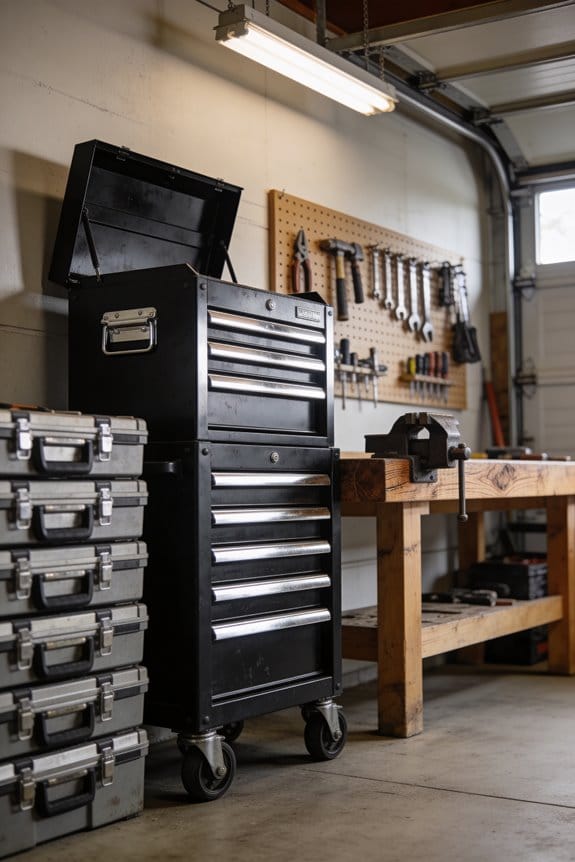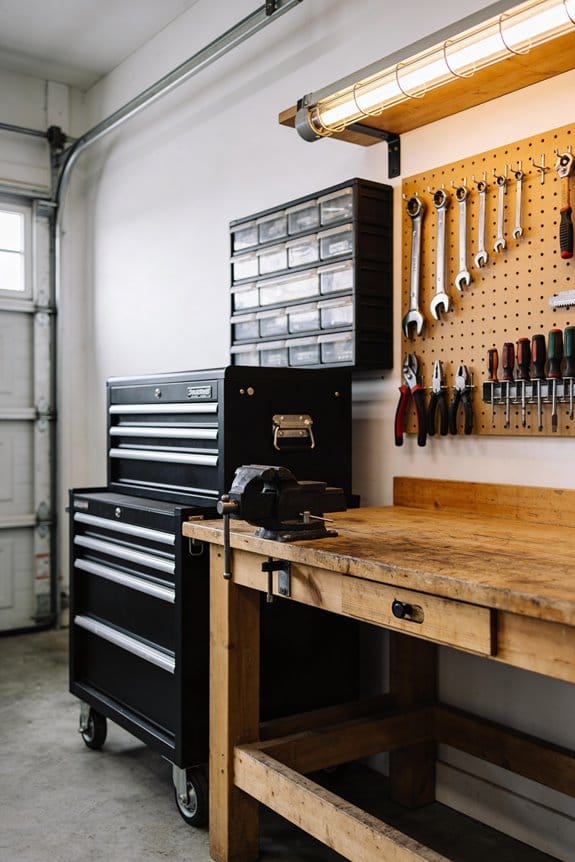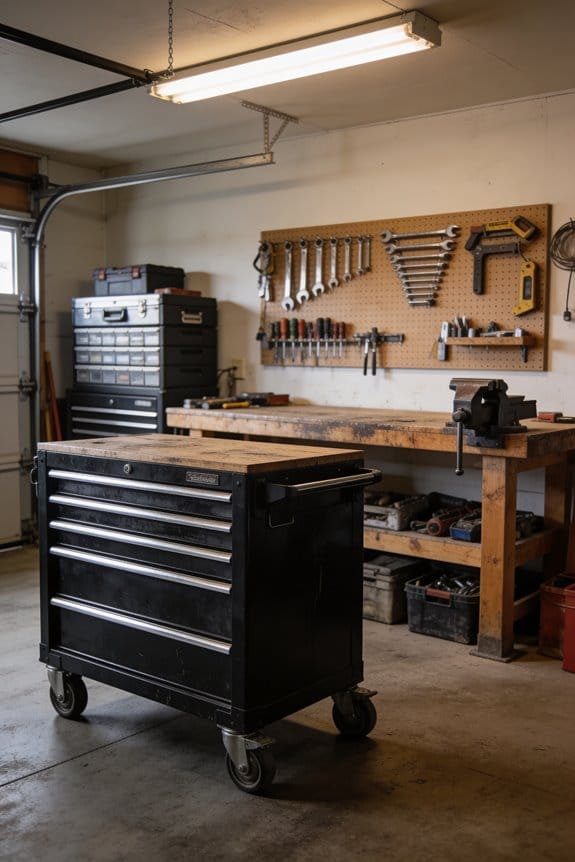

Silica gel packets absorb moisture vapor inside your sealed toolbox, which removes water—one of three conditions needed for rust to form on metal tools. The packets’ millions of microscopic pores trap water molecules deep within the material, preventing dampness from reaching your tools. By lowering humidity levels, silica gel slows the electrochemical reactions that cause rust, keeping your equipment protected. Understanding how to use and regenerate these packets effectively takes your rust prevention strategy appreciably further.
Key Takeaways
- Silica gel absorbs ambient moisture inside sealed toolboxes, reducing free water that triggers electrochemical corrosion on metal tools.
- Porous structure with high internal surface area captures water molecules deep within material, preventing dampness from contacting tools directly.
- Silica gel limits water vapor presence in the enclosed space, slowing transport of corrosive agents to metal surfaces.
- One standard packet per cubic foot of space provides effective protection; distribute packets throughout toolbox for optimal drying effect.
- Indicating silica gel changes color when saturated and can be regenerated by heating, enabling reuse for ongoing rust prevention.
Why Tools Rust Without Silica Gel
When you store your tools in a toolbox without silica gel packets, moisture from the air gradually accumulates inside the enclosed space, and this trapped humidity creates the perfect conditions for rust to form. I’ve learned that rust develops through electrochemical corrosion, a process where water and oxygen exposure trigger a chemical reaction on metal surfaces. Without moisture control, your tools become vulnerable to this destructive process. The combination of trapped humidity and oxygen causes iron in steel tools to oxidize, forming rust that weakens the metal and diminishes tool performance. Silica gel packets actively prevent this by absorbing excess moisture before it can settle on your tools. By maintaining a dry environment inside your toolbox, these packets effectively eliminate the primary catalyst for corrosion.
Does Silica Gel Actually Stop Tool Rust?
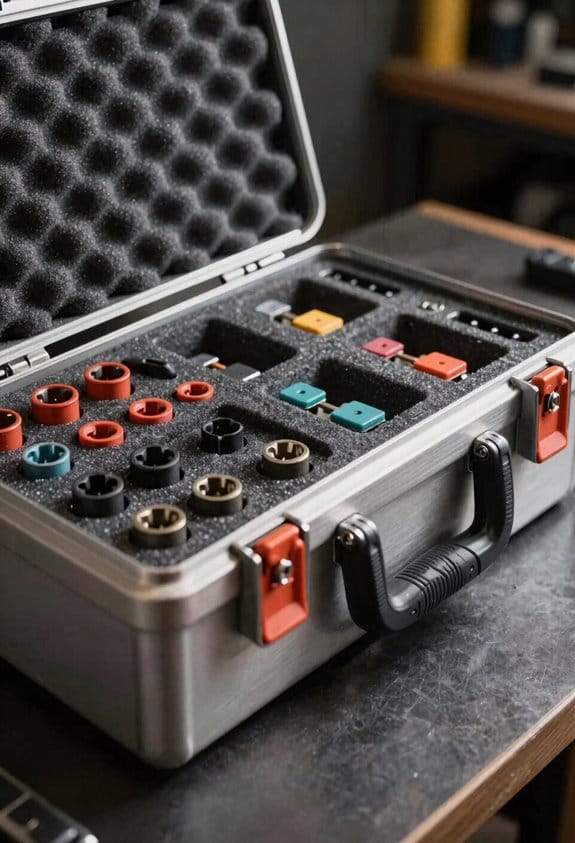
The question of whether silica gel truly prevents rust deserves a straightforward answer: yes, it does work, but understanding how and why requires looking beyond the simple idea that drying air stops corrosion. Silica gel prevents rust through electrochemical prevention—by removing moisture, it eliminates water’s role in the rust formation process. Rust requires three elements: iron, oxygen, and water. When you remove moisture from a toolbox’s environment, you break this chemical chain. Additionally, dry conditions reduce abrasion effects caused by moisture-related corrosion, which weakens tool surfaces. However, silica gel works best in moderately humid conditions rather than extremely damp environments. For maximum protection, you’ll need sufficient quantities and occasional regeneration through heating.
How Silica Gel’s Tiny Pores Trap Moisture
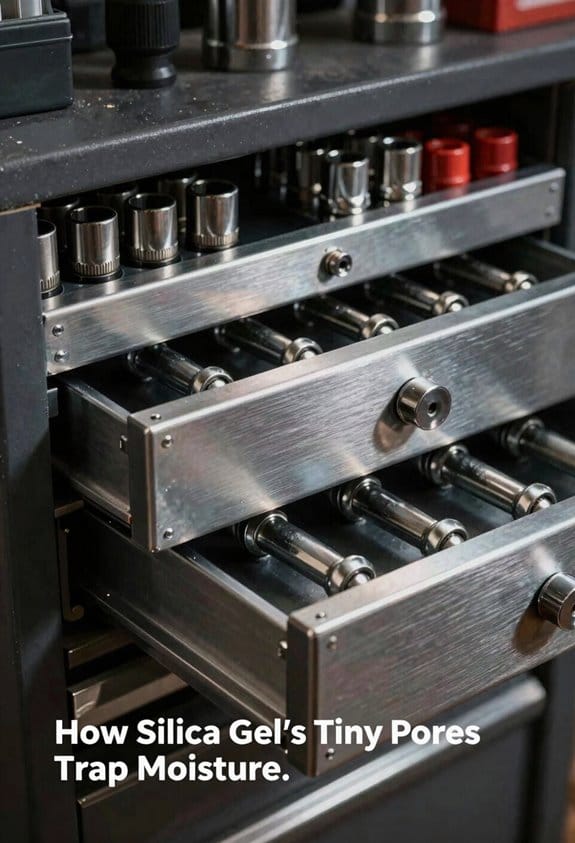
If you’ve ever held a silica gel packet and wondered why it feels so light and airy, you’ve touched the key to its moisture-fighting power—its porous structure. Inside each packet, millions of microscopic pores create an enormous surface area, sometimes reaching 800 square meters per gram. Through a process called pore adsorption, water molecules attach to the internal surfaces of these tiny channels. Additionally, capillary condensation occurs when moisture condenses within the narrowest pores, where water naturally accumulates. This dual mechanism allows silica gel to capture moisture even at low humidity levels, far before visible dampness appears. The moisture gets trapped deep within the material, preventing it from reaching your tools and causing rust or corrosion.
Silica Gel vs. Molecular Sieves: Which Protects Better?
While silica gel packets have become the standard choice for toolbox protection, molecular sieves offer a specialized alternative that performs better under specific conditions. Silica gel excels in moderate humidity environments, absorbing moisture effectively at normal temperatures. However, molecular sieves feature superior pore selectivity, meaning their uniform pore sizes target specific moisture molecules with precision. Their adsorption kinetics—the speed at which they capture water vapor—surpasses silica gel in extreme conditions. Molecular sieves perform exceptionally well in high-heat environments or extremely low humidity situations where silica gel struggles. For most toolbox applications, silica gel remains practical and cost-effective. Yet if you’re storing tools in challenging climates or temperature fluctuations, molecular sieves justify their higher cost through enhanced protection.
How Much Silica Gel Does Your Toolbox Need?
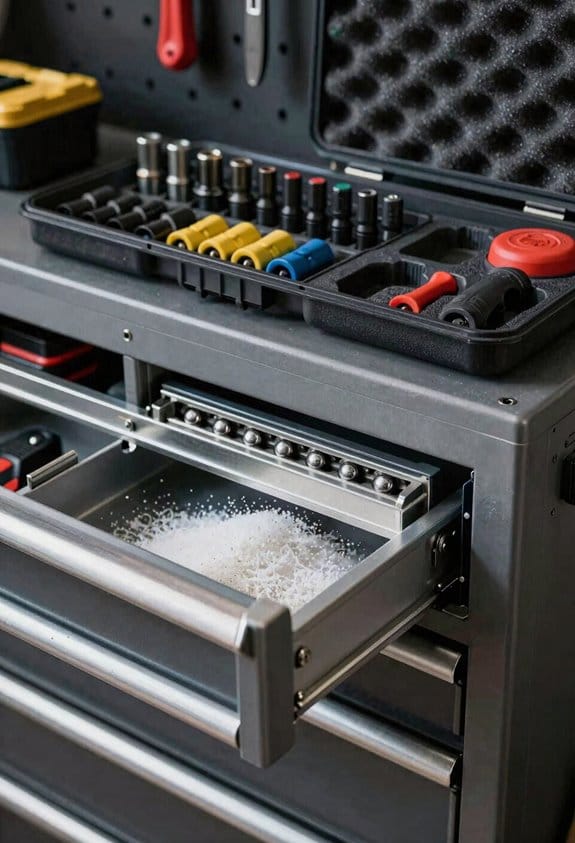
Getting the right amount of silica gel packets matters more than you might think, since too little won’t effectively control moisture while too much wastes space and money. Pack sizing depends on your toolbox volume, with a general rule being one standard packet per cubic foot of enclosed space. For smaller toolboxes, start with two to three packets and adjust based on performance. Your placement strategy substantially affects results—distribute packets throughout the toolbox rather than clustering them in one corner, ensuring moisture absorption across the entire space. Consider your climate and storage conditions when determining quantity. In humid environments, you’ll need larger amounts or more frequent regeneration cycles to maintain peak dryness levels.
How to Know When Silica Gel Is Saturated
Since silica gel absorbs moisture continuously over time, you’ll eventually need to determine whether your packets have reached their absorption capacity and can no longer protect your tools effectively. The most reliable way to check saturation involves observing the color change on indicating silica gel, which shifts from blue or orange to pink or colorless when fully saturated. Non-indicating types require a different approach—simply feel the packets for moisture or weight changes that suggest they’ve absorbed significant humidity. Once saturated, your desiccants stop functioning as a capacity indicator of protection. That’s when you’ll replace them with fresh packets or regenerate existing ones through heating. Regular monitoring guarantees your toolbox maintains ideal moisture control.
Bring Your Silica Gel Back to Life
Once you’ve identified that your silica gel packets have reached saturation, you don’t need to discard them. I find that reactivating these packets through simple cleaning methods extends their usefulness greatly. The most effective approach involves placing saturated silica gel in your oven at 250°F for one to two hours during baking intervals. This heating process drives out the absorbed moisture, restoring the gel’s absorption capacity. You’ll notice the color indicator changing back to its original shade as drying progresses. After the baking intervals complete, allow the packets to cool completely before returning them to your toolbox. This regeneration process works repeatedly, making silica gel an economical, sustainable solution for long-term tool protection and moisture control.
Is Silica Gel Alone Not Enough?
While silica gel packets are highly effective at absorbing moisture, they work best when combined with other desiccants and protective methods for all-encompassing tool protection. I’ve found that silica gel alone has limited efficacy in extremely humid environments where moisture constantly infiltrates your toolbox. When you’re dealing with environmental limits—such as coastal areas or rainy seasons—relying solely on silica gel won’t sufficiently protect your tools.
That’s why I recommend pairing silica gel with complementary solutions. VCI paper, which releases vapor-phase corrosion inhibitors, provides an extra defense layer. Camphor blocks add additional moisture absorption. Together, these methods create a thorough protection system that addresses what silica gel cannot handle alone. I’ve noticed this multi-layered approach greatly extends tool longevity and prevents rust formation that single desiccants miss.
Pairing Silica Gel With Other Rust Fighters
To maximize your toolbox’s protection against rust and corrosion, I’ve found that combining silica gel with complementary desiccants and corrosion inhibitors creates a more robust defense system. VCI paper, which uses vapor phase corrosion inhibitors, works alongside silica gel by releasing protective compounds that coat metal surfaces. I also recommend adding camphor blocks, which emit antimicrobial vapors that prevent mold alongside moisture control. For enhanced protection, consider including oil inhibitors that create protective barriers on tool surfaces. Some toolbox owners employ cathodic protection methods using sacrificial metal tabs that corrode preferentially, shielding more valuable tools. When you layer these methods together—moisture absorption, vapor inhibition, and physical barriers—you establish thorough rust prevention that addresses multiple corrosion pathways simultaneously.
Frequently Asked Questions
Are Silica Gel Packets Safe to Use Around Children and Pets in Toolboxes?
I’d say silica gel packets are generally safe, but I’d recommend child safe placement in locked toolboxes to prevent accidental ingestion. They’re non-toxic, though pet hazards exist if your dog or cat chews the packet itself, so keep them secured away.
Can Silica Gel Packets Absorb Odors in Addition to Moisture in Toolboxes?
I’ll tell you that silica gel’s famous for absorbing moisture, yet it won’t tackle odors through odor adsorption. While scent masking might seem like a bonus benefit, you’re really just getting moisture control—nothing more.
How Long Does One Silica Gel Packet Typically Last Before Needing Replacement?
I’d say a single packet lasts anywhere from a few weeks to several months, depending on humidity levels. You’ll notice replacement signs when the indicator changes color or the gel feels damp—that’s your lifespan indicator telling you it’s saturated.
Will Silica Gel Work Effectively in Toolboxes Stored in Extremely Humid Climates?
I’d say silica gel’s reduced effectiveness in humid climates means you’ll need periodic recharging and desiccant rotation. It’ll still help, but won’t match performance in moderate conditions.
What’s the Difference Between Colored and Clear Silica Gel Packets for Toolbox Use?
Colored canisters contain color indicators that change hue when saturated, signaling when they’re spent. Clear packets lack this visual feature but perform identical moisture adsorption, requiring you to guess replacement timing.