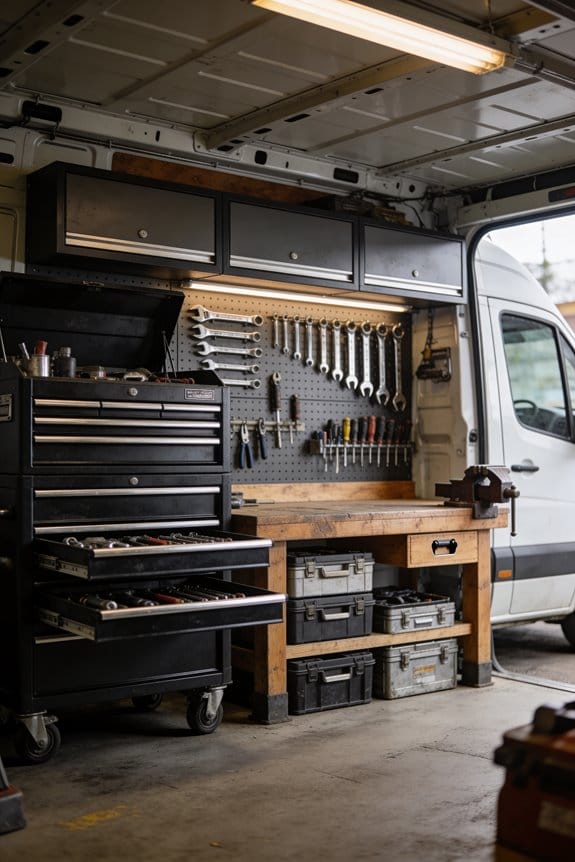
Start by cataloging every tool you own, then sort them by how often you use them. Use damage-free storage like adhesive hooks and pegboards to maximize vertical space without harming walls. Mobile rolling carts let you move your tools between rooms as needed. Store small items in clear, labeled containers so you can find things quickly. Organize by project type and access frequency, labeling everything clearly. As your skills grow, add modular units gradually rather than replacing your entire setup, ensuring your system evolves with your expanding collection and ambitions.
Key Takeaways
- Start with an inventory audit to categorize tools by type and use frequency, preventing unnecessary purchases and fitting solutions to your space constraints.
- Use damage-free vertical storage like adhesive hooks, removable pegboards, and French cleats to maximize wall space without permanent modifications.
- Invest in rolling carts and mobile tool chests to create flexible, portable workstations that adapt to different apartment areas.
- Organize small parts in clear, labeled containers and create a grab-and-go kit with essential tools for quick access and portability.
- Choose modular, expandable systems that grow with your skills and projects rather than replacing entire setups as your needs evolve.
Take Stock of Your Space and Tool Collection First
Before you invest in storage solutions, you’ll need to assess what you’re working with—both your apartment’s layout and your current tools. Start by conducting an inventory audit, which means listing every tool you own and categorizing them by type and frequency of use. Next, perform space mapping by measuring your available areas, including wall space, closet dimensions, and floor corners. Identify which zones receive natural light and remain easily accessible. Consider your lifestyle and projects you actually complete regularly, not just tools you might use someday. This assessment prevents purchasing unnecessary storage and guarantees you’ll select solutions that fit your specific needs. Understanding your constraints upfront saves time and money while maximizing your limited apartment space.
Choose Damage-Free Wall Storage to Maximize Space

Once you’ve identified your space and tools, you can build upward without drilling holes or leaving marks on your apartment walls. Adhesive friendly hooks and temporary shelving systems offer solutions for renters who can’t modify their living spaces permanently.
Pegboards mounted with removable adhesive strips hold multiple tools efficiently, while French cleat systems distribute weight across wall surfaces without damage. Consider tension rods inside cabinets or command strips for lightweight shelves. These methods work well because they rely on surface adhesion rather than permanent installation.
Temporary shelving systems come in various sizes and weight capacities, allowing you to customize storage vertically. When you move, simply remove the adhesive or hardware cleanly. This approach maximizes your limited floor space while respecting lease agreements, making it ideal for apartment dwellers managing tool collections in compact environments.
Add Mobile Solutions for Flexible Access

While wall-mounted storage keeps your tools organized and accessible without damaging your apartment, adding mobile solutions gives you the flexibility to move your collection wherever you need it. A rolling workbench on wheels becomes your portable command center, allowing you to transport everything from one room to another effortlessly. A magnetic caddy, meanwhile, holds metal fasteners and small bits securely during movement, preventing scattered items. Tool trolleys with multiple tiers maximize vertical space while remaining easy to relocate. These mobile options prove especially valuable in apartments where you might work in different areas depending on your project. Rolling tool chests combine storage capacity with portability, adapting to your changing workspace needs throughout your home.
Sort Small Items in Clear Bins and Containers

Small items like screws, bolts, nails, and bits frequently get lost or mixed together without proper containment, making them difficult to find when you need them for a project. I’ve found that clear compartmentalization solves this problem effectively. Transparent stacking containers let me see contents without opening each bin, saving time during searches. Clear plastic shoe boxes work well for organizing small fasteners by size and type. White dish tubs offer affordable open-bin storage for larger quantities. For even better organization, I label each container clearly and group similar items together. Five-gallon bucket organizers with dividers keep essentials accessible. This system prevents duplicating purchases and reduces frustration when starting projects. The visibility factor makes finding exactly what I need quick and straightforward.
Organize Tools by Access Frequency and Project Type

After you’ve sorted your small items into clear bins, the next step involves organizing your larger tools based on how often you use them and what projects require them. Create frequency zones by placing daily-use tools within arm’s reach, weekly tools in accessible storage, and occasional tools on higher shelves. Next, establish project categories by grouping related tools together—for example, painting supplies in one area and woodworking tools in another. This dual-organization system lets you grab everything needed for specific jobs quickly. Label each zone clearly so you’ll remember where everything belongs. By combining access frequency with project categories, you’ll maximize your small space’s efficiency while reducing time spent searching for tools.
Build a Grab-and-Go Kit for Quick Jobs
You’ll frequently encounter situations where you need tools immediately without rummaging through your entire collection, so building a grab-and-go kit makes practical sense for apartment living. I assemble mine in a bucket with pockets or tool pouch that holds essentials for quick repairs. I include basic items like a hammer, screwdrivers, adjustable wrench, and pliers alongside a compact flashlight for visibility in dark spaces. I also pack a portable first aid kit for minor injuries during projects. This single bin system lets me start tasks fast without searching through multiple storage areas. When my collection grows, I expand with additional modular units, keeping frequently used items accessible and organized.
Label Your Tool Storage for Shared Spaces
Once your grab-and-go kit is ready and your tools are sorted into bins and containers, labeling becomes your next organizational step, especially if other people in your apartment share access to your tools. Shared labels prevent confusion and reduce duplicate purchases. Create a simple system using permanent markers or label makers on each bin, identifying contents clearly. Include tool names, quantities, and designated locations. Maintaining communal inventories through shared labels helps roommates know what’s available and where items belong. Consider color-coding categories for visual reference. Update labels when tools are relocated or added. This straightforward approach guarantees everyone respects the organization system, minimizes lost items, and keeps your apartment storage efficient while accommodating multiple users.
Customize Deep Drawers With Foam and Trays
Deep drawers in apartment storage present both opportunities and challenges, since they offer substantial capacity but can quickly become cluttered and difficult to navigate. I recommend using kaizen foam templates to create custom outlines for your tools, ensuring each item has a designated spot. These foam templates prevent tools from shifting during movement and make it easy to spot missing items. Sliding trays and drawer dividers maximize vertical space by creating multiple organized layers within one deep drawer. This approach lets you store more tools without stacking them haphazardly. By combining foam templates with strategically placed drawer dividers, you’ll transform deep drawers into efficient storage systems that keep your tools accessible and protected in your small apartment.
Convert Closets and Unused Furniture Into Tool Pantries
Many apartments contain underutilized spaces that I’ve found work exceptionally well as dedicated tool storage areas. A closet workshop transforms an unused corner into an organized hub for your collection. I recommend installing shelving units or pegboards inside closets to maximize vertical space efficiently. You can also repurpose a dresser as a tool storage solution, converting each drawer into a categorized compartment for different tool types. This approach keeps your apartment looking clean while maintaining easy access to essentials. Under-bed storage containers and unused kitchen cabinets similarly serve as practical alternatives. By identifying these hidden spaces, you’ll create dedicated storage without sacrificing living areas, making tool organization seamless in compact apartments.
Scale Your Tool Storage as Your Collection Grows
As your skills develop and projects become more ambitious, your tool collection will naturally expand, requiring you to adapt your storage solutions accordingly. I recommend choosing modular expansion systems that grow with your needs rather than replacing everything at once. Stackable bins and rolling carts let you add new units without redesigning your entire setup. Vertical stacking maximizes your apartment’s limited floor space by using height efficiently. Consider wall-mounted pegboards with adjustable hooks that you can reconfigure as your collection changes. Labeled containers help you track what you own and identify gaps in your inventory. Start small with basic storage, then gradually invest in specialized organizers for specific tool types as your projects demand them.
Frequently Asked Questions
What’s the Best Storage Solution for Tools in a Rental Without a Dedicated Workspace?
I’d suggest you’ll find a wall-mounted pegboard and folding workbench aren’t just space-savers—they’re your temporary abode’s best-kept secrets. They’re damage-free, portable, and disappear when you’re done crafting.
How Do I Prevent Rust and Damage to Tools in Humid Apartment Environments?
I’d place silica gel and desiccant packs in your storage containers to absorb moisture. I’d wrap tools in protective coatings and tool wrap to shield them from humidity’s corrosive effects.
Can I Store Power Tools Safely in Small Spaces Without Dedicated Outlets?
Yes, you can. Studies show 40% of apartment dwellers use cordless power tools. I’d prioritize battery maintenance and portable chargers—they’re game-changers for outlet-limited spaces, letting you charge anywhere conveniently.
What’s the Most Cost-Effective Way to Organize Tools on a Tight Budget?
I’d recommend starting with cheap bins and white dish tubs—they’re inexpensive and sort tools effectively. Add magnetic strips to walls for metal items. Stack containers to maximize vertical space without breaking your budget.
How Do I Organize Shared Tools Fairly Among Multiple Roommates in One Apartment?
Studies show roommates share 40% fewer conflicts when tools have designated homes. I’d create a shared inventory list, establish a usage schedule, and label bins clearly so everyone knows what’s available and when it’s their turn to use it.