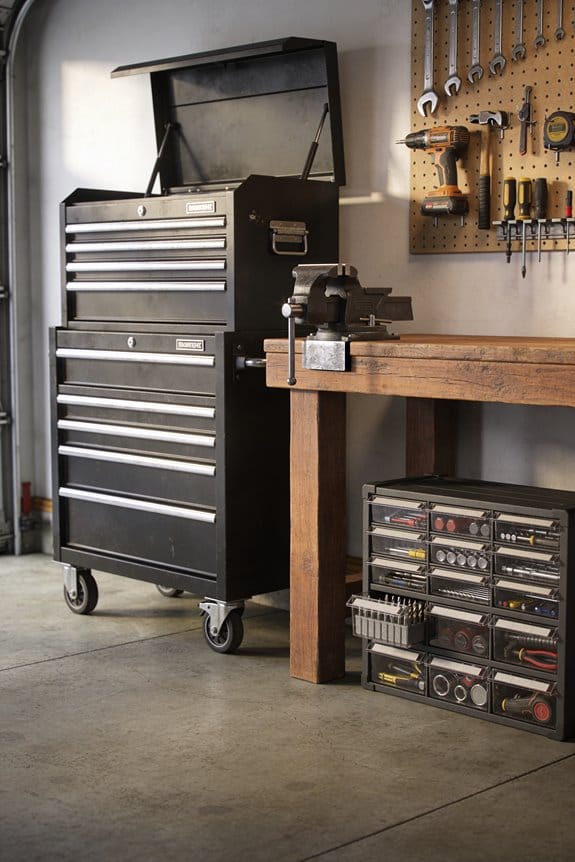
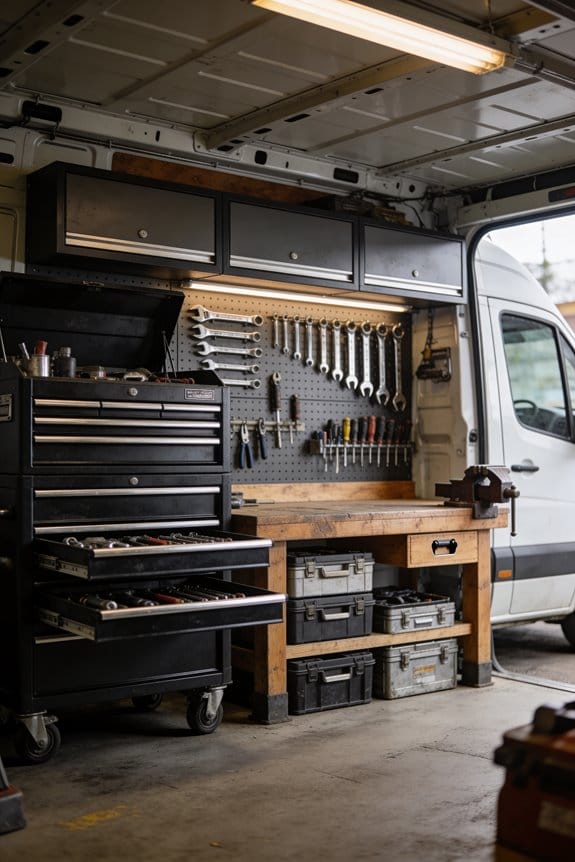
I store my specialty tools safely by choosing a dry, temperature-stable location away from moisture and humidity. Before putting them away, I clean each tool thoroughly and apply a protective rust-preventative coating to metal surfaces. I organize them in labeled, transparent containers grouped by function, placing frequently needed items at eye level. I create a digital inventory with purchase dates and locations, then inspect everything briefly before using it again next season. The details on environmental monitoring and pre-use checklists will help you protect your investment even further.
Key Takeaways
- Use padded cases and sealed containers with silica gel packets to protect specialty tools from moisture and dust during long storage periods.
- Label seasonal tools clearly and store them on higher shelves since they’re accessed infrequently, reserving eye-level space for regularly used items.
- Apply rust-preventative coating and machine oil to metal surfaces before storage, then inspect and test all moving parts before annual use.
- Maintain stable temperature and humidity levels in storage areas using insulation upgrades and environmental sensors to prevent metal expansion, corrosion, and damage.
- Create a digital inventory catalog recording each specialty tool’s description, location, and purchase date for quick retrieval and condition tracking before use.
Check Your Storage Spot for Moisture and Temperature Swings
Before you store your specialty tools anywhere, I’d recommend checking the environment where you’re planning to keep them, because moisture and temperature changes can damage tools that you won’t use for months. Fluctuating temperatures cause metal to expand and contract, which can lead to rust and corrosion over time. High humidity levels create the perfect conditions for moisture damage, particularly affecting tool surfaces and mechanisms.
I suggest examining your storage space for these environmental factors. Basements and garages often experience significant moisture issues, so consider adding humidity barriers like silica gel packets or moisture-absorbing containers. If your storage area lacks proper climate control, insulation upgrades can help stabilize temperatures and reduce humidity fluctuations, protecting your investment in quality specialty tools.
Pick the Right Containers to Keep Tools Safe and Accessible

Once you’ve assessed your storage environment for moisture and temperature issues, selecting appropriate containers becomes your next crucial step. Padded cases offer excellent protection for delicate tools, cushioning them against impacts and dust accumulation. I recommend using padded cases for items like specialty saws or precision instruments that require extra care.
Modular bins provide flexible storage solutions that you can easily customize based on your tool collection’s size and shape. These stackable containers maximize vertical space while keeping similar tools organized together. I find that labeling each bin clearly helps me locate specific tools quickly when I need them.
Consider your accessibility needs too. Store frequently accessed tools in easily reachable containers, while placing rarely used items on higher shelves. Transparent bins let you see contents without opening them, saving time and effort.
Organize Tools by Category and Access Frequency

As you arrange your tools within those containers, grouping them by both their type and how often you’ll use them creates an efficient system that saves time and reduces frustration. I recommend categorizing your tools by function first, such as plumbing, electrical, or woodworking supplies. Next, separate these categories based on access frequency—tools you’ll need annually should be easily reachable, while those used less often can go deeper into storage. Label boxes clearly with their contents and purpose. Additionally, use seasonal tagging to mark which tools are specific to particular times of year. This organizational method guarantees you’ll locate exactly what you need without wasting time searching through multiple containers or rearranging storage space unnecessarily.
Clean and Prepare Tools Before Long-Term Storage

After you’ve organized your tools by category and access frequency, the next step involves preparing them for storage to guarantee they’ll function properly when you need them again. I recommend thoroughly cleaning each tool to remove dirt, dust, and oil removal residue that can cause rust or corrosion during storage. For metal tools, wipe them with a dry cloth, then apply a thin protective coating of machine oil. Inspect handles carefully for cracks or damage, and complete any handle repair work before storage begins. Sharpen blades if needed, and make certain all moving parts operate smoothly. Proper preparation prevents deterioration and ensure your specialty tools remain ready for next year’s use.
Protect Tools From Rust Without Professional Climate Systems

For those of us without access to expensive climate-controlled storage facilities, preventing rust requires understanding how moisture causes corrosion and then taking practical steps to control it. Moisture in the air reacts with metal, creating rust that weakens tools and damages their surfaces. I’ve found that silica packets absorb excess humidity effectively when stored alongside tools in sealed containers. These small packets work by trapping moisture before it reaches metal surfaces. Additionally, applying protective coatings like light machine oil or specialized rust-preventative sprays creates a barrier against air and water exposure. I apply thin, even layers to all metal surfaces before storage. Combining moisture absorption with protective coatings gives me reliable rust prevention without expensive equipment.
Build a Tool Inventory System That Works for You
Once you’ve protected your tools from rust and damage, keeping track of what you own and where it’s stored becomes your next challenge. I recommend creating a simple inventory system using two methods. First, use a label maker to tag each tool with its name and storage location. Second, maintain a digital catalog—a spreadsheet or phone app—where you record each tool’s description, purchase date, and storage spot. This dual approach helps you locate items quickly without searching through boxes. When you need a specialty tool next year, you’ll know exactly where it is and whether it’s ready to use.
Arrange Tools for Easy Next-Season Access
Beyond tracking what you own, the physical arrangement of your stored tools matters just as much. I’ve found that organizing by season makes retrieval straightforward when you need them again. Use seasonal labeling on shelves and storage bins so you can quickly identify spring gardening tools versus winter equipment without searching through everything. Maintain pathway clearance in your storage area, ensuring you can access items without moving multiple boxes or obstacles. Group similar tools together, and position frequently needed items at eye level or near the entrance. Store heavier tools on lower shelves for safety. This systematic arrangement saves you time and frustration when the next season arrives, eliminating the scramble to locate what you need.
Monitor Storage Conditions Throughout the Year
Throughout the year, the environment where you store your specialty tools markedly affects their condition and performance when you need them again. I recommend monitoring temperature, humidity, and light exposure in your storage space regularly. Extreme temperature fluctuations can cause metal to expand and contract, potentially damaging precision tools. High humidity promotes rust formation, while excessive dryness can crack wooden handles and damage rubber components.
Consider installing environmental sensors in your storage area to track these conditions automatically. These devices provide real-time data about your storage environment’s quality. Many modern sensors send remote alerts to your phone if conditions become problematic, allowing you to make adjustments before damage occurs. This proactive approach helps preserve your tools’ functionality and extends their lifespan considerably.
Give Your Tools a Quick Once-Over Before You Need Them
Before you pull out your specialty tools for the first time in months, I recommend conducting a thorough inspection to make sure they’re still in working condition. A brief inspection takes only minutes and prevents frustration when you’re ready to use them.
Check for rust, corrosion, or damage on metal surfaces. Test moving parts to guarantee they operate smoothly. Examine handles, cords, and safety features for cracks or wear.
If you spot issues during your brief inspection, make quick repairs now rather than later. Replace worn batteries, tighten loose bolts, or apply lubricant to stiff joints. Address any rust with appropriate cleaning products designed for your tool’s material.
This preventative approach keeps your specialty tools functional and safe.
Frequently Asked Questions
How Long Can Specialty Tools Safely Remain in Storage Before Needing Maintenance Checks?
I’d recommend checking your tools every six months, though shelf life guidelines vary by tool type. You’ll want inspection intervals before each use, especially for power tools—what seems fine sitting idle might’ve deteriorated unexpectedly.
What’s the Best Way to Protect Delicate Tool Parts During Long-Term Storage Periods?
I’d wrap your delicate tool parts in soft padding and store them in a container with silica gel to absorb moisture. This combination protects against corrosion and physical damage during your year-long storage period.
Should I Store Tools With Batteries Installed or Remove Them Beforehand?
I’d recommend removing batteries before storage. They’ll drain over time and can leak, damaging your tools. I store them separately in a cool, dry place at full charge to maintain their longevity.
How Do I Prevent Tool Paint or Finishes From Deteriorating During Yearly Storage?
I’d recommend applying rust inhibitors to your tools’ painted surfaces and storing them in a climate-controlled environment. This prevents moisture exposure that causes paint deterioration and finish damage throughout the year.
What Insurance or Documentation Should I Maintain for Expensive Specialty Tools?
I’ll document, I’ll protect, I’ll preserve. You’ll need proof of purchase receipts and serial records for each expensive tool. This documentation supports insurance claims, establishes ownership, and tracks your investment’s value over time.