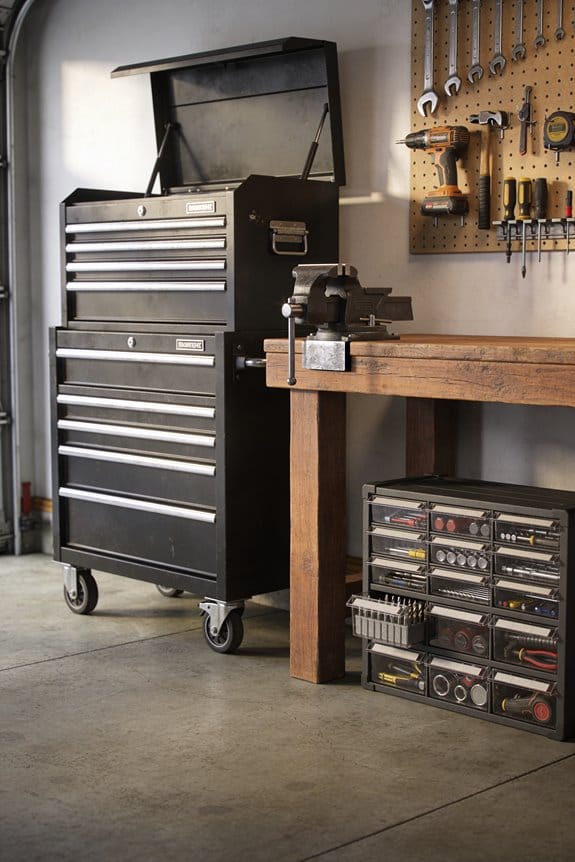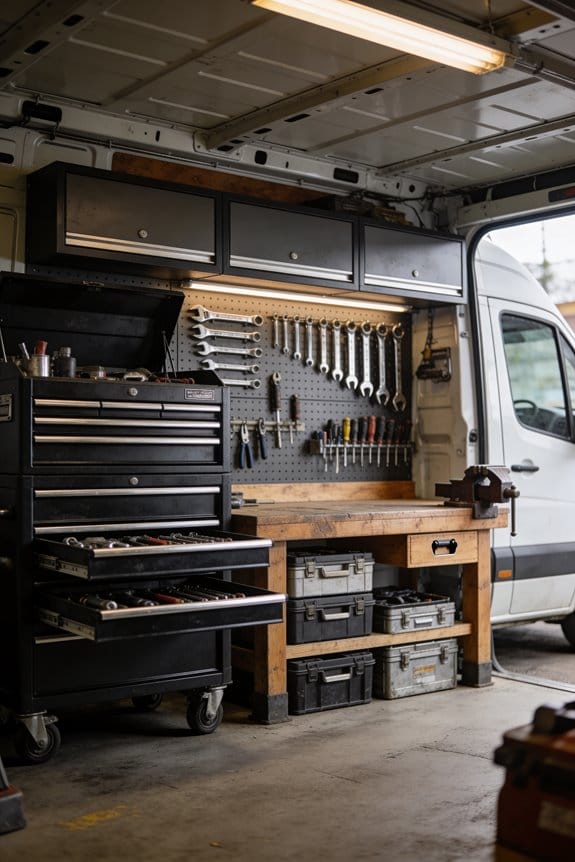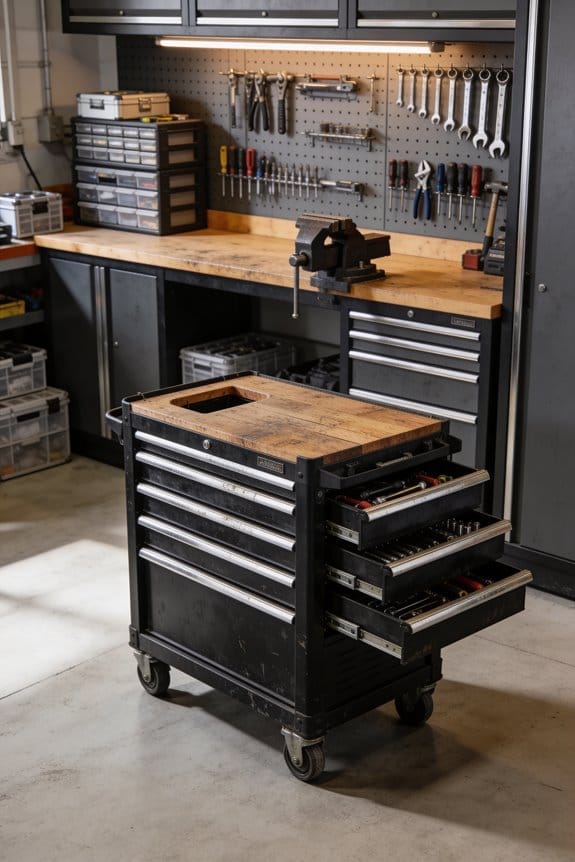

You can store power tools effectively without a garage by using wall-mounted pegboards and magnetic strips for vertical organization. Mobile carts work well for compact spaces, while converted closets or utility rooms maximize limited square footage with shelving and pegboards. Keep tools in climate-controlled areas to prevent battery damage and corrosion. Lock valuable items in secure cabinets, organize tools by type with clear labels, and arrange frequently used items within easy reach. Understanding your specific space constraints and tool inventory will help you build a system tailored to your needs.
Key Takeaways
- Convert closets or utility rooms into vertical storage using shelving, pegboards, and wall-mounted magnetic strips for tools.
- Use rolling workbenches and compact trolleys with multiple tiers to create mobile storage solutions for limited spaces.
- Group tools by type and label storage locations clearly to maintain organization and reduce search time.
- Store tools in climate-controlled indoor spaces to prevent battery damage, corrosion, and moisture-related deterioration.
- Build budget-friendly organizers from scrap wood, pallets, and PVC pipe to maximize unused under-furniture areas.
Figure Out Your Space First
Before you invest in storage solutions, you’ll need to honestly assess what space you actually have available, since the right organizational system depends entirely on where you can install it. Start by measuring space in potential storage areas like closets, utility rooms, or corners of your home. Consider wall dimensions, ceiling height, and floor area to determine what fits your needs.
Next, prioritize tools by frequency of use. Identify which power tools you grab regularly versus those used occasionally. This helps you decide between accessible wall-mounted systems for frequent items and compact storage for rarely-used equipment. Evaluate natural light and climate conditions in your chosen area, since tools require protection from moisture and extreme temperatures. Understanding your constraints guides you toward practical solutions that actually work for your situation.
Wall-Mounted Tool Storage: Pegboards and Magnetic Rails
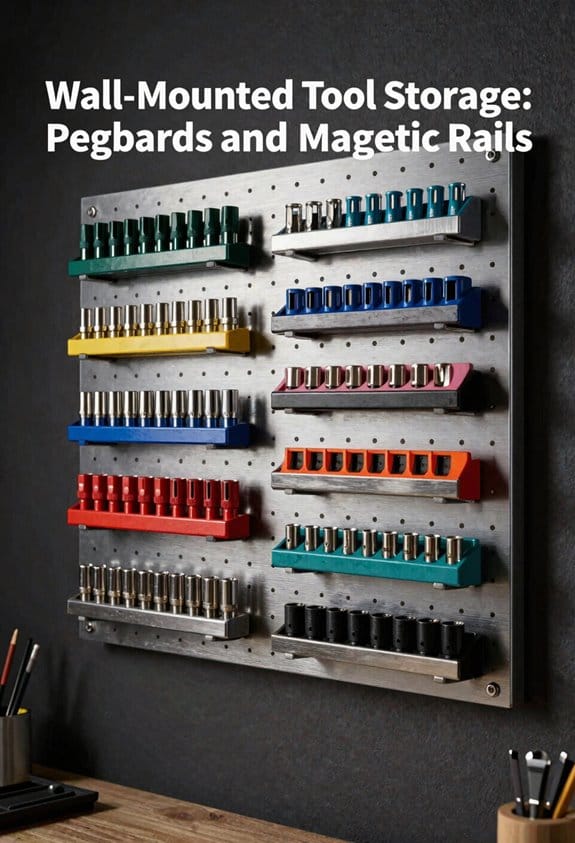
Once you’ve identified your available space and determined which tools you’ll need most often, wall-mounted storage systems become your next logical step, since they maximize vertical areas while keeping your power tools visible and within arm’s reach. Pegboards offer customizable layouts with modular hooks, shelves, and baskets that adapt to your specific tools. You can install them in closets, utility rooms, or any blank wall space. Magnetic rails and strips provide an alternative solution, holding metal tools directly without requiring hooks. These systems work particularly well in apartments or small homes where floor space is limited. Both options transform unused wall real estate into functional storage, making your tools accessible while maintaining vertical visibility throughout your workspace.
Quick-Access Shelves and Metal Strip Systems
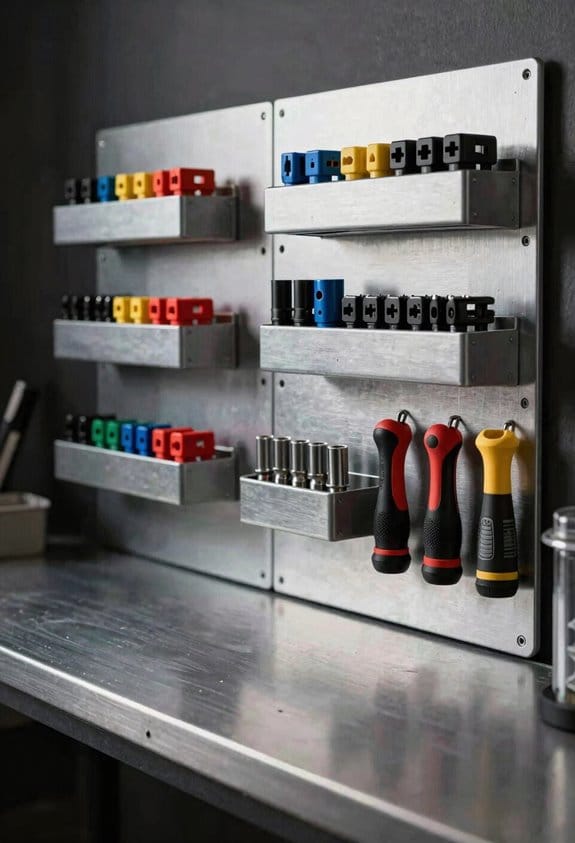
Building on wall-mounted systems, combining quick-access shelves with metal strip storage creates an efficient two-tier approach that handles both bulky and small tools effectively. I’ve found that metal strips mounted above shelves provide quick grab storage for frequently used metal tools, eliminating time spent searching through drawers. The shelves below accommodate heavier power tools like drills and saws, keeping them organized and visible. This wall-mounted configuration maximizes vertical space while maintaining quick access to essentials. I use labeled magnetic containers on the strips for screws, nails, and small bits, making identification instant. The combination of metal strip systems with sturdy shelving transforms otherwise wasted wall space into a practical storage solution that keeps my most-used tools within arm’s reach.
Mobile Solutions: Carts and Compact Trolleys
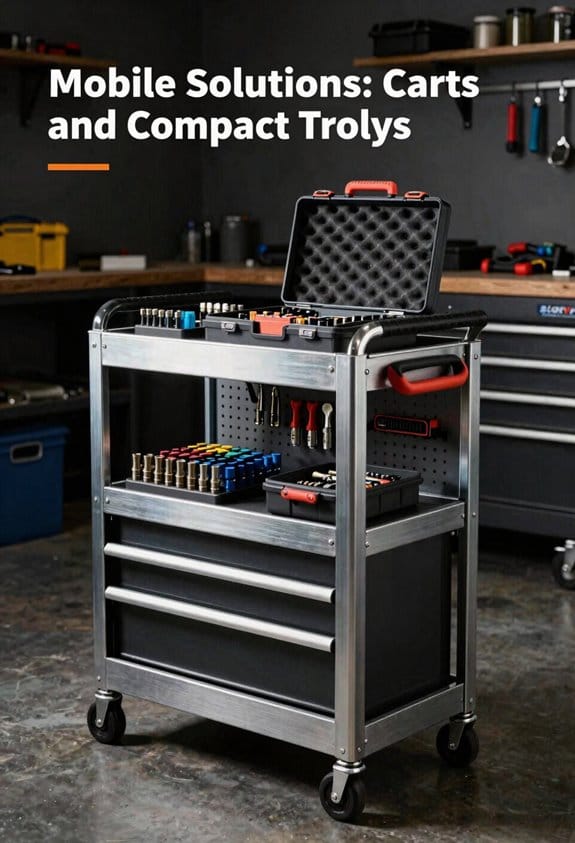
While wall-mounted systems excel at maximizing vertical space in fixed locations, mobile solutions offer flexibility when you need to move your tools between rooms or work areas. A rolling workbench combines storage with a work surface, letting you organize tools in one portable unit that goes wherever you’re working. Compact trolleys with multiple tiers hold power tools, accessories, and supplies while taking up minimal floor space. Consider a battery station—a dedicated cart that stores and charges your batteries and chargers together, keeping everything organized and ready. These carts fit into closets, utility rooms, or corners when not in use. Wheeled solutions work especially well for apartment dwellers or anyone without permanent workshop space, since you can easily store them away between projects.
Convert Closets and Utility Rooms Into Tool Zones
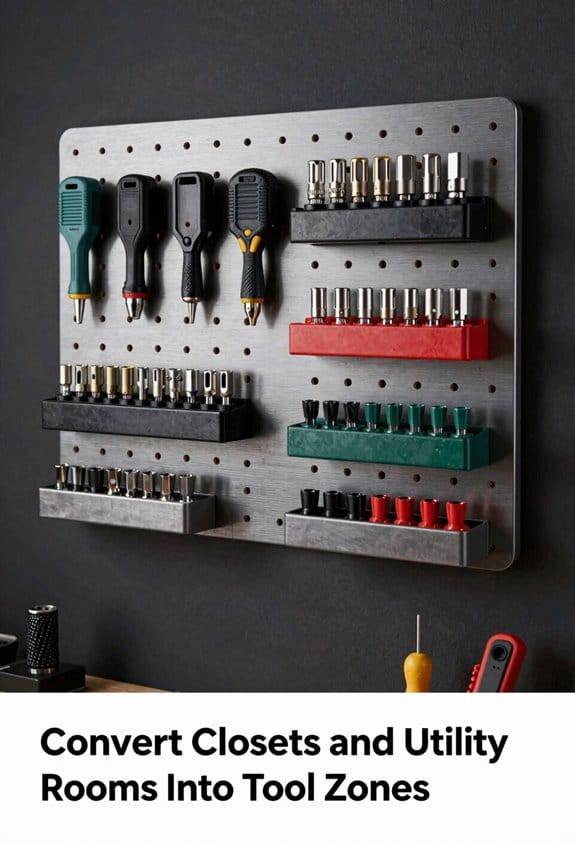
Since most homes have at least one closet or utility room that sits underutilized, converting these spaces into dedicated tool zones offers a practical solution for storing power tools without a garage. I recommend installing vertical shelving to maximize limited square footage while keeping tools organized and visible. Adding closet lighting guarantees you can locate specific tools quickly without fumbling around in darkness. Mount pegboards or wall-mounted rails alongside shelves to accommodate hooks for hand tools and accessories. Consider installing a small workbench if space permits, creating a functional workspace for minor repairs or maintenance tasks. This approach transforms forgotten storage areas into efficient, accessible tool stations that keep your power tools protected and ready for use whenever needed.
Lock Up Your Power Tools Safely
Once you’ve organized your tools in a closet or utility room, securing them becomes the next critical step in protecting your investment. I recommend using secure lockboxes, which provide tamper evident seals that show if someone’s attempted unauthorized access. Filing cabinets with locks work well for storing smaller power tools and accessories in closets or carports. For expensive equipment like drills and saws, consider installing a lockable cabinet or chest that keeps tools hidden and protected from theft or accidental damage. If you’re storing tools in a shared space, locked storage prevents family members or roommates from borrowing items without permission. These security measures make certain your tools remain safe, organized, and ready whenever you need them for your next project.
Build Budget-Friendly Storage From Scrap Materials
Transform materials you already have at home into functional tool storage systems that cost little to nothing. Scrap woodwork organizers offer excellent solutions for power tool storage, allowing you to build custom racks from leftover lumber. Repurposed pallet shelving provides sturdy platforms for organizing drills, saws, and batteries without purchasing expensive commercial units. I’ve found that PVC pipe racks work exceptionally well for smaller tools and can be assembled quickly with basic tools. Wooden crates stacked vertically create compartments for organizing accessories and charging cables. These DIY approaches maximize your available space, whether in closets, utility rooms, or carports. By repurposing household materials, you’ll establish organized storage while keeping expenses minimal and maintaining easy access to your power tools.
Choose Climate-Controlled Storage Locations
While budget-friendly DIY storage solutions work well for organizing your tools, protecting them from environmental damage requires careful consideration of where you place them. I recommend storing power tools in climate-controlled spaces like indoor closets, utility rooms, or climate-controlled storage units. Temperature control prevents battery damage and metal corrosion, which occur when tools experience extreme heat or cold. Humidity monitoring is equally important because moisture causes rust on metal components and electrical problems in batteries and motors. Basements with dehumidifiers work well if they stay dry. Avoid attics, sheds, and garages without insulation, as these spaces experience temperature swings and moisture buildup. Climate-controlled facilities offer professional protection when home storage isn’t viable. Your investment in proper storage locations directly extends your tools’ lifespan and performance.
Label and Organize by Tool Type
Creating an organized storage system requires sorting your tools into categories, which makes finding what you need fast and prevents duplicating tools you already own. I recommend using function based grouping to arrange your tools logically. For example, I keep drilling tools together, cutting tools in one section, and fastening tools in another area.
Color coded labels help me identify each category instantly. I use different colored markers or stickers on containers and shelves to distinguish between tool types. When I label magnetic strips or pegboard sections clearly, I waste less time searching during projects.
This organizational method works well in closets, cabinets, or under-furniture storage spaces. Consistent labelling guarantees that anyone using your tools can return them to their proper locations, maintaining your system’s effectiveness long-term.
Frequently Asked Questions
Can I Store Power Tools in Humid or Damp Environments Without Damaging Them?
I wouldn’t recommend storing power tools in humid environments without protection. You’ll need moisture barriers like sealed containers and corrosion inhibitors to prevent rust and electrical damage. Dehumidifiers help too.
What’s the Best Way to Store Batteries and Chargers With My Power Tools?
As they say, “An ounce of prevention is worth a pound of cure.” I’d recommend storing batteries separately in a cool, dry spot with proper battery rotation to maintain charge health. Make sure your charger’s got adequate ventilation to prevent overheating.
How Do I Protect Power Tools From Theft in Shared or Communal Spaces?
I’d recommend securing your power tools in lockable boxes or filing cabinets stored in communal lockers when possible. You can also use portable toolboxes with sturdy locks, keeping them in designated storage areas rather than leaving them visible in shared spaces.
Should I Store Power Tools Assembled or Disassembled to Save Space?
I’d recommend disassembling when possible to maximize space. Many modern tools feature tool modularity, letting you store batteries and heads separately. This approach saves considerable room, especially in compact storage solutions like carts or shelves.
How Often Should I Maintain and Check on Stored Power Tools?
I’d check my power tools like they’re fine wine—they’ll go bad if I ignore ’em. I do monthly inspections for damage, then seasonal servicing to keep batteries charged and mechanisms functioning smoothly.