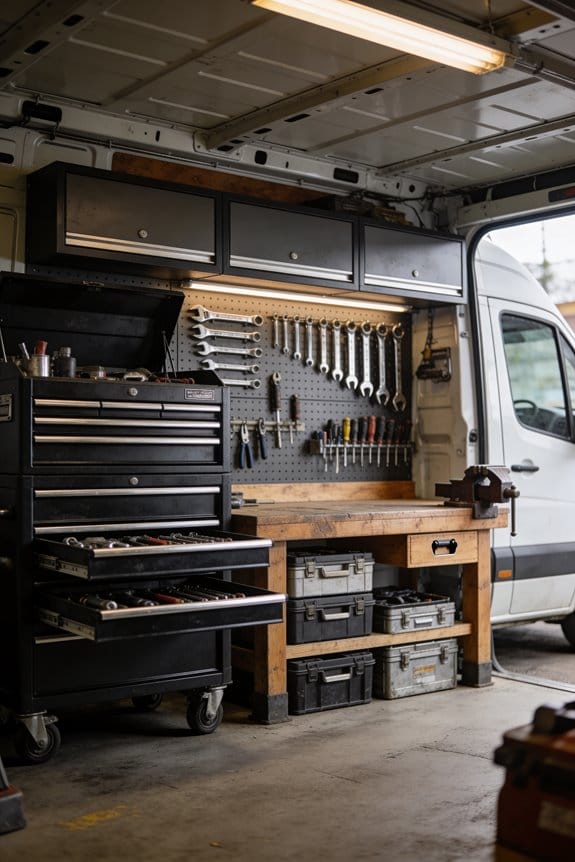
People I’ve worked with consistently choose three IKEA hacks for real tool storage: pegboards with magnetic strips for visibility, rolling carts for flexible positioning, and dresser-based workbenches for affordability. These solutions work because they keep tools accessible without permanent garage modifications. Pegboards display frequently used items, carts move with your projects, and dressers provide hidden storage with professional results. Each approach solves specific accessibility problems while staying budget-friendly, and the right choice depends on your space and workflow.
Key Takeaways
- Pegboards with magnetic strips and vertical lighting create efficient, visible tool storage while improving accessibility and return-to-place habits.
- Rolling utility carts like RÅSKOG enable flexible tool zone repositioning without permanent wall modifications or expensive installation requirements.
- Inexpensive IKEA dressers paired with custom tops and pegboards above create affordable, professional-quality workbenches and storage stations.
- Foam-lined drawers and SAMMANHANG boxes with custom compartments prevent tool shifting during transport while maintaining organized, concealed storage.
- Mini chests and open shelving like KALLAX integrated with wall systems provide compact, dust-protected storage for small parts and tools.
Pegboards: The IKEA Garage Foundation
When you’re looking for a way to organize your tools and keep them visible, a wall-mounted pegboard system offers one of the most practical solutions available. I’ve found that installing pegboards in my garage creates designated spots for each tool, eliminating clutter and reducing excuses for unfinished projects. The setup requires a gap behind the pegboard using spacers like washers, which allows hooks to grip securely. I pair my pegboards with vertical lighting to see tools clearly, and I add magnetic strips for storing metal items efficiently. This combination transforms disorganized tool piles into an organized system where everything has its place. The visibility factor keeps me motivated to return items after use, maintaining order long-term.
Mobile Utility Carts for Flexible Storage

While pegboards excel at keeping tools visible and organized on walls, not every tool or workspace benefits from permanent wall installation, and that’s where mobile utility carts become invaluable. I’ve found that rolling mods like the RÅSKOG and JUTTERSBO carts transform how I organize different task zones throughout my garage and workshop. These carts move effortlessly between locations, letting me position tools exactly where I need them. The NISSAFORS cart works particularly well for under-sink storage when you remove the top shelf. What makes these carts practical is their flexibility—I can reposition them as projects change or store them away when space matters. They’re affordable solutions that provide instant access without requiring permanent wall modifications or extensive installation time.
Drawer Hacks That Keep Tools Hidden and Organized

Mobile carts work wonderfully for repositioning tools between projects, but they take up floor space and leave your most-used items exposed on open shelves. I’ve found that drawer hacks offer a better solution for keeping tools hidden and organized. The SAMMANHANG box, priced at just £8, transforms into a sliding drawer when you attach wood underneath existing units. Adding foam inserts inside creates designated compartments for each tool, preventing shifting during movement. These concealed slides keep frequently used items tucked away on work surfaces, maintaining a clean garage appearance. You can position these drawers anywhere that fits your workflow, making them incredibly adaptable. This approach combines affordability with functionality, keeping your workspace organized without sacrificing accessibility.
Budget-Friendly Workbench Dressers

If you’re looking for an affordable way to build a custom workbench, repurposing inexpensive IKEA dressers offers a practical solution that doesn’t require specialized skills or a large budget. These cheap dressers provide drawer storage that newer garage units often lack, making them ideal for organizing hand tools, fasteners, and supplies. By combining a dresser base with custom tops, you create a functional workspace tailored to your needs. I’ve found that measuring your garage space with graph paper beforehand guarantees precise fitting. Pairing your dresser base with a pegboard above and a work surface on top transforms an ordinary piece into a thorough storage and work station. This approach costs markedly less than purchasing dedicated garage cabinets, delivering professional results without the premium price tag.
Compact Storage for Hand Tools and Hardware

When organizing hand tools and hardware in tight spaces, compact IKEA storage solutions provide efficient alternatives to bulky cabinets. I’ve found that mini chests like the MOPPE work exceptionally well for storing screws, nails, and small tools. Magnetic strips mounted on walls hold metal tools securely while saving drawer space. For frequently used items, fold down trays attached to dresser units keep everything accessible yet hidden when not needed. SAMMANHANG boxes with foam inserts create customized compartments for specific tools, preventing items from shifting during transport. These compact options fit seamlessly into garages, workshops, and craft rooms regardless of square footage. By combining multiple small storage pieces rather than one large cabinet, you maintain flexibility to rearrange your workspace as your needs evolve.
Display-Ready Shelf Units
Display-ready shelf units transform tool storage from purely functional to visually organized, allowing you to showcase your collection while keeping items within arm’s reach. Open shelving options like KALLAX integrated with pegboards create flexible systems where you can arrange tools by category or frequency of use. Display cabinets offer a middle ground, protecting your tools from dust while maintaining visibility through glass doors. STÄLL shoe cabinets work particularly well for compartmentalized storage, letting you organize small hardware, fasteners, and specialized tools in designated sections. When you choose display-ready solutions, you’re not just storing tools—you’re creating an organized workspace that encourages maintenance and prevents items from getting lost among clutter.
Choose by Your Space and Workflow
Because every garage, workshop, or craft room has different dimensions and usage patterns, you’ll want to match your storage solution to your specific needs rather than picking the first option you find. Consider your workflow zones, which are the areas where you perform specific tasks. Proximity mapping helps you place tools near where you’ll actually use them, reducing wasted movement and time. If you work primarily at a bench, a dresser-based workbench with pegboard makes sense. For mobile projects, utility carts like the RÅSKOG offer flexibility. Craft rooms benefit from wall-mounted systems, while small spaces favor drawer hacks that tuck away discretely. Assess your actual work patterns before investing in any storage solution.
Real Garages, Real Solutions
Now that you’ve considered your specific space and workflow needs, it’s time to see how these IKEA storage solutions actually work in real garages where people store everything from power tools to seasonal equipment. Creating garage zones helps organize your workspace logically. You might designate one area for frequently used hand tools, another for power equipment, and separate sections for seasonal items. Workflow maps—visual plans showing how you move through your garage—guide your storage placement. By positioning your pegboard near your workbench and placing utility carts along pathways, you reduce unnecessary movement. This strategic arrangement means tools stay accessible exactly where you need them, making projects more efficient and keeping your workspace functioning smoothly throughout the year.
Frequently Asked Questions
How Do I Prevent Tools From Falling Through Pegboard Holes During Storage?
I’d recommend using hook strips or pegboard sleeves to secure your tools. They’ll prevent items from slipping through the holes while keeping everything visible and accessible for your workspace organization.
Can Utility Carts Hold Heavy Power Tools Without Wheel Damage or Tipping?
I’ve watched heavy drills and sanders wobble precariously on standard carts. You’ll need locking casters and low center of gravity placement to prevent tipping. Most utility carts handle moderate power tools safely, but heavier equipment risks wheel damage without reinforcement.
What’s the Best Foam Insert Thickness for Organizing Small Screws and Fasteners?
I’ve found that 3mm foam works best for tiny screws and fasteners, while 10mm foam suits larger items. The thinner option prevents waste and keeps everything visible in your Shadow Foam-lined drawers.
How Do I Weatherproof IKEA Dressers When Using Them in Unheated Garages?
You’ll want rustproof coatings on metal hardware—it’s your first defense. I’d seal wood with weatherproof stain, add thermal breaks between drawers, and guarantee proper ventilation to prevent moisture damage in unheated spaces.
Should I Anchor Wall-Mounted Shelf Units to Studs for Safety With Heavy Tools?
I’d absolutely anchor to studs when storing heavy tools. If studs aren’t available, toggle anchors work, but they’re not ideal for substantial weight. Studs give you the security you need.