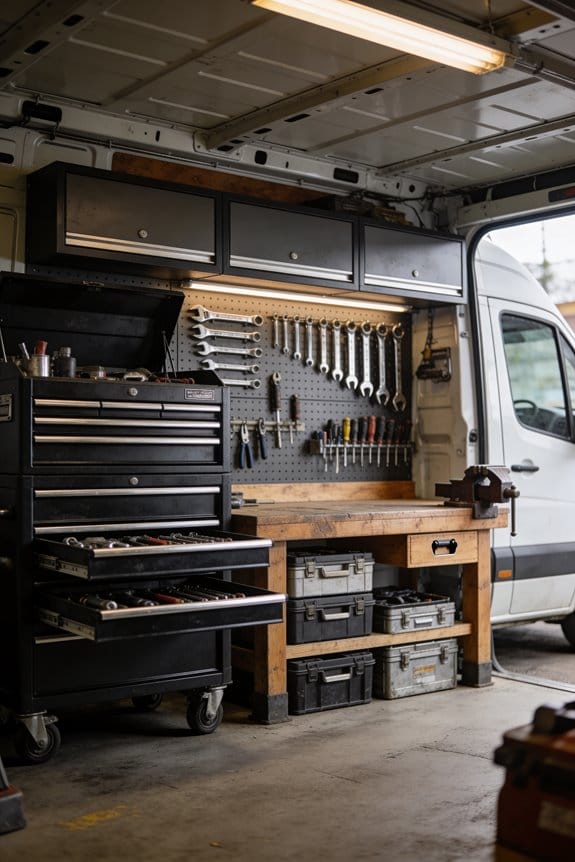
Vertical storage transforms cramped garages by freeing floor space and eliminating safety hazards like trip risks. Moving items onto walls and ceilings keeps your most-used tools within arm’s reach while maximizing every inch. Systems like pegboards, slatwall, and cabinets organize different tool types based on how often you access them. The three-zone method—hot zone at shoulder height, warm zone mid-back, cold zone overhead—ensures efficiency and workflow. Starting with under $500 in basic pegboards and shelving makes this transformation accessible for any workshop owner keen to discover advanced solutions.
Key Takeaways
- Vertical storage maximizes limited floor space in compact garages by utilizing walls and ceilings effectively.
- Wall-mounted systems like pegboards and slatwall eliminate trip hazards and safety risks from cluttered floors.
- Three-zone organization keeps daily-use tools at arm’s reach while storing seasonal items overhead efficiently.
- Pegboards, slatwall, and cabinets offer flexible options for different tool collections and workshop workflows.
- Budget-friendly starter solutions under $500 make vertical storage accessible for DIY garage enthusiasts immediately.
Why Small Garages Need Vertical Storage (And What It Solves)
If you’re working with a small garage, you’ve probably noticed that floor space disappears quickly once you add a workbench, tools, and the everyday items your family needs to store. Vertical storage solves this problem by moving items onto walls and ceilings, freeing up valuable floor real estate for actual work.
Space constraints in compact garages create multiple challenges. Cluttered floors become safety hazards, increasing trip risks and making it difficult to locate tools efficiently. Wall-mounted systems like slatwall panels, pegboards, and overhead racks eliminate floor clutter while keeping frequently used items within arm’s reach. Organizing vertically transforms cramped workshops into functional spaces where you can move comfortably and safely access equipment. This approach maximizes every available inch without sacrificing accessibility or workflow.
Three Wall-Mounted Systems: Pegboards, Slatwall, and Cabinets

When you’re setting up a small garage workshop, choosing the right wall-mounted storage system breaks down into three main options: pegboards, slatwall, and cabinets, each serving different organizational needs and preferences.
Pegboards excel at displaying hand tools and hardware with hooks that you can adjust easily. They offer visibility, making tool placement straightforward for frequent access. Slatwall panels provide similar flexibility but with a sleeker material finish, accommodating heavier items through integrated slots. They reconfigure without damaging walls, ideal for evolving workshops. Wall cabinets hide chemicals and sharp tools behind doors, reducing visual clutter while protecting your space. Consider your tool collection size and access frequency when deciding. Pegboards work best for visible organization, slatwall for durability, and cabinets for safety and concealment in compact garages.
The Three-Zone Storage Method: Hot, Warm, and Cold

To get the most from your garage workshop, you’ll want to organize your vertical storage into three distinct zones based on how often you use what’s stored there. Your hot zone, positioned at knee-to-shoulder height, holds items you need for daily access—frequently used tools and supplies that you reach for regularly. The warm zone occupies mid-back shelves or higher spaces, perfect for seasonal rotation of equipment you use occasionally throughout the year. Finally, your cold zone sits overhead, storing archived items and rarely accessed gear. This three-tier approach guarantees your most-needed items stay within arm’s reach, while less frequently used equipment remains organized but out of your immediate workspace, maximizing both efficiency and safety in your workshop.
Overhead Storage: From Basic Racks to Motorized Lifts

Beyond your three-zone method, overhead storage represents the most practical solution for maximizing your garage workshop’s vertical space. Ceiling racks efficiently store large bins, holiday decorations, and camping gear while keeping your work area clear. Retractable platforms simplify accessing frequently used elevated items without requiring a ladder every time. For heavier loads, attic lift elevators provide safe, controlled lowering and raising of substantial equipment. Sliding systems organize plastic boxes and medium-weight materials effectively. The newest innovation involves motorized platforms and solar lifts, which use automation to bring stored items down on demand. These systems require minimal floor space, making them ideal for small workshops where every square foot counts toward functional work zones.
Your First Vertical Garage Workshop: Start Under $500

Starting your vertical garage workshop doesn’t require expensive motorized systems or professional installation, since budget-friendly options can transform your space for under $500. I’d recommend beginning with a budget build using pegboards and basic wall shelving, which provide excellent organization without breaking the bank. Entry level anchors, like heavy-duty toggle bolts and studs finders, guarantee your installations stay secure. Start by mounting a pegboard for hand tools and hardware, then add two or three floating shelves for bins and equipment. This foundation lets you organize essentials while keeping floor space open for workbenches. As your workshop grows, you can expand vertically by adding wall cabinets or overhead racks, building your system gradually without overwhelming costs.
Frequently Asked Questions
How Do I Choose Between Slatwall, Pegboards, and Cabinets for My Specific Needs?
I’d choose based on your telegraph-era precision: slatwall wins for modular compatibility and visual aesthetics, pegboards offer superior accessibility ergonomics for hand tools, while cabinets provide material durability for chemicals and hazardous items.
Can Motorized Ceiling Lifts Support the Weight of My Heavy Power Tools Safely?
Yes, motorized ceiling lifts can safely support heavy power tools when properly rated. I’d recommend checking the manufacturer’s load testing specifications—they’re designed with motorized safety features and weight capacity limits you shouldn’t exceed.
What’s the Best Way to Organize Tools by Frequency of Use in Limited Space?
I know you’re worried about cramming everything in. I’d place your daily essentials in the hot zone—knee to shoulder height—for quick access. Store seasonal backups overhead, keeping your workspace lean and functional.
Are Smart Garage Storage Systems Worth the Investment for Small Workshop Spaces?
I’d say smart shelving and automated inventory systems justify the investment if you’re serious about maximizing your workshop. They’ll streamline your workflow, reduce wasted time searching for tools, and adapt as your needs evolve—especially valuable in cramped spaces.
How Do I Install Vertical Storage Without Damaging Drywall or Studs Permanently?
I’d recommend using no drill anchors for lighter loads and removable rails that mount directly into studs. This approach protects your drywall while letting you reconfigure systems whenever you need.